Blog

  • Cookies & Cream Grows Up


    This monstrosity was borne out of wondering what to make for National Ice Cream Day. There were two schools of thought at first. I was thoroughly excited about making our very first chocolate ice cream, while Nate had his eye on experimenting with a cookies ’n’ cream. The time came to when we were wandering the aisles of a grocery store near our house and we knew we had to make up our minds soon. At the last moment, Nate had the utterly genius idea of…simply not choosing.

    data-animation-override>
    ‘¿Por qué no los dos?’ he said to me.

    “¿Por qué no los dos?” he said to me.

    He’s a madman, I thought.

    We bought good chocolate, Oreos, and heavy cream and went home.

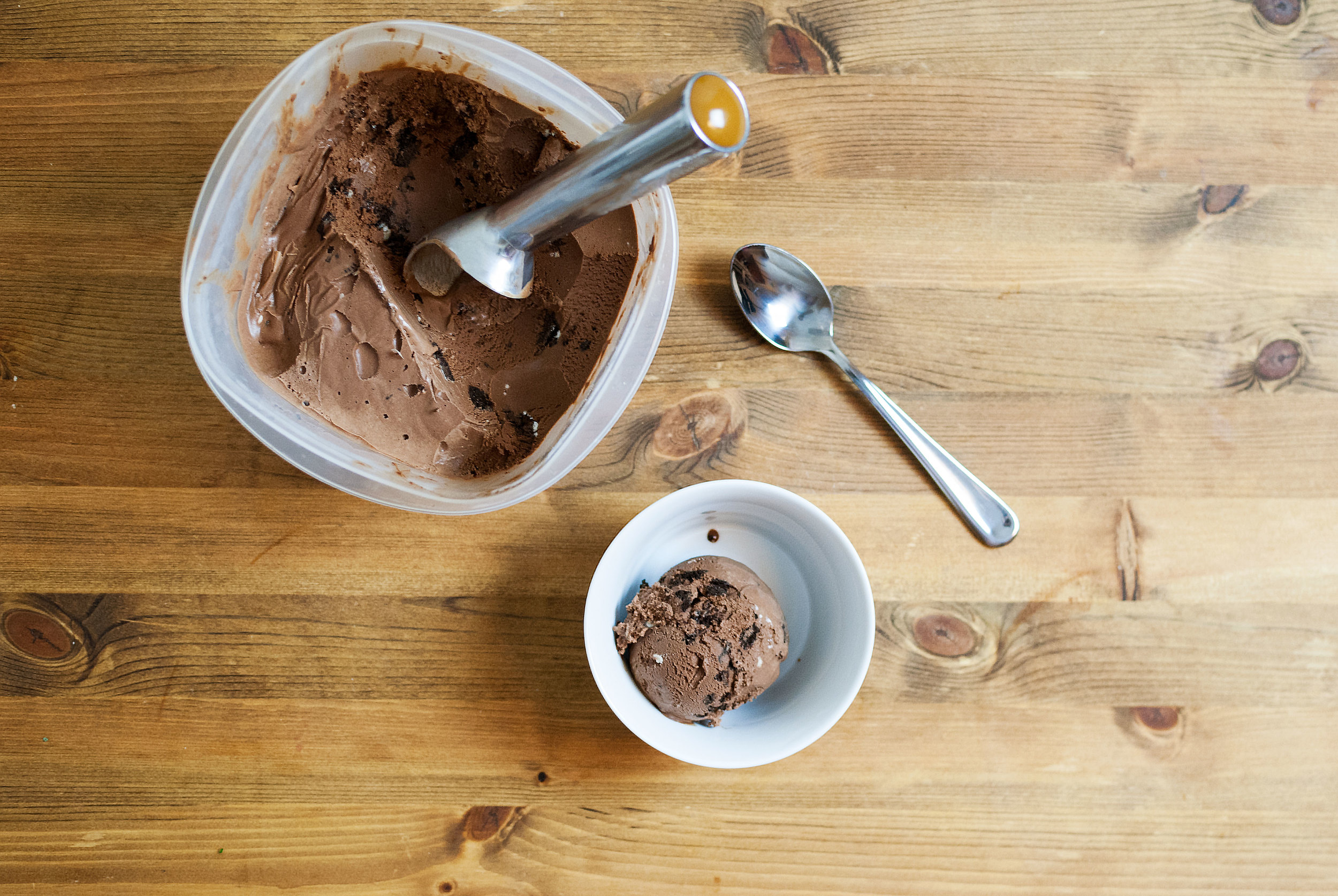
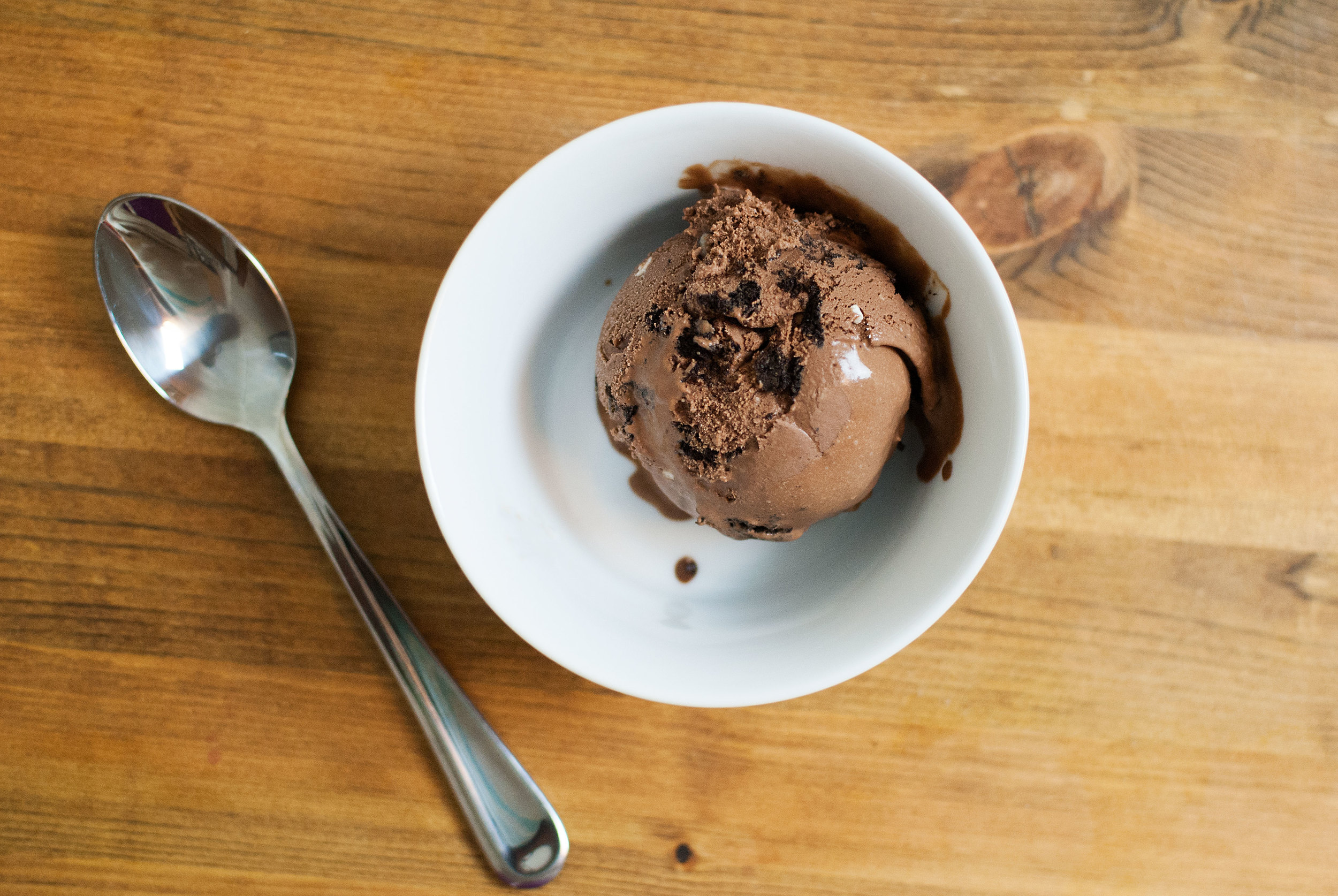
    What transpired was a combination of a rich chocolate ice cream that resembled chocolate mousse—spiked with a little bourbon because we found it raiding the pantry and also why wouldn’t you do that? Then, in it’s last moments of churning, we crammed it full of crumbled Oreos.

    There’s no possible way we can prepare you for how delicious this is. I almost got angry the first time I tasted it because it was so delicious. Angry. Lesson learned from making this ice cream: when you’re deliberating between two things, sometimes the best possible outcome for the choice is, in fact, choosing both. And I have to say, this is the best tasting compromise I’ve ever come across in my life.

    ¿Por qué no los dos?

    Boozy Dark Chocolate Cookies & Cream Ice Cream

    • 1 pint heavy cream
    • 1 cup whole milk
    • ½ cup sugar
    • ¼ tsp. good sea salt
    • 8 oz. good dark chocolate, 60% cacao or higher (we recommend Valrhona or Woodblock)
    • Scant ⅛ tsp. xanthan gum
    • 1½ tbsp. bourbon or rye whiskey
    • 10 Oreo cookies, crumbled (plus more to snack on, because porqué no?)
    In a heavy bottomed 2-quart pan, heat cream, milk, sugar, and salt until simmers and the sugar and salt completely dissolve. Place chocolate into the bowl of a large food processor. Pulse until broken into small chunks, the smaller the better. Add 1 cup of the hot cream-milk mixture while the food processor is running. Blend until chocolate is melted, making a rich ganache.

    In a medium bowl, pour the rest of the cream-milk mixture. Add the ganache to the cream and whisk until fully incorporated. Add the whiskey. Add the xanthan gum, and stir until dissolved. Chill mixture for at least 2 hours before churning.

    In your ice cream machine, churn the mixture for 25–30 minutes or until it thickens enough to stick to the churn or a spoon. Right before you stop churning, slowly add the cookies and churn for about a minute. Quickly transfer to a freezer-safe container. Cover with plastic wrap and the lid, and freeze until desired hardness is achieved. We recommend overnight, but this depends on how cold your freezer is.
    Yields about 1.5 quarts.
  • Chilaquiles


    Everyone seems to have a default breakfast. You know the one. You’re mulling over what to eat in the morning, then you sigh and say “I’ll just make this. Again.” Very frequently, it’s a rag tag assembly of whatever you have on hand in your fridge on a regular basis. It’s a reflection of your cooking habits where your stock characters/ingredients all work together.
    This particular meal (if you really think about it) was probably the result of drinking way too much the night before and not wanting to go to any large lengths to create a fancy meal the following morning. I can imagine the inventor’s thought process going something like this:

    “Lets see. I’ll take some super stale tortillas that I was too drunk to put away last night (they’re still good, right?) and…fuck it, I’ll just fry ’em up with some eggs and salsa. Christ, my head hurts.”

    Pretty sure that’s how it went down.

    In a way, chilaquiles are the Mexican answer to fried rice: an excess of a starchy meal component that is used in an ingenious way to get rid of leftovers. Chilaquiles are a spicy, fresh, and satisfying breakfast situation that bring a huge variety of textures and flavors to one meal. If you haven’t made these before, you better get on it. You just might have a new favorite default breakfast.

    This recipe is designed to give you freedom to do what this dish does best: get rid of leftovers. All you really need are the things listed in the chilaquiles section, but adding a garnish or three and a couple add-ins can transform a good bowl of chilaquiles into a great one. We certainly have our preferences, and we can make this breakfast in our sleep, which is a helpful skill if you’re waiting (in vain) for your coffee to brew.

    Chilaquiles

    • 10 corn tortillas, left out overnight to become stale, cut into eighths
    • Oil for frying
    • 2 eggs, beaten
    • ½ + ¼ cup salsa, divided
      Note: Use any salsa you like: red or green. The idea is to use up whatever you have lying around. If we were to give you a recommendation, however, we would tell you to use our recipe for morita salsa. It turns out very 👌👌.

    Garnish

    • More salsa
    • Cilantro, chopped
    • Queso fresco, crumbled
    • Crema
    • Lime slices
    • Fresh avocado, sliced

    Optional add-ins

    • 4 oz. chorizo, veggie sausage, protein of choice
    • ¼ of a medium onion, chopped
    • ½ of a small zucchini, sliced
    • ½ cup roasted corn

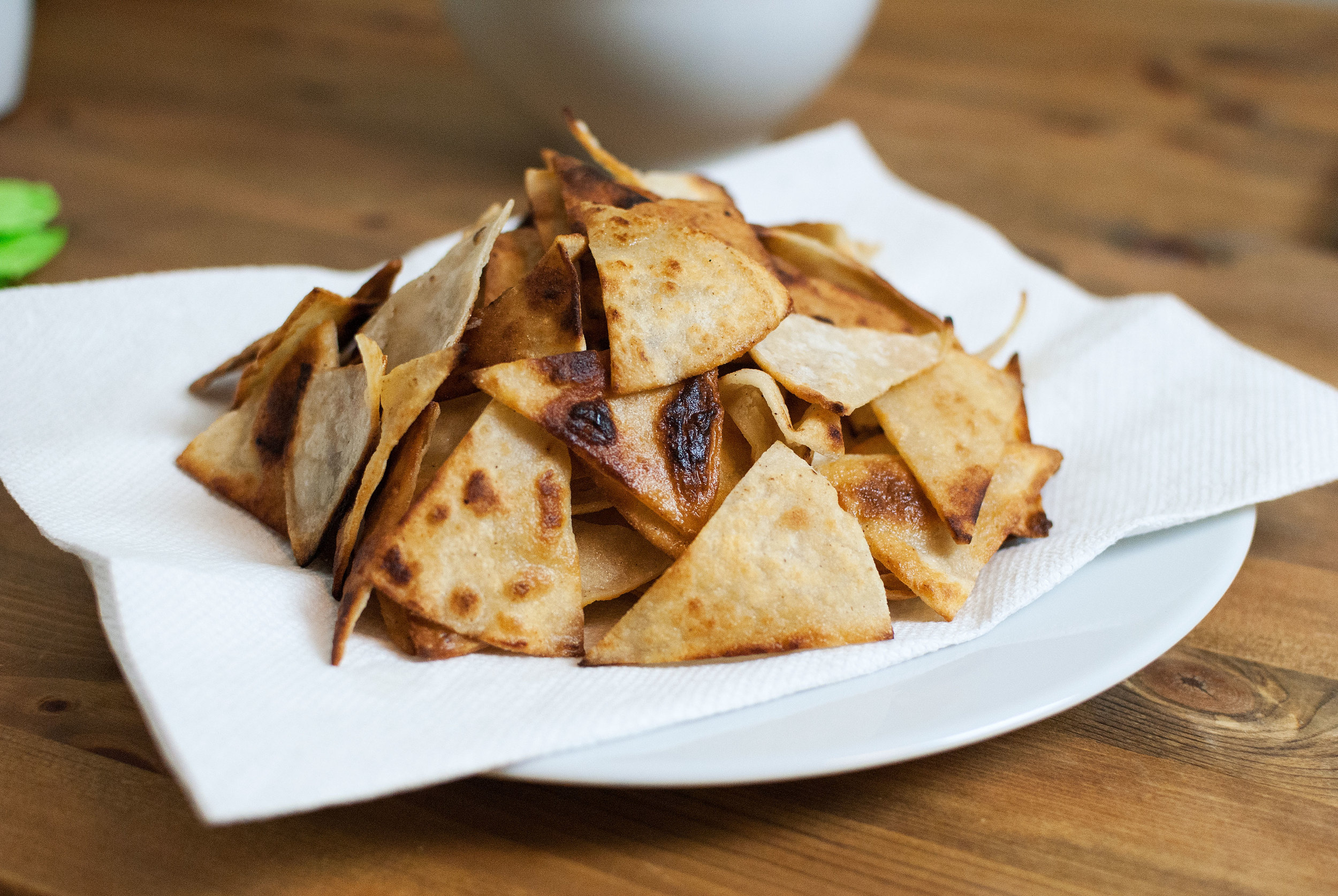
    In a deep skillet, heat a generous amount of oil on medium high and fry the chips in several batches until they are crispy and golden. Allow them to cool slightly drain excess oil on a plate with a paper towel. Set aside. Remove almost all leftover oil from the skillet if a lot remains.


    Chilaquiles-01.jpg

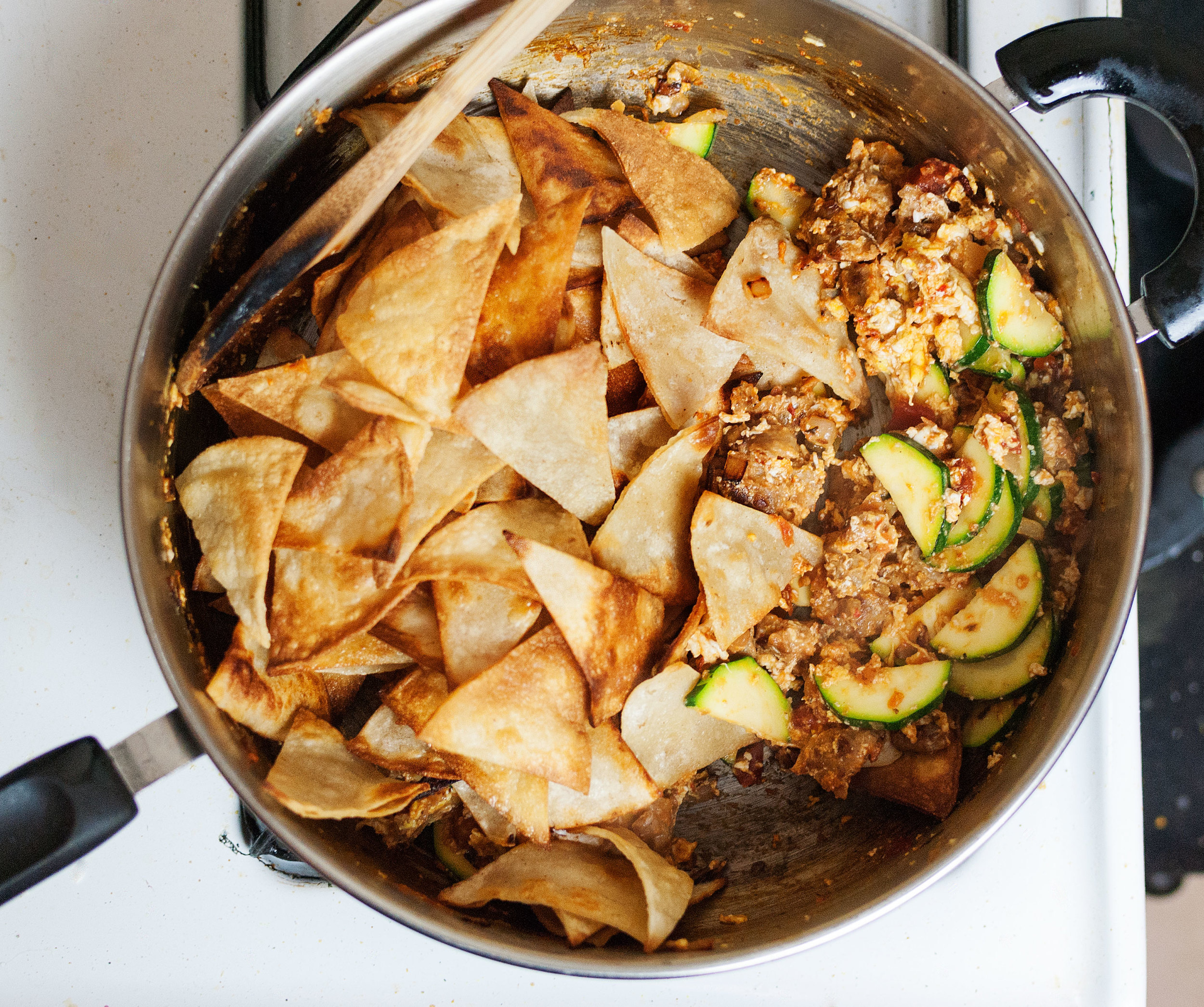
    Heat the same skillet on medium heat and cook your desired add-ins at this time. When they are done, add in the eggs and cook quickly, like scrambled eggs. When the eggs are almost done, add the ½ cup of salsa and stir until all of it is evenly incorporated. Add the chips and stir well. Add the remaining ¼ cup of salsa and stir well.


    Chilaquiles-02.jpg

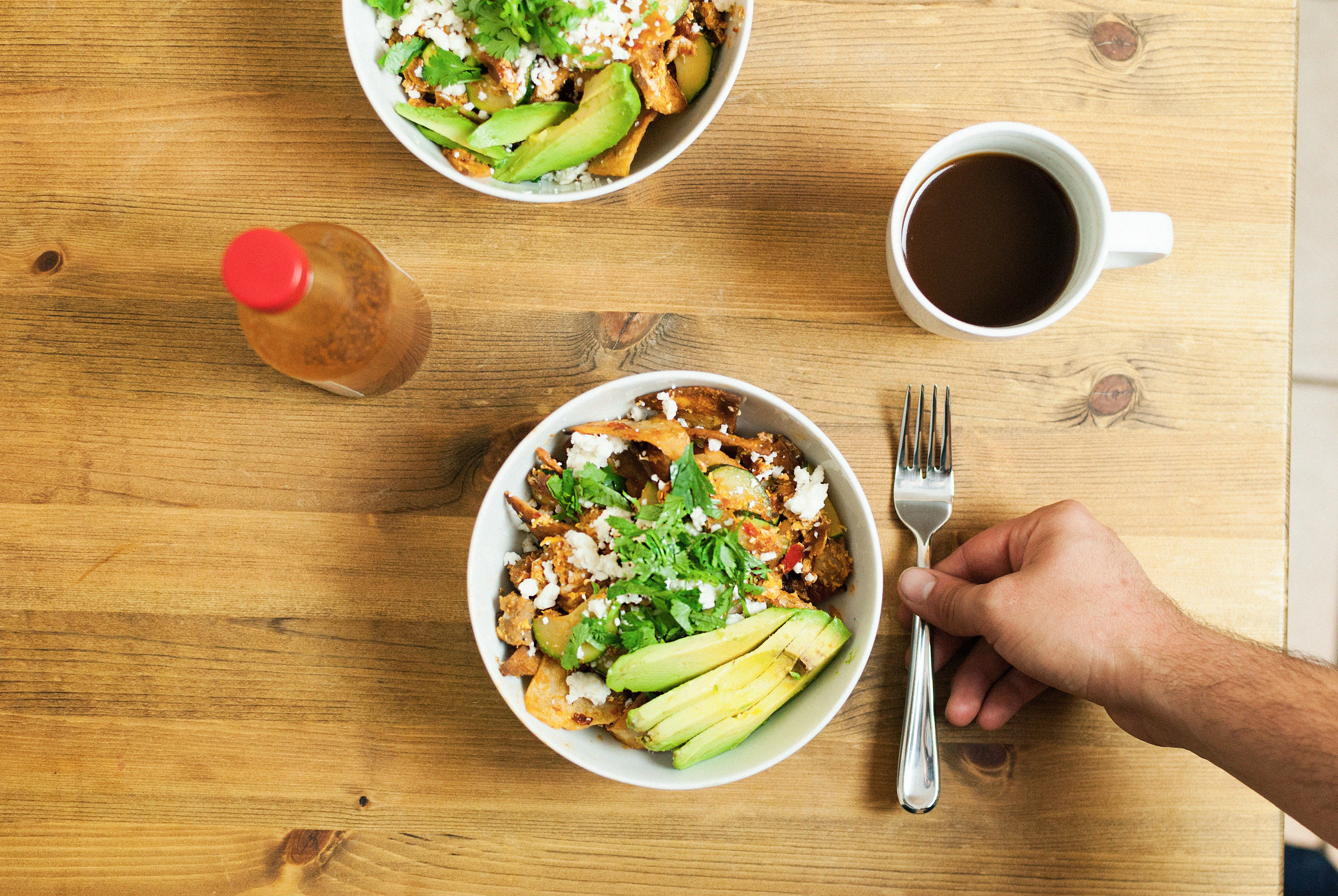
    Serve immediately with a few garnishes, and tuck in.


    Chilaquiles-03.jpg

    Serves 2.

  • Leek Powder Pierogis


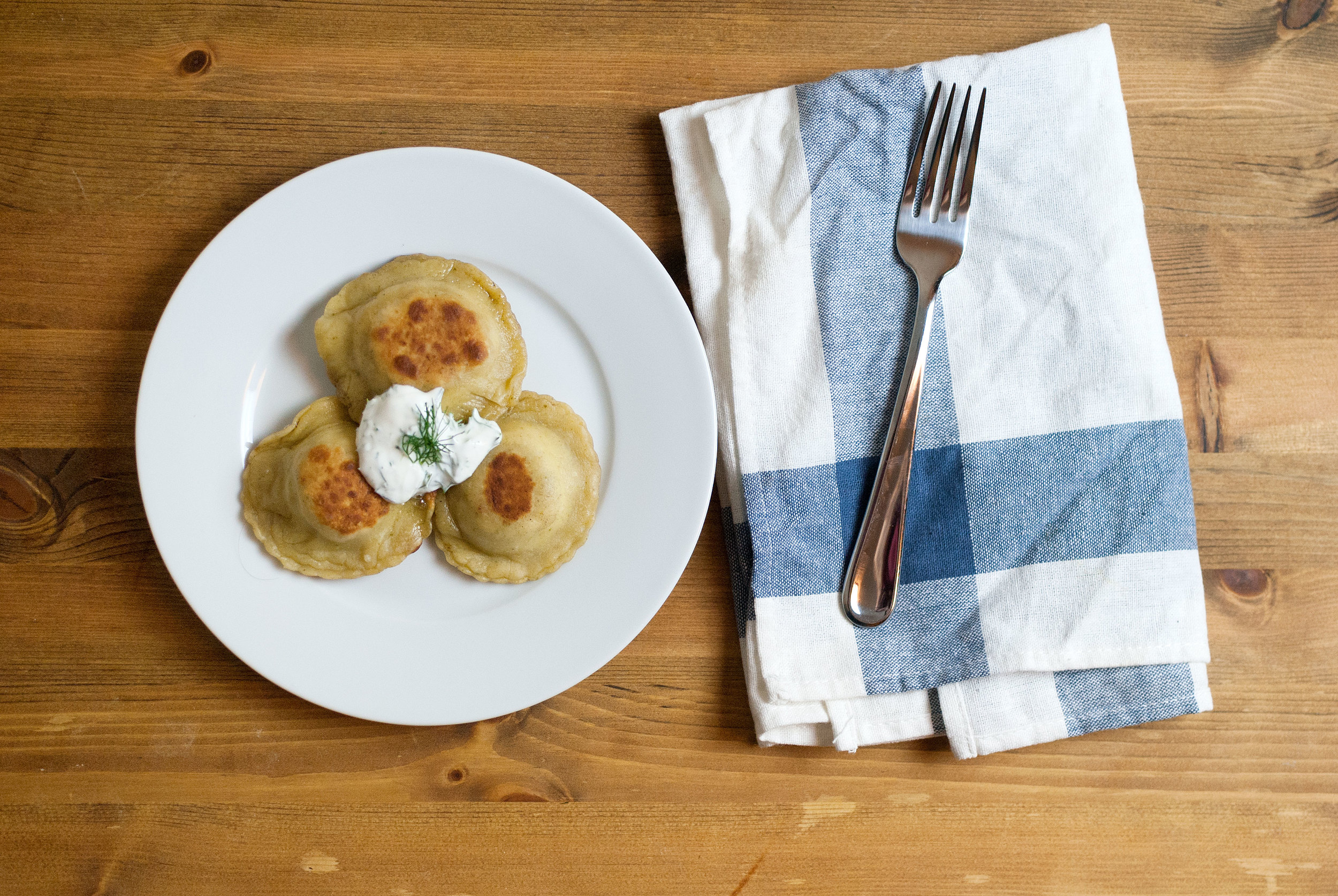
    Leek-Powder-Pierogi-5.jpg

    We are very often products of our upbringing. This recipe is a really fun blend of my mother’s culinary curiosity and my father’s Polish ancestry.
    Leek powder was borne out of my mother getting sick of throwing out leek greens, so she found a way to use them and even make them keep for a long time. Gastronomically she was gifted with preserving things, and she was willing to give anything a chance. Anything.

    My father loves feeling connected to his Polish roots, and one of the main ways that he returns to them is through food. It’s the little things like sauerkraut, a well-made kielbasa, or the richness of sour cream that take him back.

    Naturally, I inherited both of these compulsions, so here we are. Pierogis are just about the most Polish thing I can think of, and I love the crap out of them. Crispy and cheesy potato dumplings. What’s not to like? To bring this to another level, I decided to try adding a little bit of my mother’s evil genius influence. The leek powder gives the dough a fun color and a wonderful herb-like flavor that’s perfect for its potato counterpart.

    Leek powder pierogi dough

    • 2½ cups (300 g) all-purpose flour, plus more as needed
    • ½ cup lukewarm water
    • 1 egg, room temperature
    • 2 tbsp. sour cream
    • 1 tsp. salt
    • 1 tbsp. leek powder

    Potato filling

    • 2 cups mashed red potatoes (about 1 lb raw potatoes)
    • 2 tbsp chives, chopped
    • 1 tsp. salt
    • 2 oz. cheddar, shredded
    • 1 tbsp. butter
    • ½ tsp. fresh ground pepper

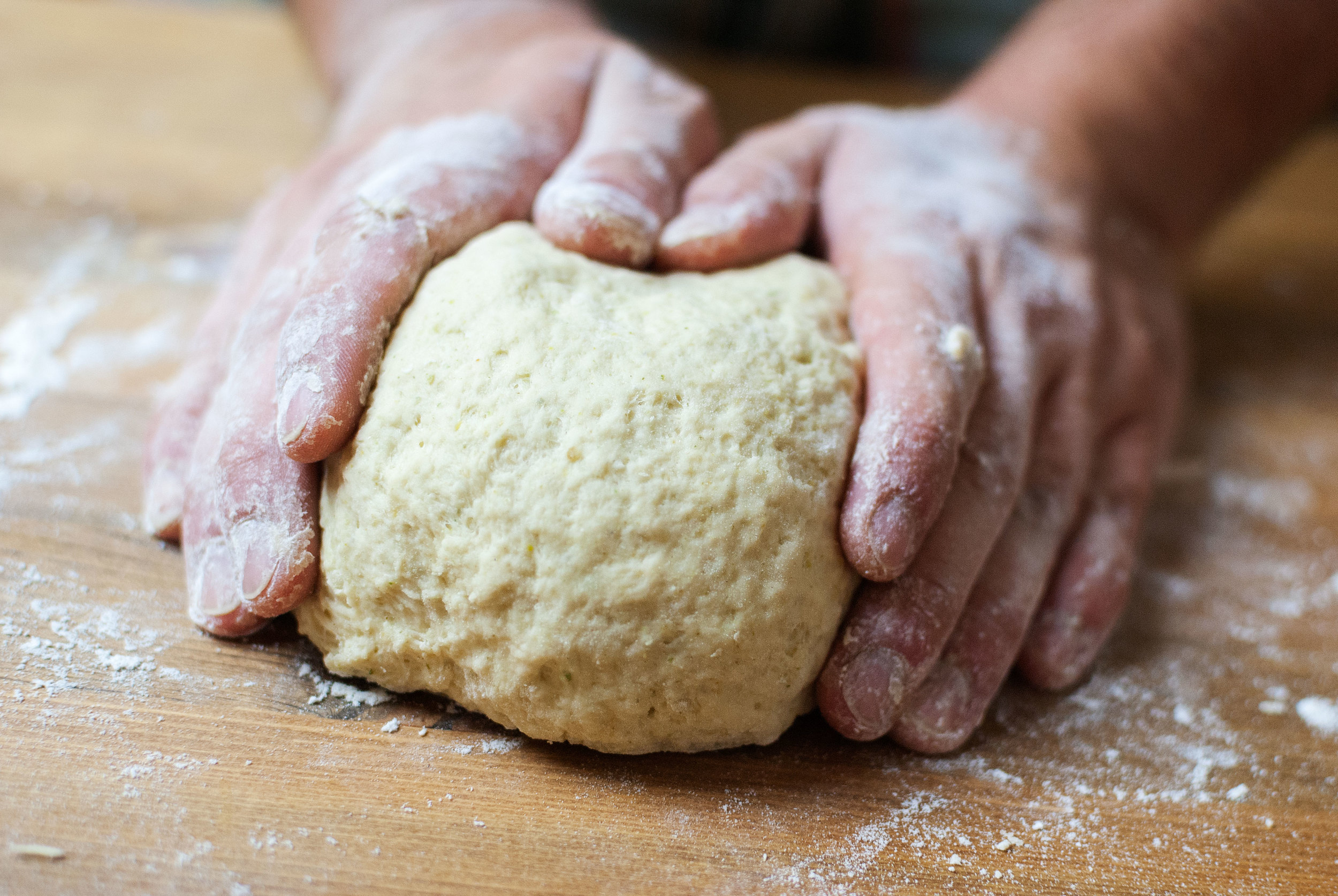
    Knead all the ingredients for the pierogi dough together until combined. The dough should be only slightly sticky, so add more flour as needed. Refrigerate for 30 minutes to let the leek flavor infuse and the flour bind to the moisture.

    While the dough rests, boil quartered potatoes until soft. Strain and mash, adding cheese, butter, salt, and pepper. Mix until fully incorporated. Allow the mixture to cool slightly before adding the chives; they shouldn’t cook.

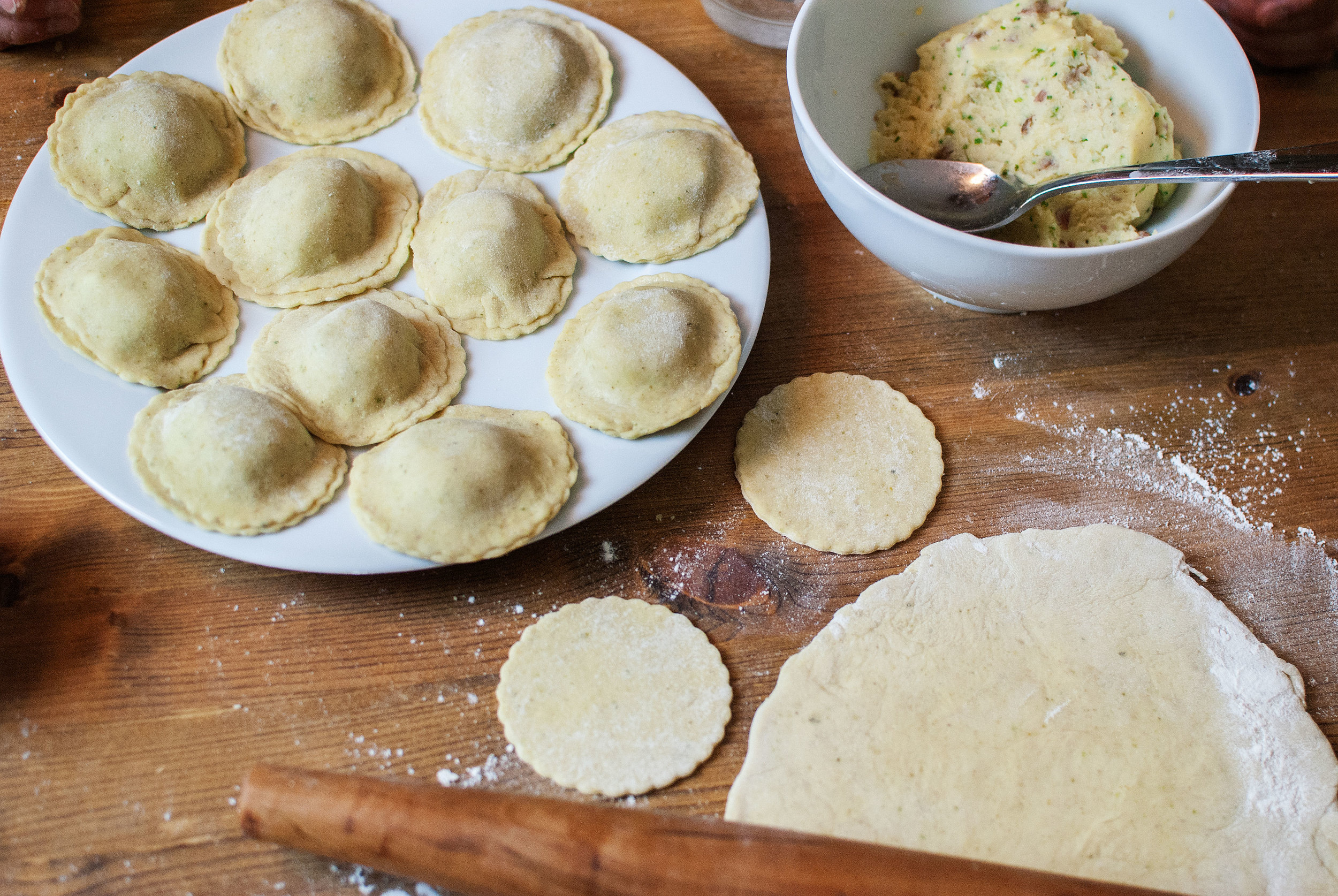
    Roll out the dough to about ⅛” (thinner is okay) and use a cookie or biscuit cutter to cut out the dough. Use two pieces of dough per pierogi, spooning about ½ tbsp. (think half a ping pong ball) of potatoes on one. Wet your fingers and dab it around the edges, sealing it.

    Heat a skillet with 1/2 tbsp. butter over medium heat. Cook until golden brown on both sides. Serve with sour cream, applesauce, fresh dill, or caramelized onions.

    Makes 24 pierogis.

  • Leek Powder


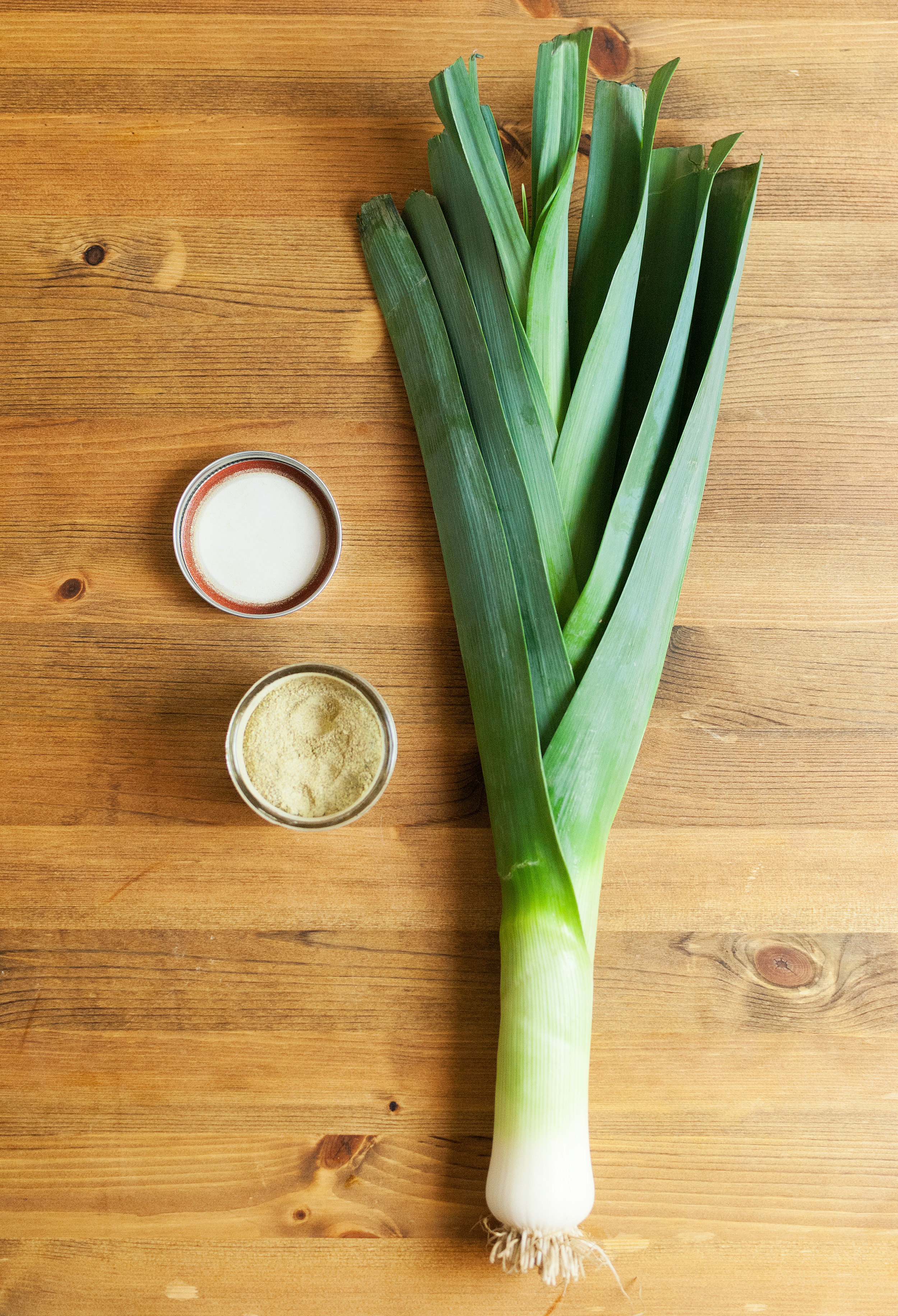
    Leek-Powder-Pierogi-1.jpg

    As odd as this may seem, this recipe is actually quite personal for me. My mother taught me how to make this. My mother was a very strange woman. She would pick wild mushrooms and bring them into the house to examine what colors they might make if you turned them into dyes, sometimes leaving them on paper to create intricate designs with their spores. She was a master preserver, confident in her ability to can or process anything. Her library of mason jars would line the walls of my childhood home, holding the little secrets of her fearless flavor experiments and prized recipes. She could eliminate the daunting space between a stranger and a friend in a matter of seconds. I learned the majority of what I know about food from her. She taught me how to see that everything is connected, no matter how obscure the link may be at first. If you can maintain your sense of wonder in this world, you can always find a way to make something into something else; something you need, something you want. She taught me that humble things are beautiful, and if treated correctly, they can be turned into something even more beautiful; something you love.

    I miss her so much.

    Leek Powder:

    • 2 whole leeks, roots removed, cleaned

    Preheat oven to 170.

    Cut the leeks into smaller segments (including the greens) then place them in the food processor. Blend until they resemble finely minced onions. If you don’t have a food processor, just do this by hand with a sharp knife. Be careful since the greens are fibrous and might be hard to cut.

    On a baking sheet with parchment paper, spread the minced leeks as thinly and evenly as you can. Place them in the oven and allow them to “bake” for about 6 hours, or until all the moisture in them is gone. They should be light and crispy, like dead autumn leaves.

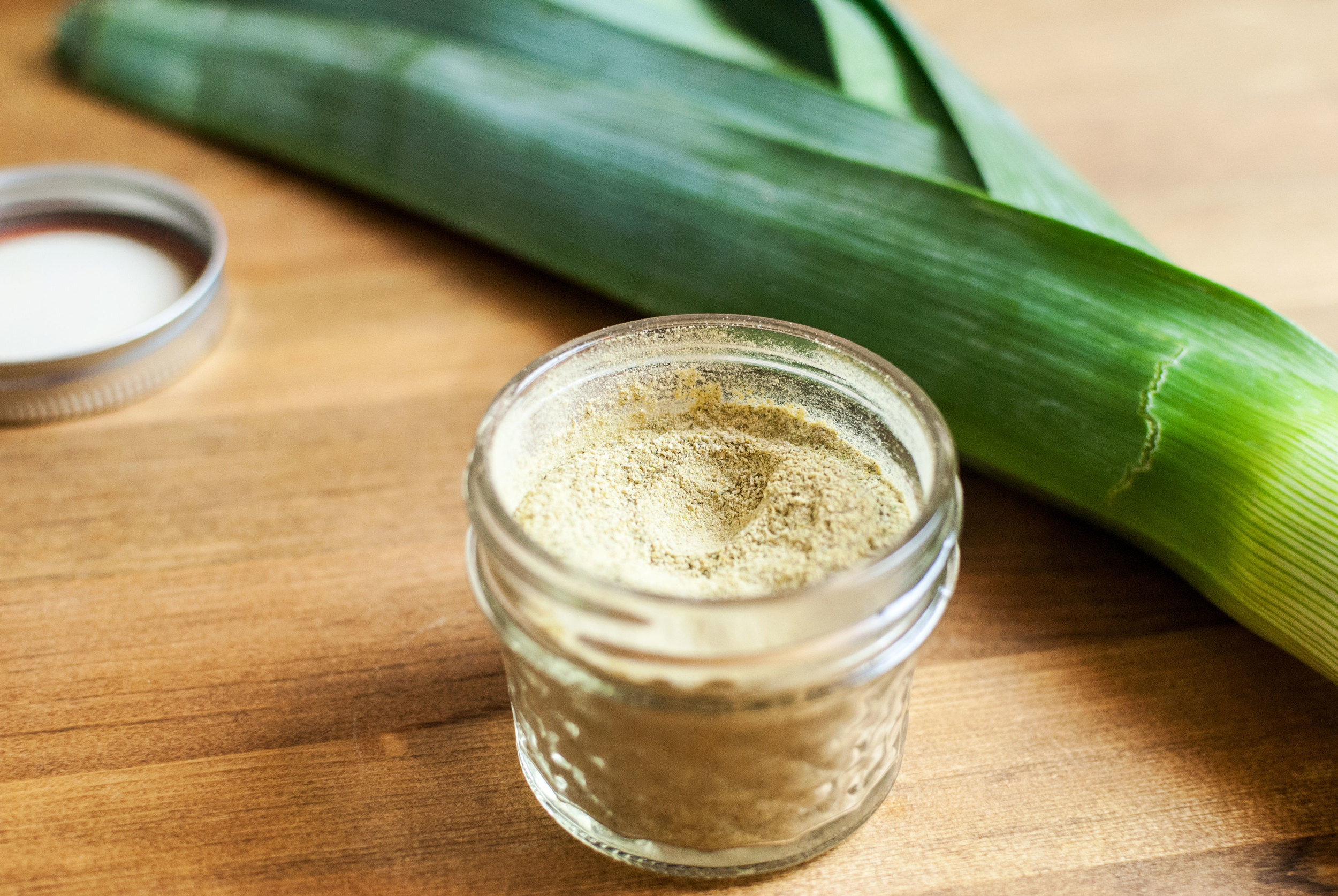
    Place the dehydrated leeks in a coffee grinder and grind until it becomes a fine powder. Store in an airtight container. Keeps for months.

    Yields about ½ cup of leek powder.

  • Peanut Butter and Jelly French Toast


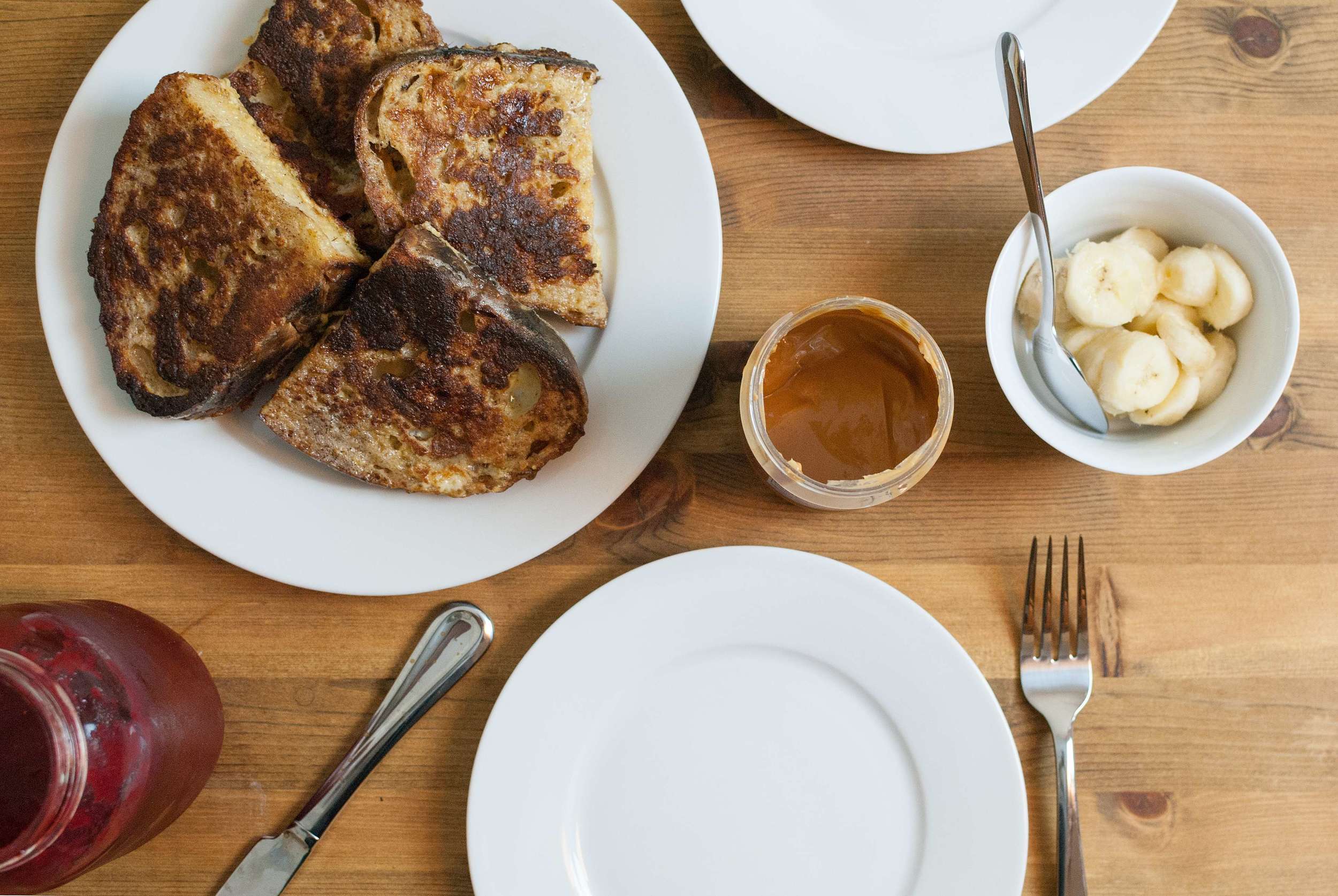
    As we play our way through Dragon Age Inquisition for the first time, I have to say that it puts us in a rather aggressive mindset. We feel the urge to go forth and conquer things and conform them to our ideologies for the sake of the “greater good.” We have applied such schools of thought to our cooking recently, and one of the things that we have “conquered” as of late has been something notorious for its (way too) sweet reputation: French toast. Usually covered in butter corn syrup (sweet), dusted in powdered sugar (sweeter), and often soaked in eggs saturated in sugar and cinnamon (just eat a Pillsbury cinnamon roll, for goodness sake), French toast hasn’t been something that we seek out. But one day, Nate made some incredible homemade bread and we had to use it up. We made a few tasty favorites with it, but still had some left. So, we decided to go outside our comfort zone and venture into enemy territory (sorry, sweet tooths [teeth?])…

    We decided to make French toast.

    After some research we decided to base our recipe on something we found in the vast archives of the Martha Stewart empire, but suppress most of the sugary influences (of course). That left us with the conundrum of toppings. We had maple syrup and powdered sugar on hand (we swear we don’t know how it got there), but we just couldn’t bring ourselves to use them. We knew we would be disappointed. In search of a solution, we got creative. We always have an overstock of peanut butter in the pantry, and having just returned from Sauvie Island, we had plenty of strawberry jam to use. And then we had a thought: What if we took a classic and made it better?

    What you see before you is how we will eat French toast for the rest of our lives. Salty peanut butter and seasonal jam on top of perfect french toast that is crisp on the outside, and almost like cake on the inside.

    • 2 eggs
    • ¼ cup half and half
    • ½ teaspoon vanilla extract
    • pinch salt
    • pinch ground cinnamon
    • 2 1-inch slices artisan bread (day old preferable)
    • Oil or butter for cooking
    • Peanut butter
    • Any seasonal jam/preserves/jelly/marmalade/etc.
    • Banana, sliced (optional)

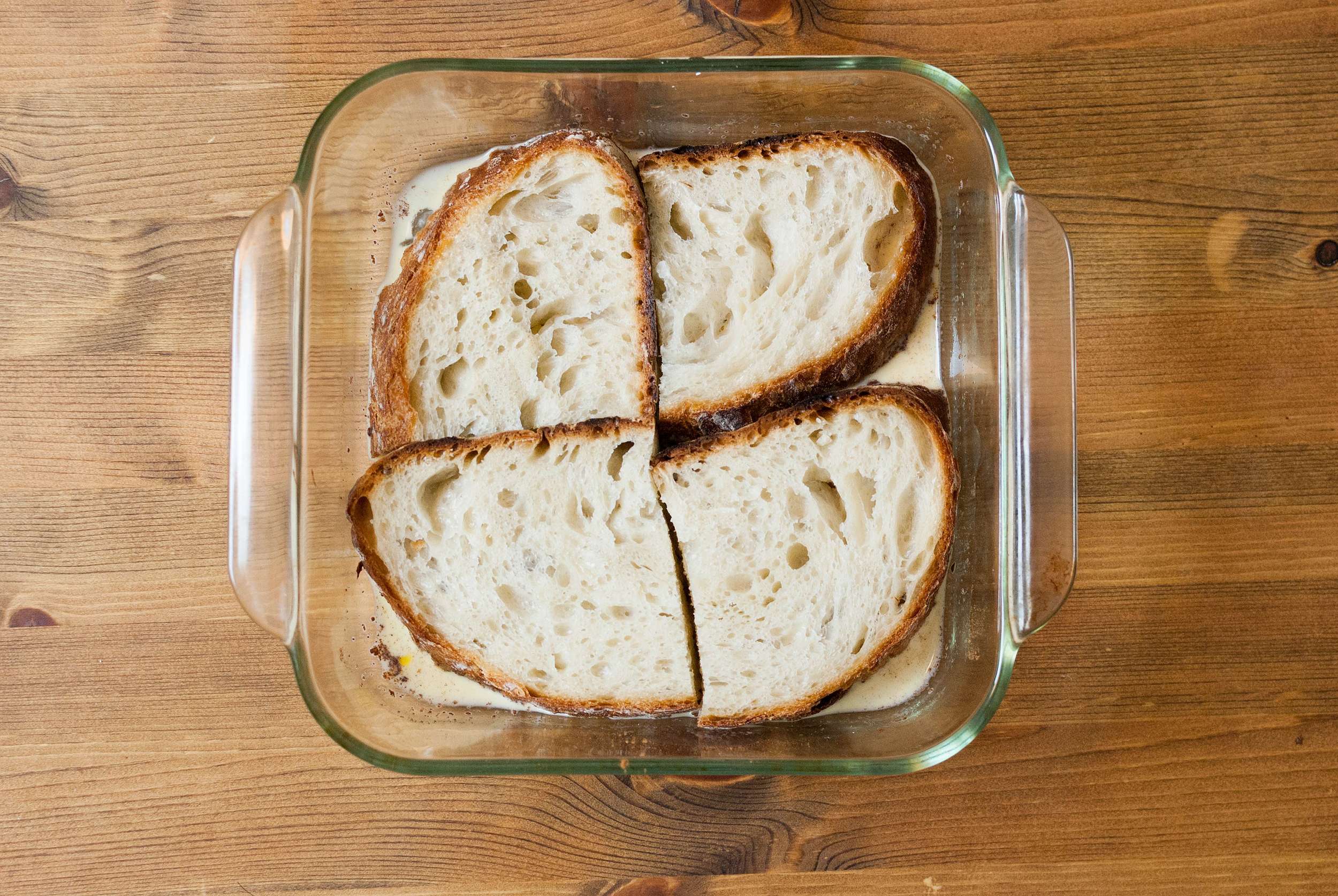
    Whisk together egg, half and half, vanilla, salt, and cinnamon in a baking dish (big enough to hold all your bread). Soak bread in egg mixture for 10 minutes on each side. Heat a skillet and butter over medium low heat and cook each side of the bread for 2–3 minutes, until golden brown.


    peanut-butter-and-jelly-french-toast-01

    If making more than one batch, preheat oven to its lowest setting. Place a wire rack on a baking sheet in the oven. Remove from heat, and put in the oven until all your French toast is ready.

    Serve immediately with peanut butter, jam, or whatever you want on top.

    Serves 2.

  • Strawberry Jam


    strawberry-jam_021.jpg

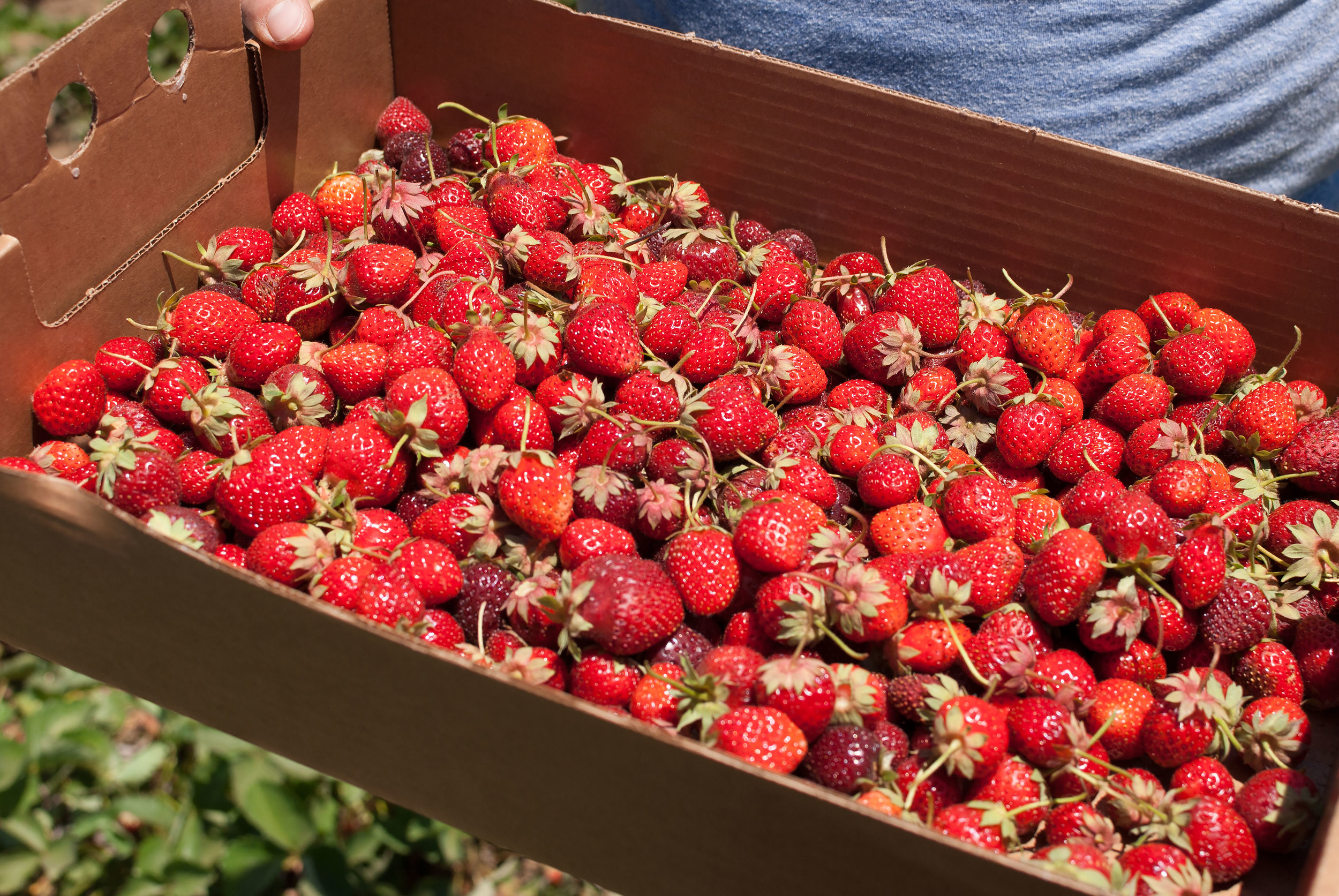
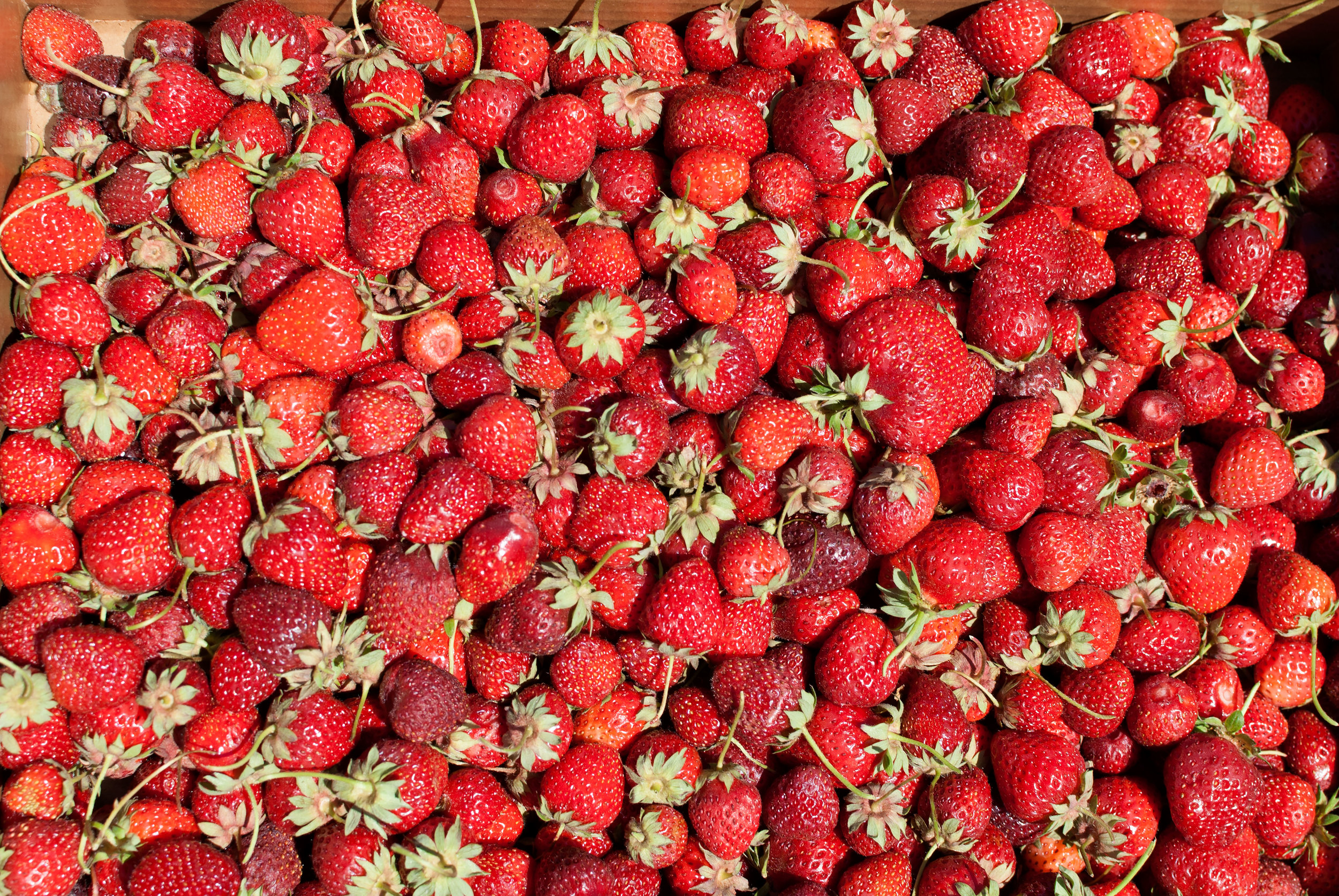
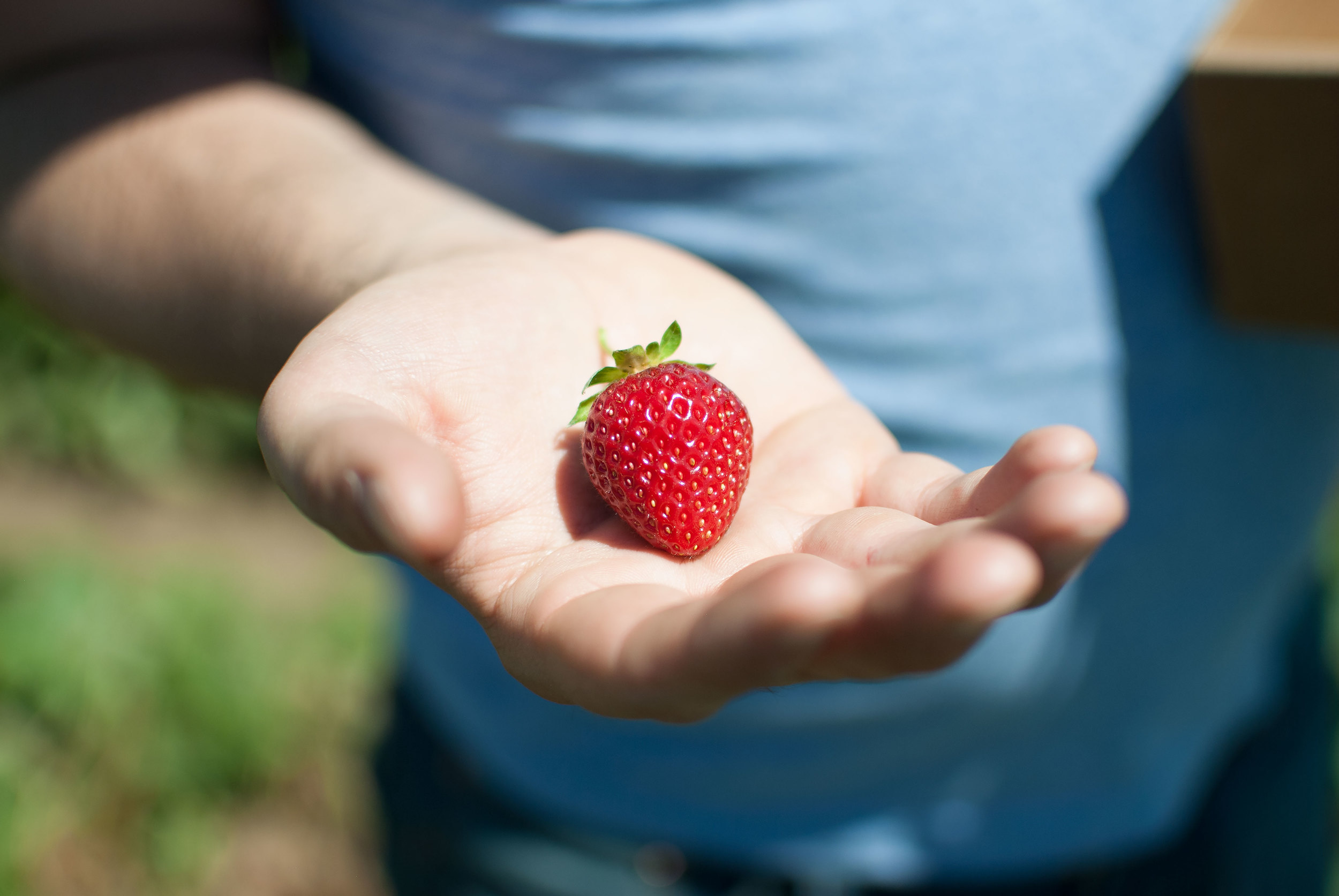
    When we bought the strawberries at the farmer’s market for our strawberry caprese salad, we had a pint and a half of strawberries left over. They were so ripe they left juice stains on the pint boxes. I said, “How about we make jam?” And Jon agreed. What else are you going to do with that many strawberries? (I will admit I was tempted to split the spoils with Jon and just sit down and eat them. Jam was a much better idea.) We looked online for a recipe, and found this one from Ina Garten. We love Ina, but there was too much sugar and lemon for us, so we went to Sauvie Island, here in Portland, and determined to get more strawberries (and raspberries!). We ended up with around 7½ pounds of strawberries bursting with sweet juice.


    strawberry-jam_03

    strawberry-jam_03


    Jon

    Jon


    Nate

    Nate

    After adapting the jam recipe for our own tastes (like we do), we ended up with our favorite strawberry jam ever. It’s sweet, but not overwhelming. It’s floral and the strawberry flavor is bright, but not cloying. It’s perfect on toast by itself, and it’s even better with a savory element, such as peanut butter or chèvre. We’ll be making this for many summers to come.


    strawberry-jam_05

    strawberry-jam_05

    Strawberry Jam

    • 7 lb (3.2 kg, about 9 pints) ripe strawberries, hulled and halved
    • 5 cups (2.2 lb/1 kg) white sugar
    • zest of 4 lemons
    • juice of 3 lemons

    Cook sugar, lemon juice and zest over low heat stirring constantly until sugar is completely melted, about 10 minutes. Add strawberries and stir until combined. Let simmer on low heat for 20–30 minutes, stirring frequently to prevent scorching. Jam is done when the juice gels when you put it on a cold surface (we used a plate in the freezer for this). Remove from heat. If strawberries are too chunky, use an immersion blender to achieve desired consistency. Use a canning funnel to put in pint jars. If not using immediately, you will need to preserve it. If canning see instructions here. If freezing, put into freezer-safe containers (most wide mouth canning jars will work for this, just leave room at the top to account for expansion), and freeze after cooling completely.

    Yields a little more than 7 pints.

    strawberry-jam_06

    strawberry-jam_06

  • Spiced Banana Bread


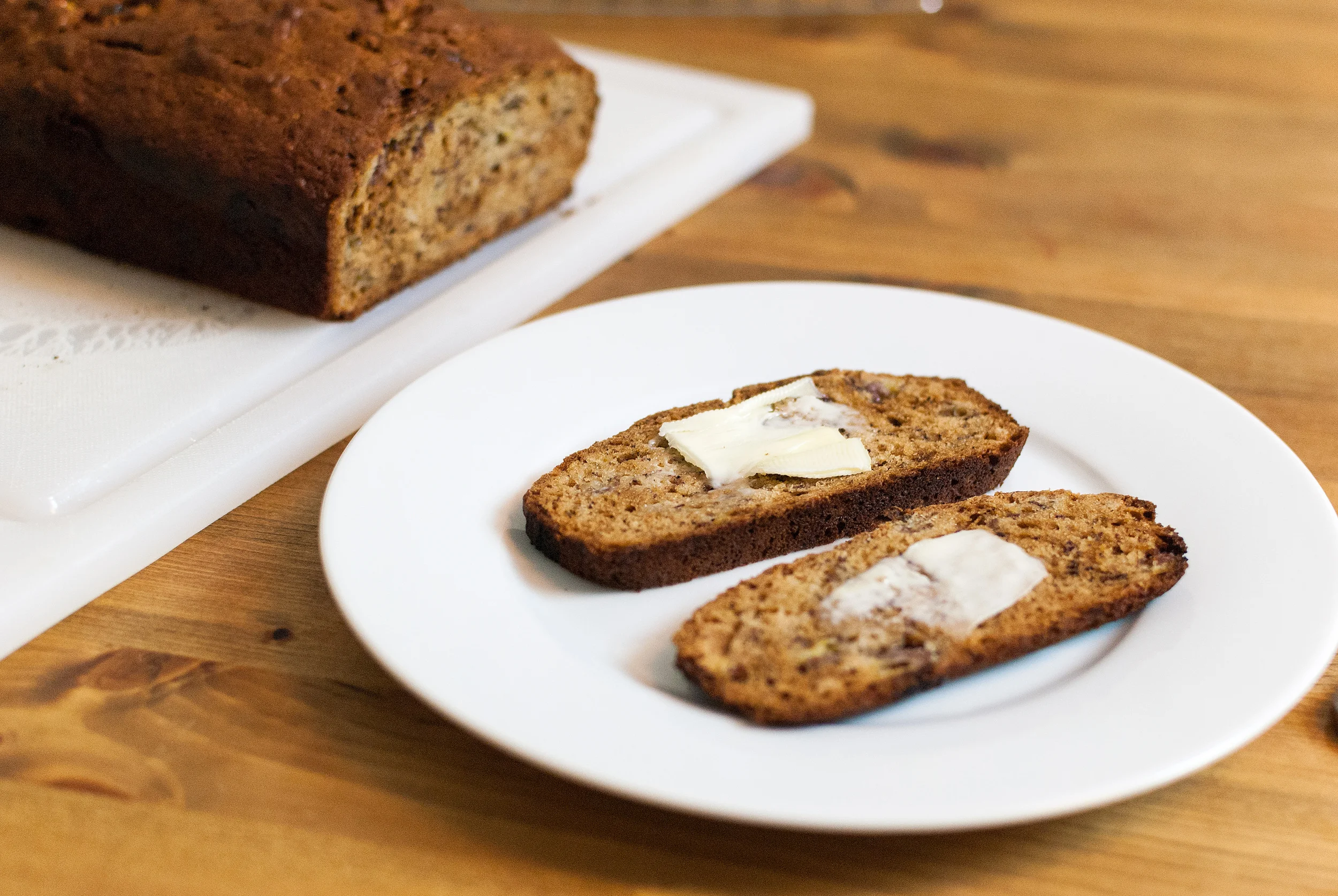
    banana-bread-031.jpg

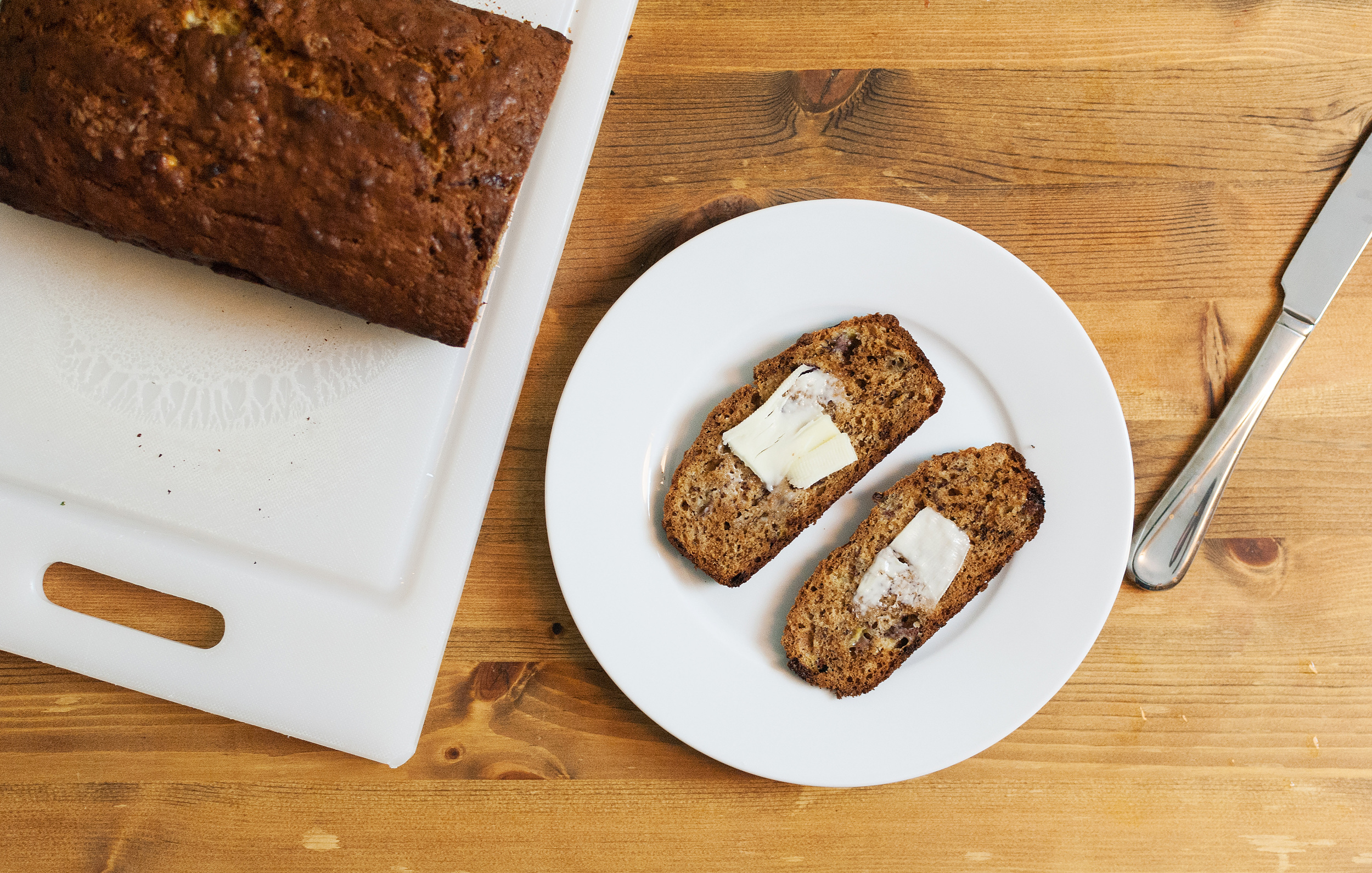
    I spent a long time looking for the perfect banana bread recipe, which, when you think about it, shouldn’t be all that hard. The problem I kept running into was finding all sorts of things in the recipes from buttermilk to sour cream. I prefer to get the moisture in my banana bread from the bananas, since it gives it more banana flavor rather than a milk-based additive.
    What I ended up with was a soft, caky banana bread that’s always a hit at parties or when I take it to work. The thing that varies for me is what spice I use in it. Usually I’ll put in nutmeg or allspice, but sometimes cloves. Honestly it’s usually whatever I see first on the shelf. The key part of great banana bread is bananas so ripe, you think they’re rotten. For this last batch, I let the bananas get so black, they started to ferment. If this makes you uncomfortable, just remember that any alcohol in the bananas will cook off. Because you let them go for so long, make sure to start out with big fruit or use an extra so it’s moist enough.

    I think the best part about this recipe is that it takes a little over an hour from start to finish. It will keep, wrapped in foil, for up to a week.

    • ¼ cup butter, softened
    • ¾ cup granulated sugar
    • 1 large egg
    • 3 extremely ripe bananas, mashed
    • 1 tsp. vanilla extract
    • 2 cups (240 g./8.5 oz.) all-purpose flour
    • 1 tsp. baking soda
    • ½ tsp. salt
    • ½ tsp. ground nutmeg/allspice/cloves

    Preheat oven to 350°F. Lightly oil an 8×4 inch loaf pan. (I use 8×5 pans, but bake for a shorter time.)

    In a medium bowl, cream butter and sugar together until the sugar starts to dissolve. Stir in the egg. Add the bananas and vanilla extract and stir until fully mixed.

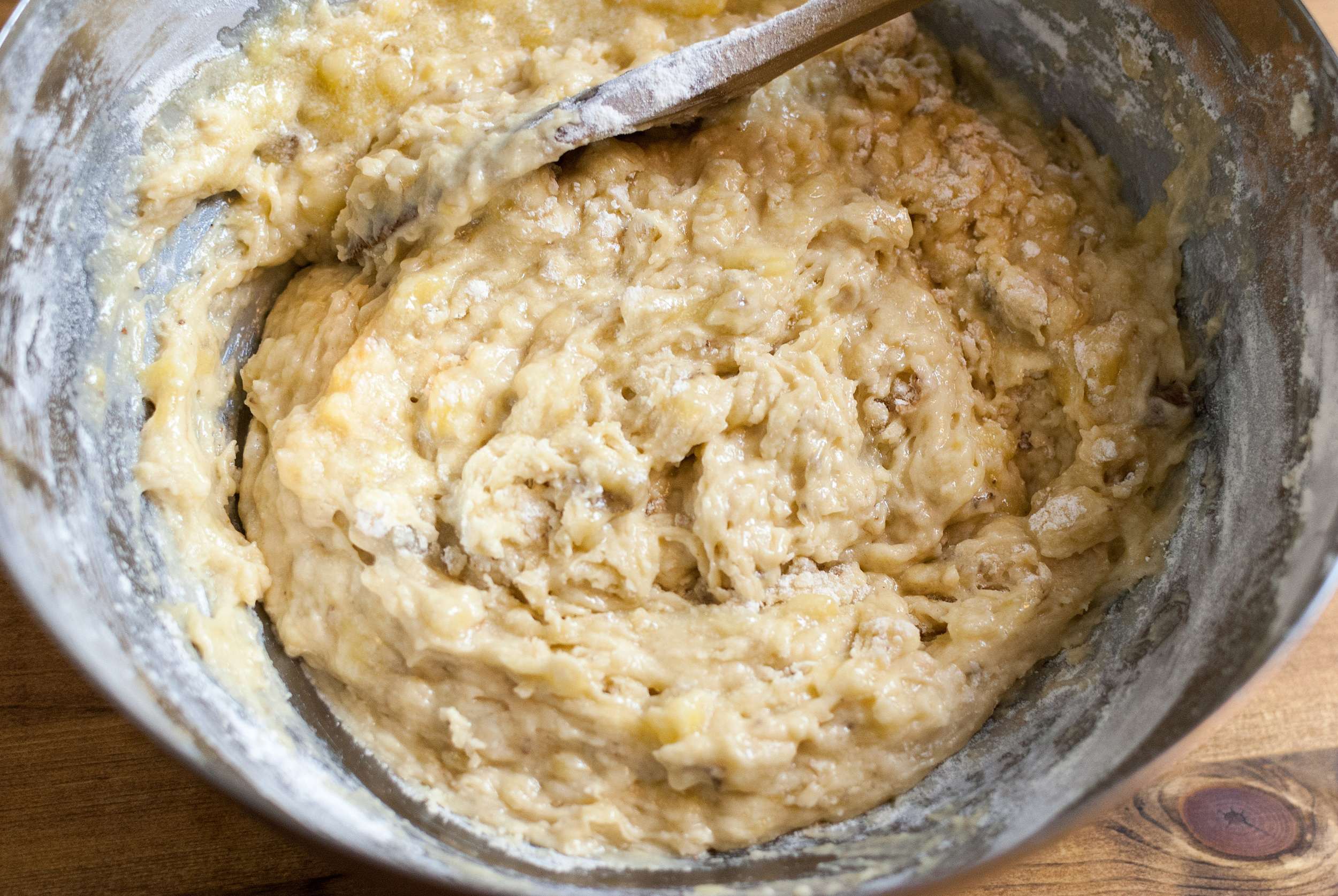
    Sift together flour, baking soda, salt, and spices. Add to the banana mixture and stir gently until just combined. You should still have some bits of undissolved flour.


    banana-bread-01

    banana-bread-01

    Pour into prepared loaf pan and tamp the base of the pan with your hand, or on a flat surface, to get rid of any bubbles. Bake for 50–60 minutes. Check about 40 minutes in. If it’s getting dark too soon, it means your oven is too hot. Bread is done when a toothpick comes out clean.

    Remove from oven and let rest in pan for 10 minutes before removing from the pan. Cool on an wire rack. I’d tell you to cool it completely, but good luck with that.


    banana-bread-02

    banana-bread-02

  • Strawberry Caprese Salad


    strawberry-caprese-salad-011.jpg

    We aren’t entirely sure how to classify this dish…
    Is it a salad?

    Is it a dessert?

    Is it a cheese plate?

    We don’t know. We really don’t. Do we care?

    Nope. No we don’t.

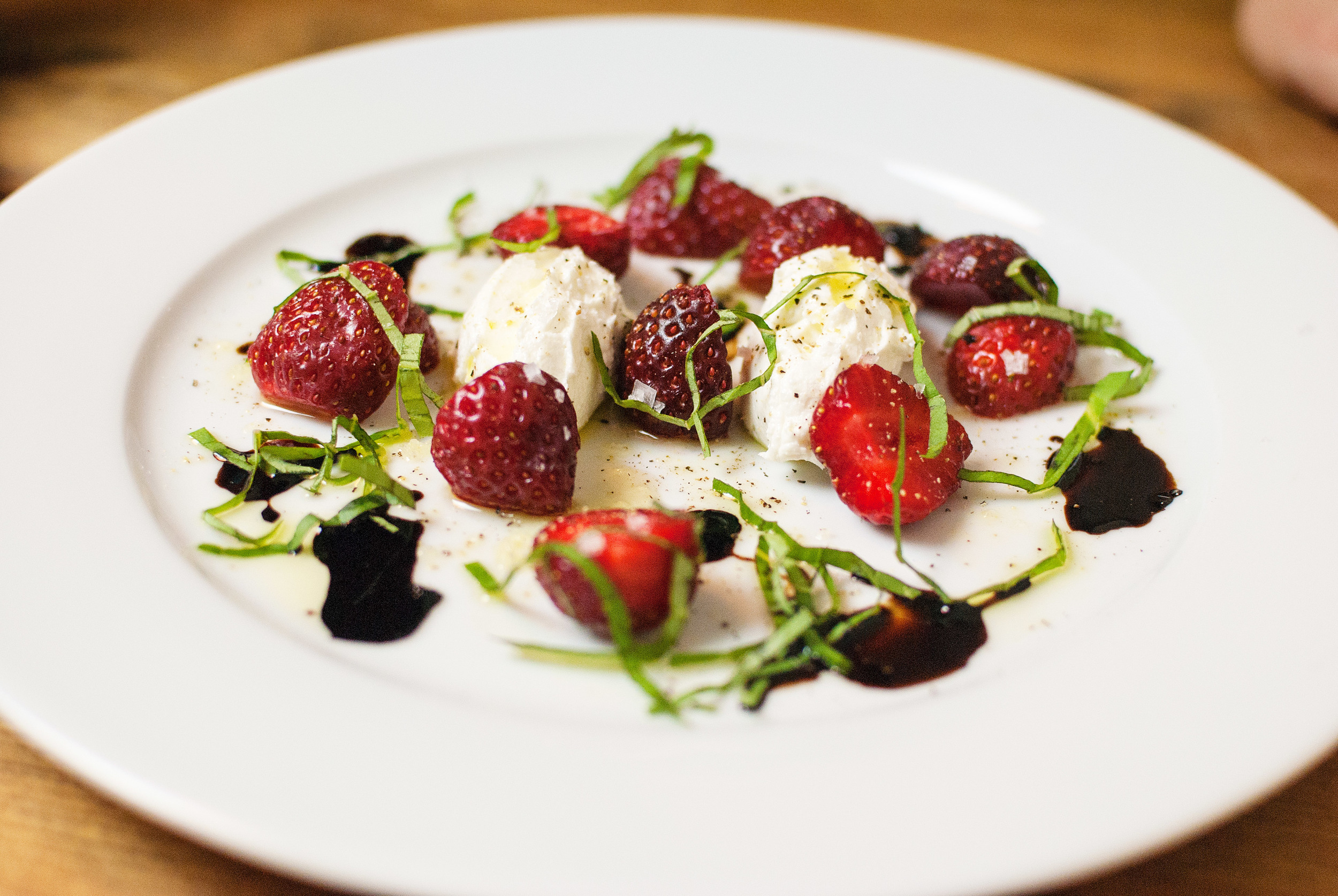
    We tried to come up with something that would feature strawberries since we keep seeing amazingly ripe ones floating around these days. We were getting strawberry envy. So we decided to do something about it. We hauled ourselves to one of the farmers markets in Portland and took home some gorgeous Mt. Hood strawberries, dark as rubies, and ripe enough to stain your fingers with their juice. They were small, sweet, and completely melted in your mouth when we ate one (or four).

    We put our heads together and applied some knowledge we had that suggested strawberries and tomatoes have almost an identical flavor pairing list. So, we decided to cycle through some of our favorite things to eat featuring fresh tomatoes and see if we could plug in fresh strawberries instead. Balsamic vinegar was the key. What we ended up with was this thing.


    strawberry-caprese-salad-011.jpg

    strawberry-caprese-salad-01

    We played with two ideas to make this: one tomato centric, one strawberry. Most of the inspiration came from caprese salad, but we opted to use whipped chèvre instead of fresh mozzarella to mimic strawberries and whipped cream. Complete with good olive oil and a thick but quick balsamic reduction, this thing left us speechless. If you play your cards right, it’s ready in five minutes.

    Now go get yourself some strawberries, damnit.

    • 4–6 achingly ripe strawberries, halved
      Note: We prefer smaller strawberries for this recipe, but if you can only find larger ones, use about 4 and quarter them instead of halving.
    • ¼ cup balsamic vinegar
    • 2 oz chèvre
    • 1 tsp. milk
    • 2–3 basil leaves, chopped
    • good olive oil
    • freshly cracked black pepper
    • sea salt

    In a small bowl, mash the chèvre with a fork until it becomes soft, then add the milk. Whip it as best you can until it resembles fluffy cream cheese. Set aside.

    In a small sauce pan on medium low heat, reduce the balsamic vinegar until it resembles a syrup. Remove from the heat and let it cool slightly. Not too long or it will be slow as molasses. (If it becomes too thick, just pour a splash more balsamic in and it should loosen it up a little bit). Set aside.


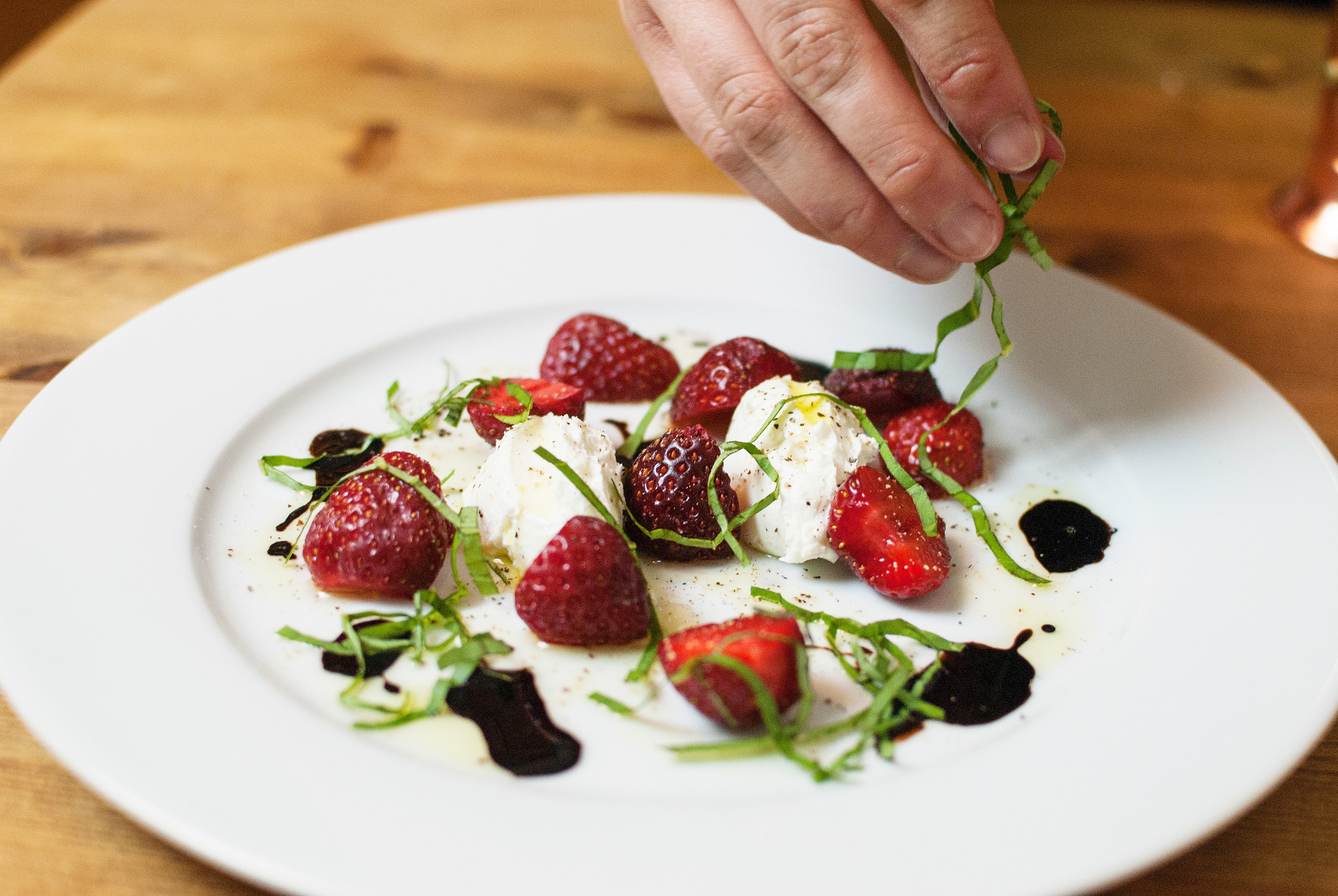
    strawberry-caprese-salad-04

    strawberry-caprese-salad-04

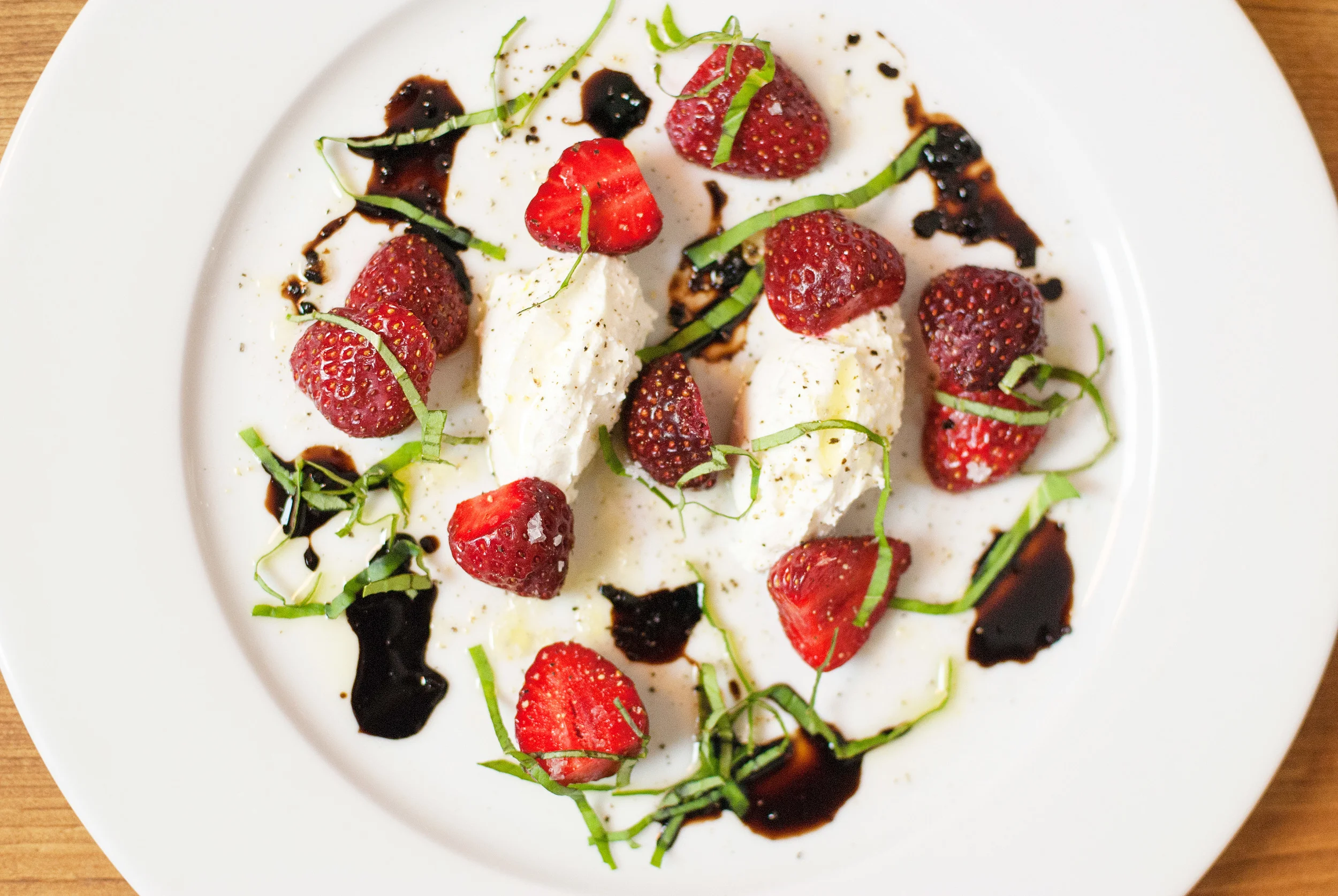
    Plate the chèvre, halved strawberries, and dot the plate with some balsamic reduction. Drizzle the plate with olive oil and finish with the chopped basil leaves, pepper, and sea salt.

    Serves 1–2


    strawberry-caprese-salad-03

    strawberry-caprese-salad-03

  • Mapo Doufu

    If it isn’t obvious yet, serious comfort food for us usually involves something really spicy and filling coupled with a beer. There are going to be a lot of recipes on here that fit that description, and this is one of them.
    I have a lot of memories of this dish growing up since it was one of my dad’s favorite things to make. Naturally it was a recipe that I inherited from him and brought with me when I went to college. I made it all through school, afterward, and eventually, for Nate. Since our tastebuds are eerily similar, he likes it almost as much as I do.

    I would describe mapo doufu as a gravy. A spicy, meaty, savory gravy.  You simmer pork and tofu together with some black bean paste, soy sauce, and a huge amount of garlic, ginger, and chile paste. Feel free to adjust the chile paste levels, but we have to say that the benefits of a nice chile glow are underrated. (more…)

  • Salty Peanut Butter Sundae


    peanut-butter-ice-cream-07.jpg

    WARNING: Do not make this recipe. If you make ice cream and realize how ridiculously easy it is to make, you won’t stop. We certainly haven’t.
    That said, we love us some peanut butter. There was this time where we were eating only low-fat protein and veggies, and on a whim we ate a spoonful of natural peanut butter (salted, of course). The experience, when we hadn’t had a lot of fat for a while, was religious. The complexity of this everyday staple has led us to experiment with different formulations of the legume paste in ice cream.


    peanut-butter-ice-cream-03

    peanut-butter-ice-cream-03

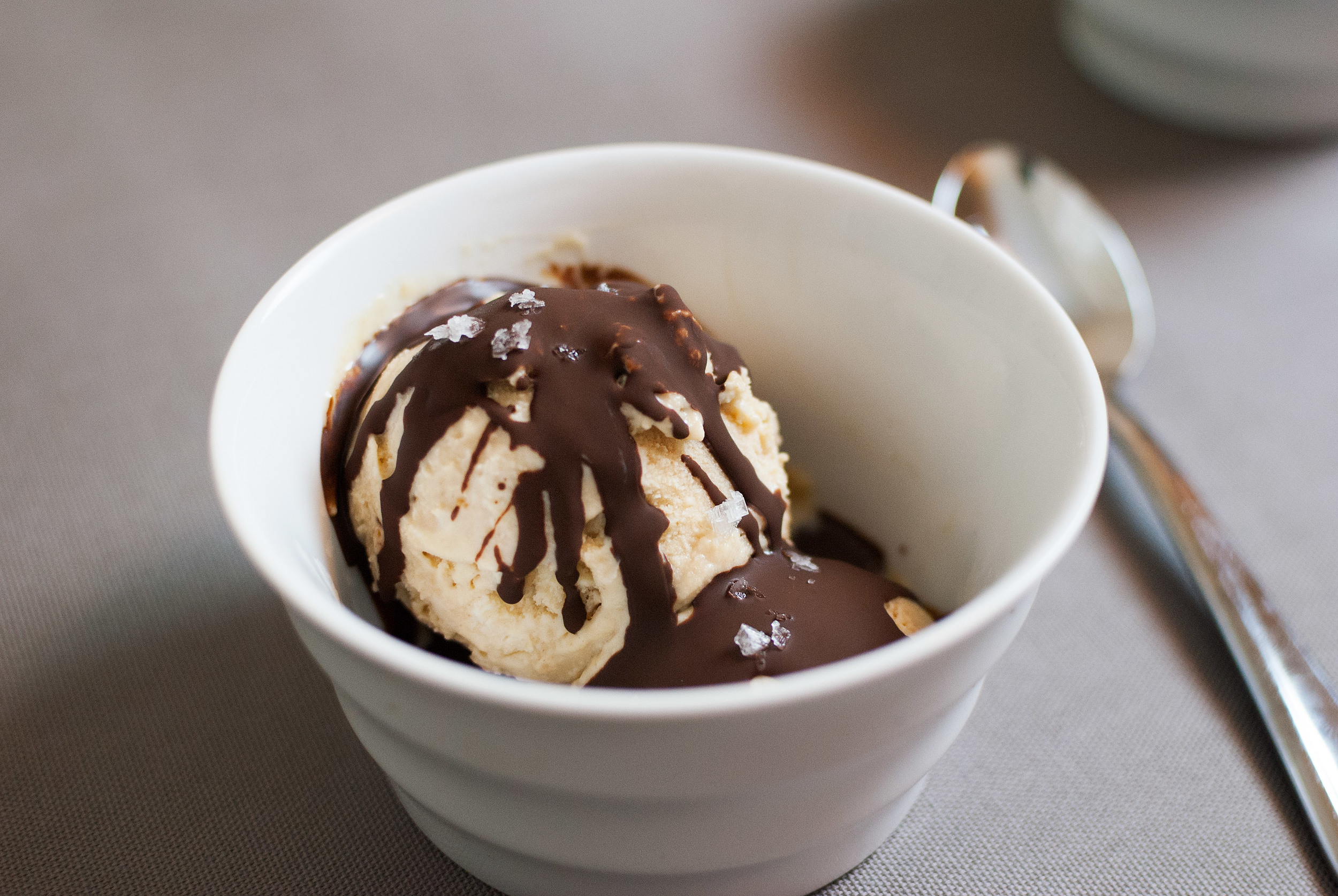
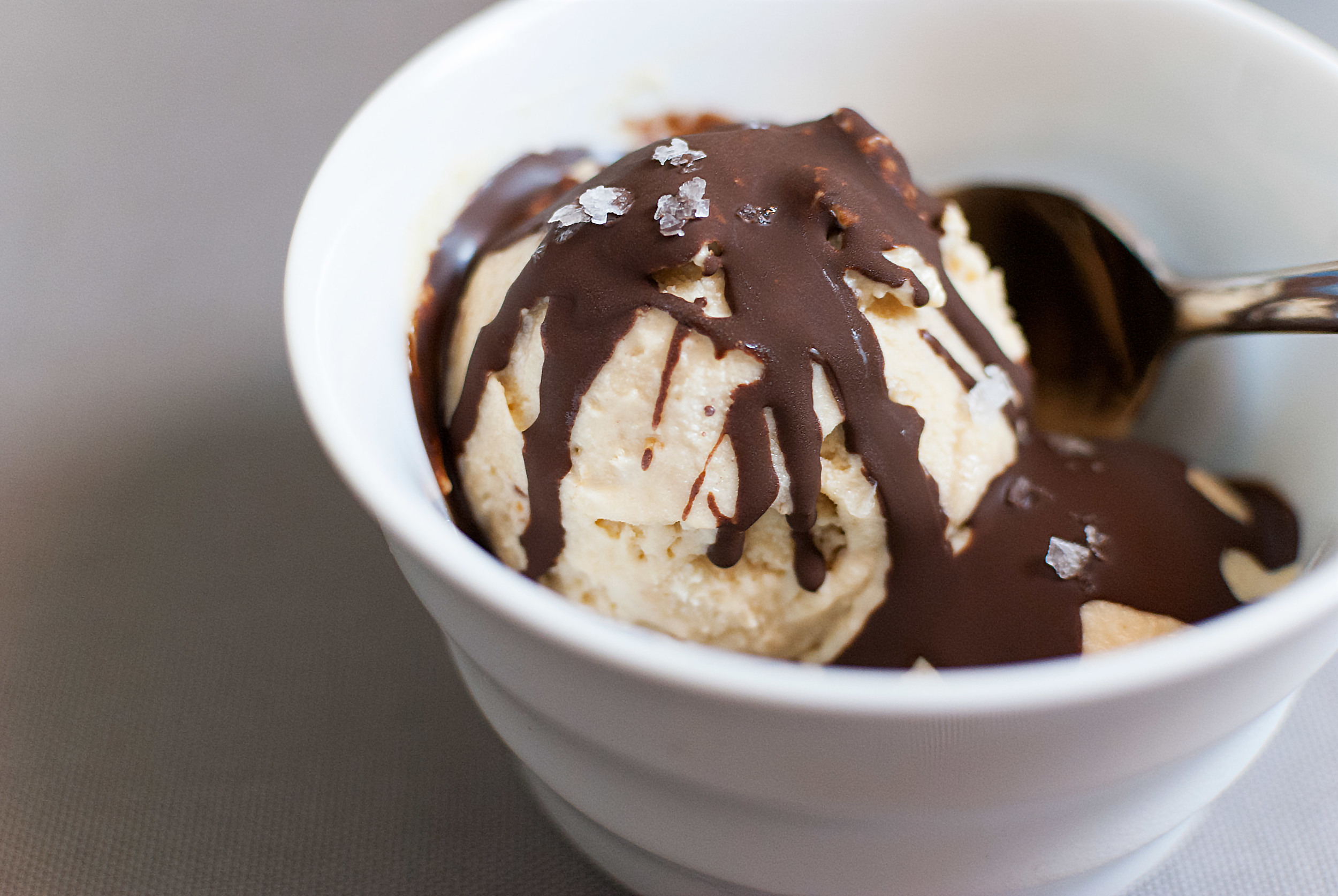
    Eventually, we settled on a less-sweet version of the ice cream, preferring the sweetness to come from the add-ins. The added twist of extra salt gives it that extra savory oomph to sate our salty-tooth tastes. This version has Heath toffee chunks swirled in (we found these next to the chocolate chips), though we have experimented with chocolate bits and peanut butter cup pieces, both of which are delicious. And to make it all the more us, we covered it in a crispy dark chocolate shell that adds a distinct bitterness to this rich and creamy dessert.

    • 2 cups whipping cream (not heavy)
    • 1¼ cups milk
    • ½ cup granulated sugar
    • 1 heaping cup peanut butter
    • 2 tsp. good quality vanilla extract
    • 1 heaping teaspoon good sea salt
    • ½ cup Heath bits o’ brickle toffee pieces

    Dark chocolate shell

    • 2.5 oz. dark chocolate chips
    • ¼ cup coconut oil

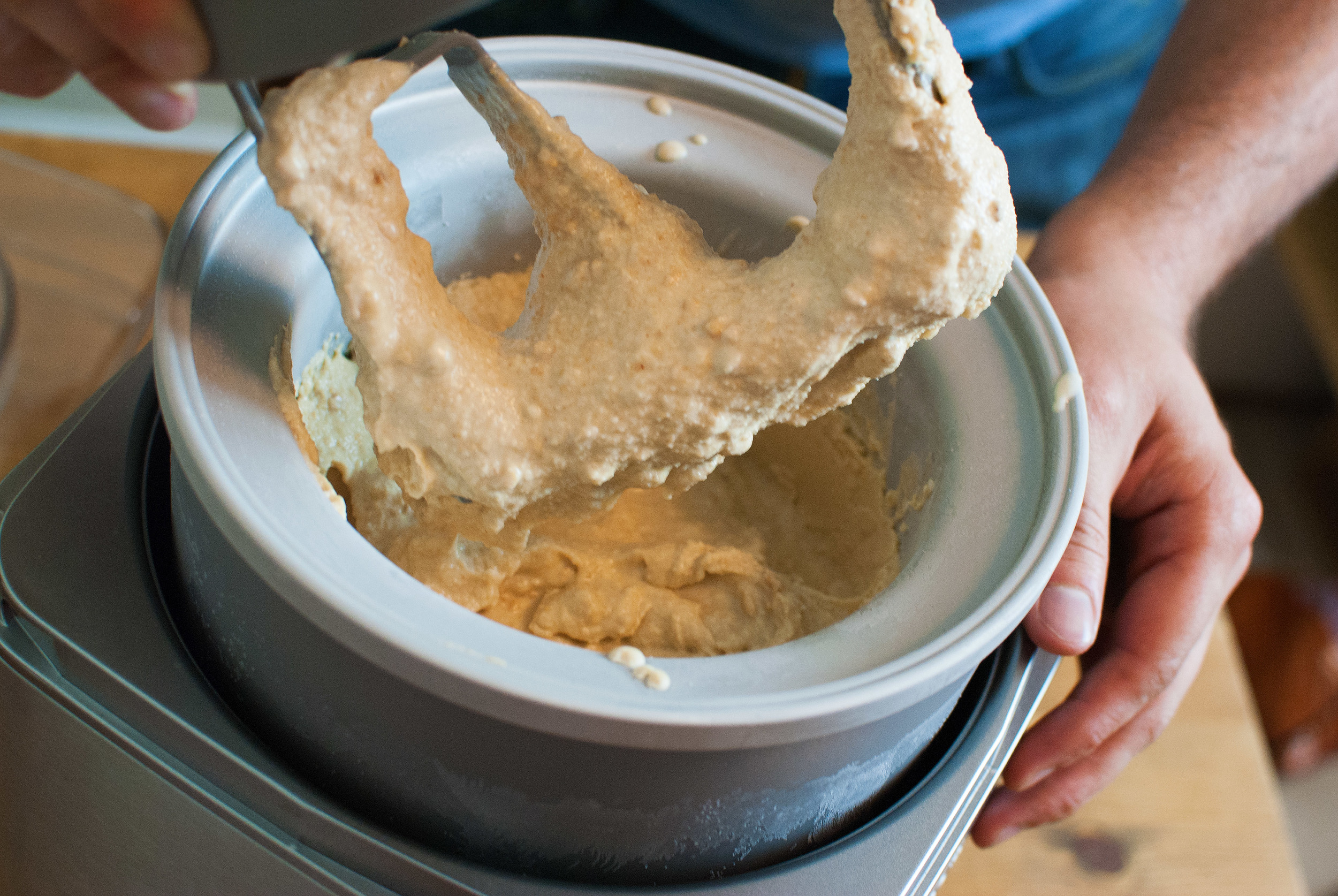
    In a medium bowl, whisk together peanut butter and sugar until sugar is completely dissolved, about 1–2 minutes. Add cream and vanilla extract and stir until mixed. Add milk and salt, and continue stirring until it is completely incorporated.


    peanut-butter-ice-cream-04

    peanut-butter-ice-cream-04

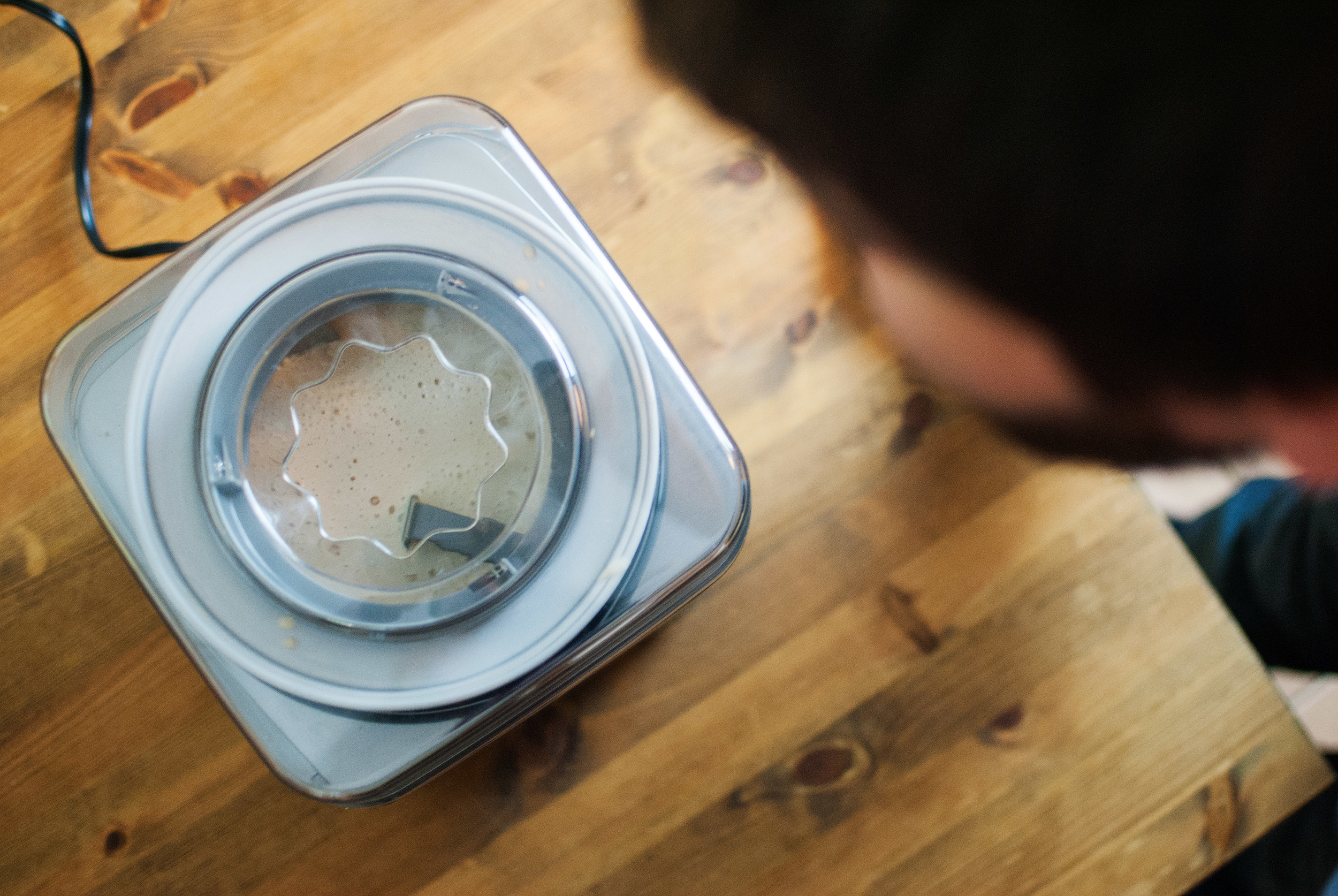
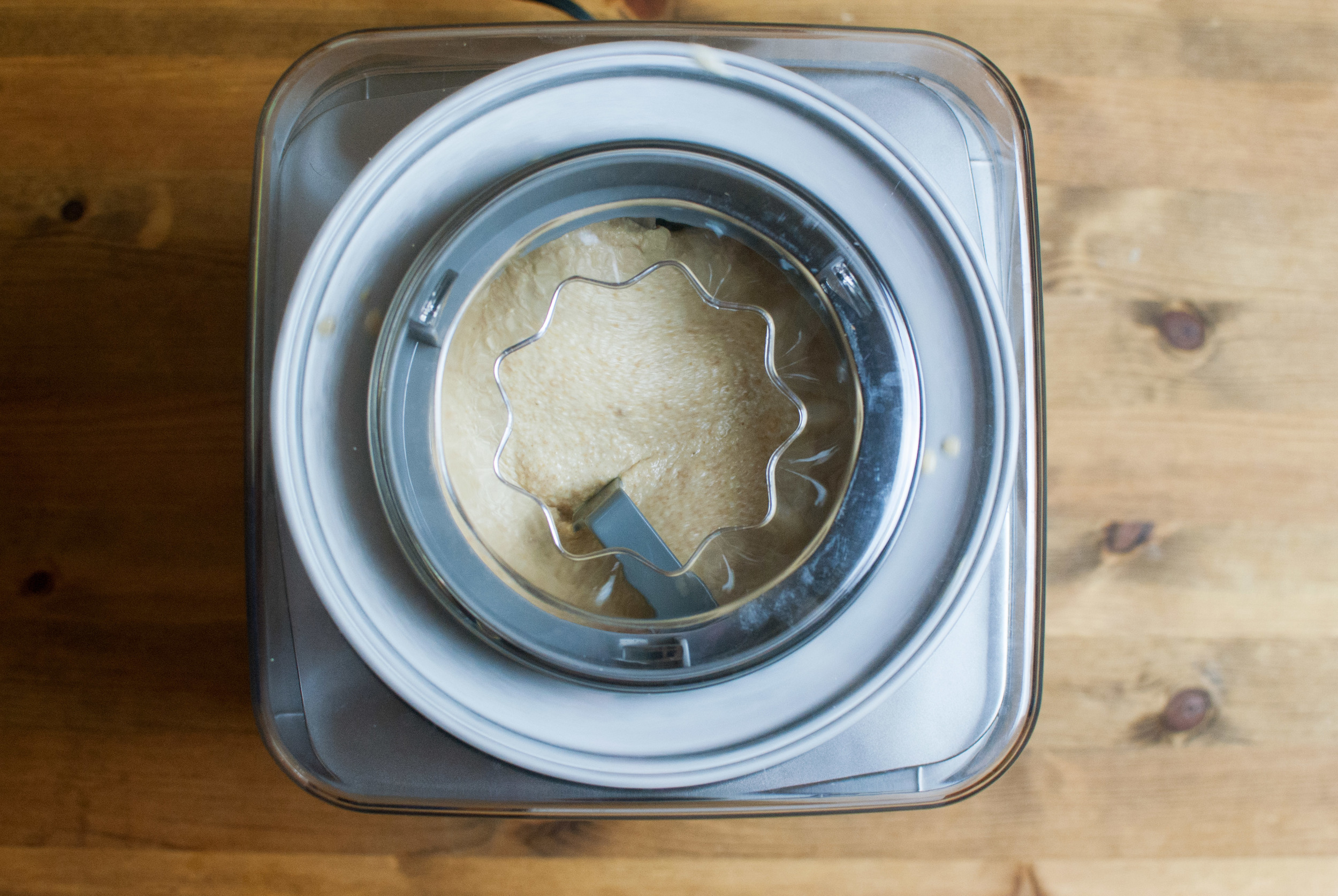
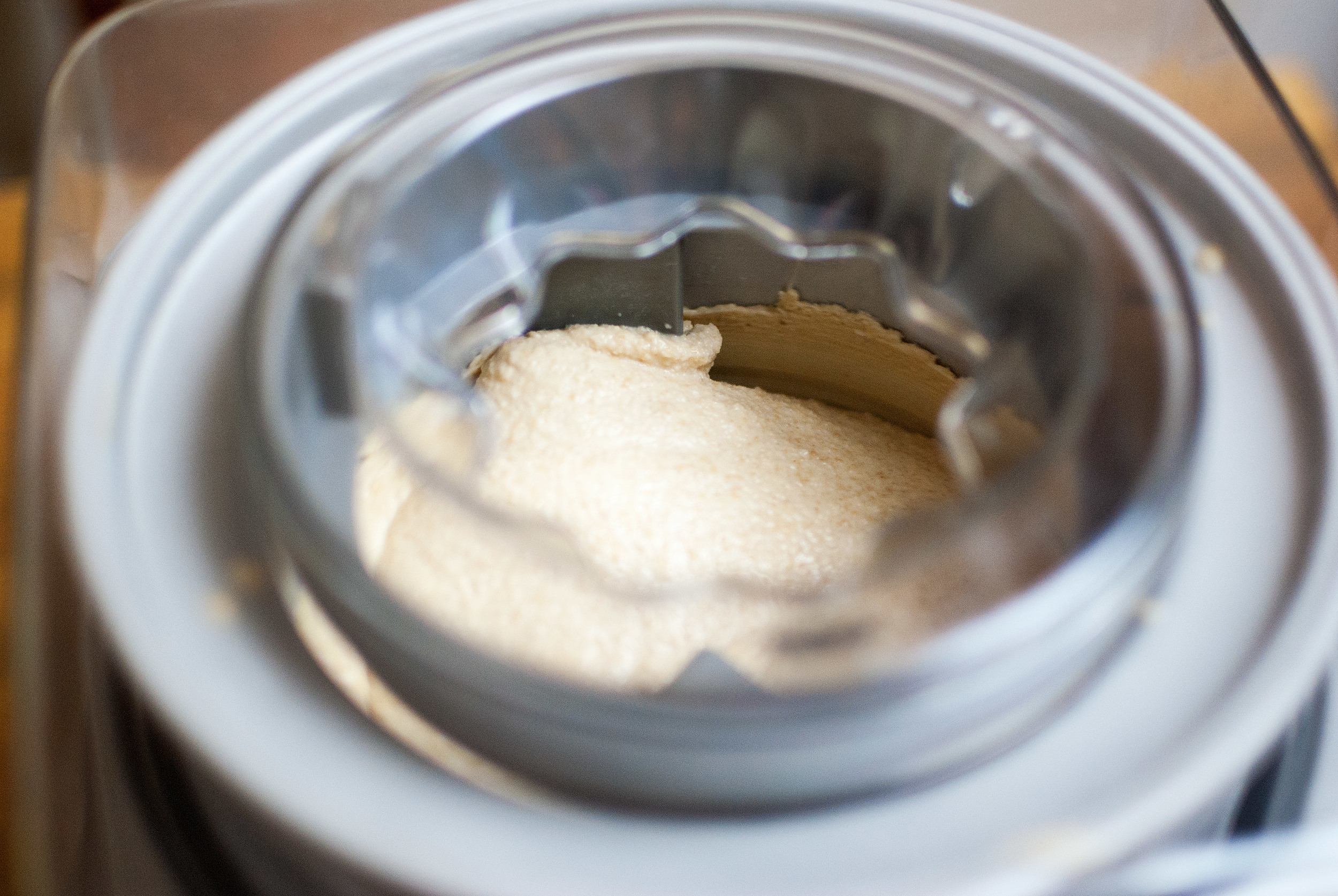
    Prepare your ice cream maker, turn it on, and pour the ice cream into the machine. Churn according to your machine’s directions (usually 20–25 minutes). About 15 minutes in, pour the toffee pieces in and continue churning until you achieve a thick, soft serve consistency. Scrape into a freezer-safe container and freeze for at least 4 hours, ideally overnight. Ice cream is better fresh, so consume within two weeks of making it, or it will become dense.


    peanut-butter-ice-cream-05

    peanut-butter-ice-cream-05


    peanut-butter-ice-cream-06

    peanut-butter-ice-cream-06

    Yields 1.5 quarts

    When you are ready to serve, heat the chocolate chips and coconut oil in the microwave until thin and liquid. Let cool slightly. Pour slowly over the scooped ice cream, garnish with some big flake sea salt, and serve immediately. If the shell does not harden immediately, place the sundae in the freezer for about 30 seconds. Store any unused chocolate shell in the fridge.


    peanut-butter-ice-cream-08

    peanut-butter-ice-cream-08