Tag: recipe for dinner

  • Skordalia


    I have a fascination with recipes that utilize ingredients that seem to have lost their value: vegetable tops and bottoms, stalks and skins, bones and bits, crusts and scraps. I don’t like wasting food, so when I discover something that allows me to use these delicious rejects in a creative way, I get a little thrill out of it. And do you wanna know what’s laying around our home that’s sometimes challenging to use before it becomes hard as a rock and “useless?”

    Bread. Lots and lots of effing bread.

    My partner bakes some of the best damn bread around and posts saliva inducing photographs of it on our Instagram, but alas, we can only eat so much of it at once, and sometimes we don’t consume all of it before it goes stale. Toward the beginning of his bread kick, we actually started to give the bread away to our friends, but even that didn’t keep us out of the clear, and I was starting to hear creaky protests coming from our food processor that seemed to say, “Please, God, not one more batch of breadcrumbs. PLEASE, NO MORE.” Luckily for our food processor, and for us, I discovered a type of recipe that changed the way I cooked with bread.

    Bread sauces.

    There are several, actually. The Brits have one (it’s just called “bread sauce,” because of course it is). Romesco sauce is also technically a bread sauce, utilizing stale bread to bind all its parts together. There’s even a Peruvian stale bread and cheese sauce that’s intended to be served with potatoes. I cycled through a few of different variations of this style of disposing of Nate’s hearty loaves, but it didn’t take long for me to stumble upon what became far and away my favorite one of the bunch: skordalia. Skordalia is easy to make, versatile in its use, keeps for a long time, and it focuses on two of my all time favorite flavors: garlic and lemon.

    Side note: using a good stale French loaf would be great for this, but in our house, we like sourdough. It really latches onto the lemon flavor, which is the backbone of the sauce. Also, you don’t even need to use stale bread for this recipe, just know that you can. I mean, you’re dousing it in oil and lemon juice and water then blending it into oblivion, so don’t get too hung up on that.

    Skordalia:

    • One 1” slice of stale bread from a large, hearty loaf of bread (we like sourdough)

    • 6–8 cloves of garlic (or, like, more if you’re into that)

    • A heaping ½ cup of slivered almonds

    • ½ cup olive oil, divided

    • Juice of one whole juicy lemon

    • ¾ cup of water

    • Salt to taste

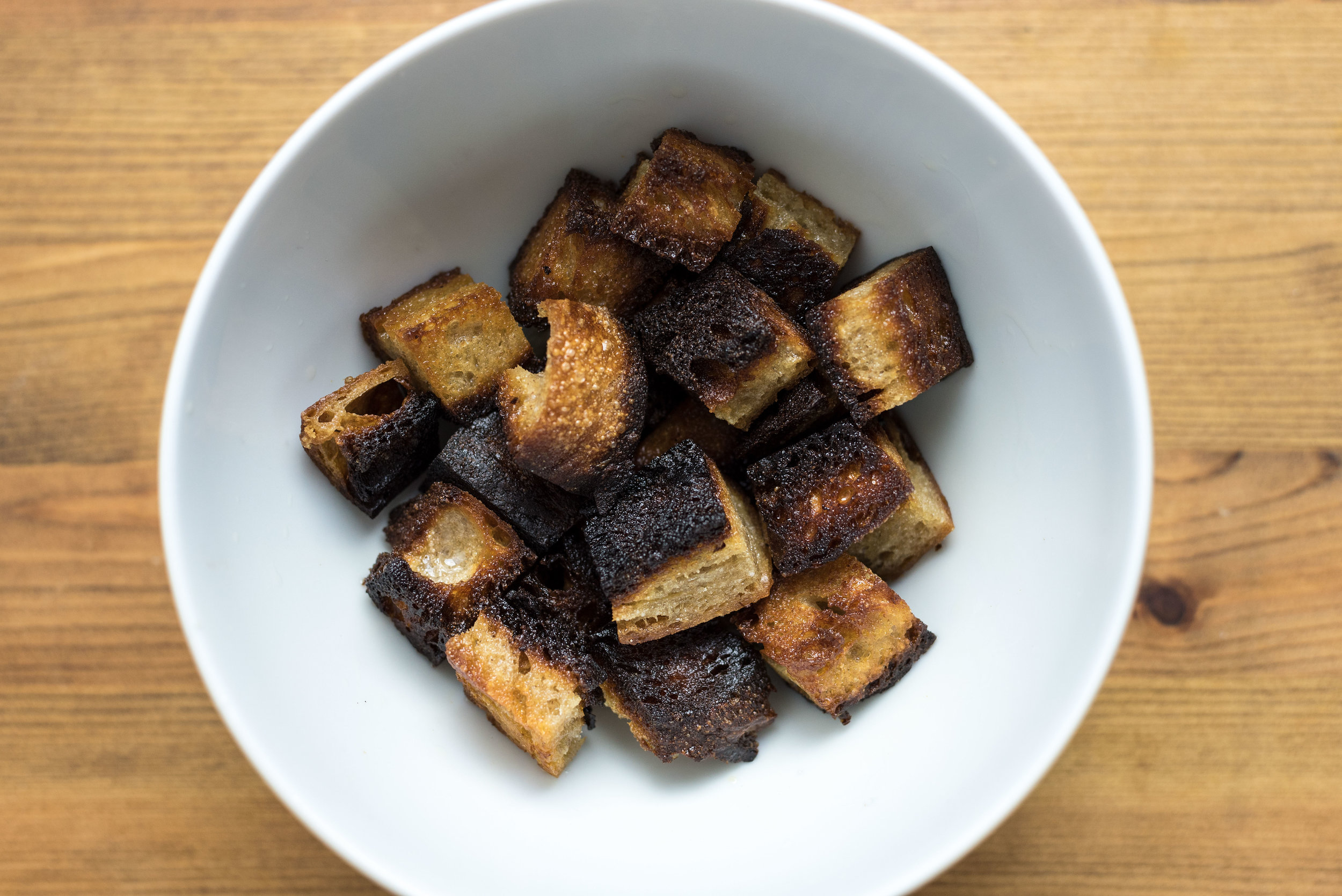
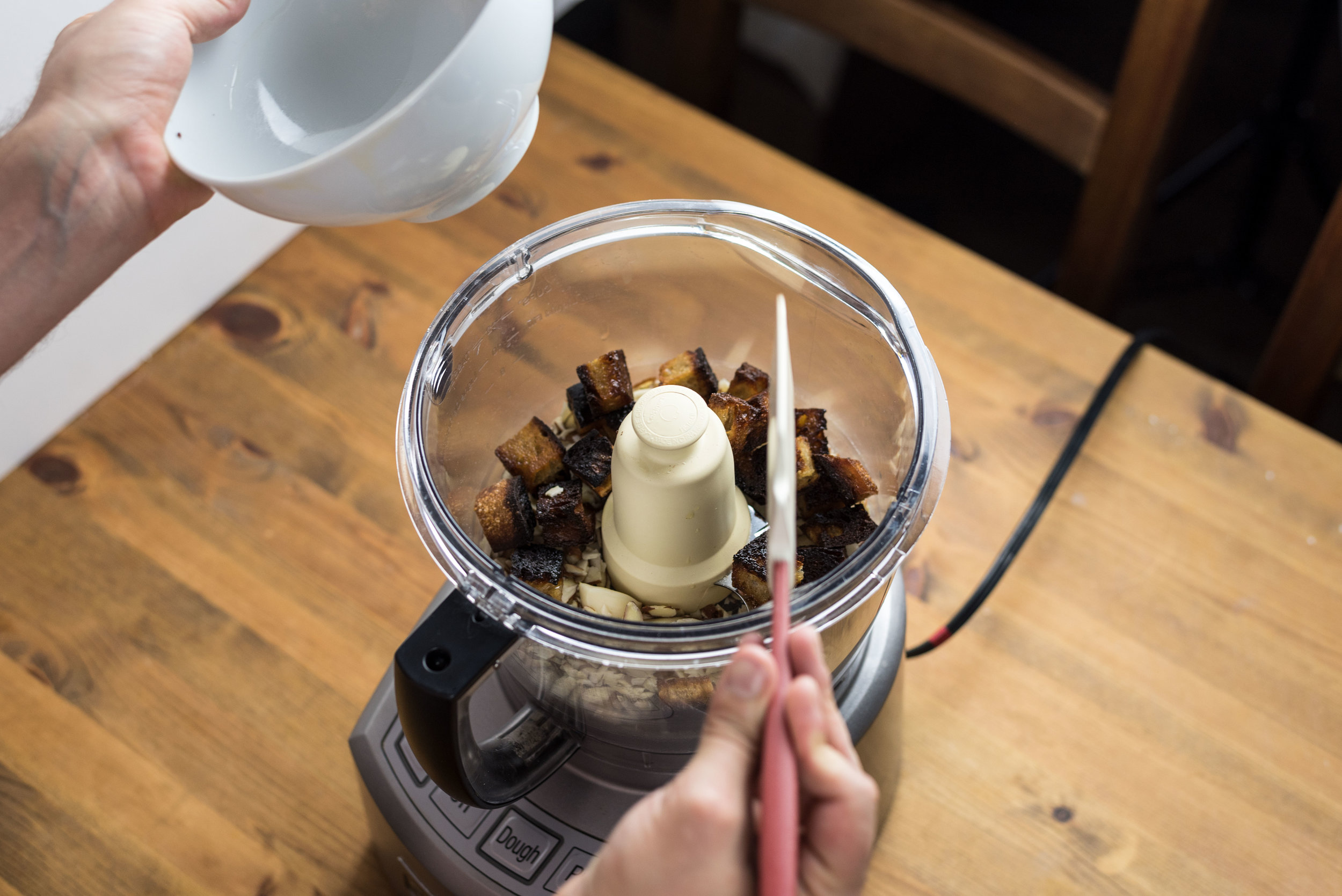
    In a skillet on medium heat, warm ¼ cup of the olive oil until it begins to shimmer. While the pan is coming up to heat, cut your stale bread into 1-inch cubes. Think of it like you’re making some big-ass croutons, because, well, you kind of are. When the oil is ready, add the bread to the pan. It should begin to fry immediately, making a satisfying “deep frying” noise (you know what I’m talking about). If it doesn’t, remove the bread and wait until it gets hotter and try again.

    Fry the bread cubes on all sides, moving them around the pan from time to time. You have a couple options here: fry the bread until it’s golden brown OR until it’s just a little more than that. This will determine the flavor character of your skordalia. Golden brown bread will be a nuttier, milder, and buttery skordalia whereas slightly charred bread will be a more sour, punchy, and smoky skordalia; they both have their place. If you’re using your skordalia as a dip, meant to be eaten more on its own, I’d opt for golden bread since it’ll be milder. If you’re using your skordalia to accompany a meal as a hearty bread sauce component, then I’d do charred bread since it’ll stick out a little bit more. The sourness of the charred flavor bonds with the lemon really nicely, and the smokiness responds really well to meat or roasted vegetables.

    skordalia_01.jpg

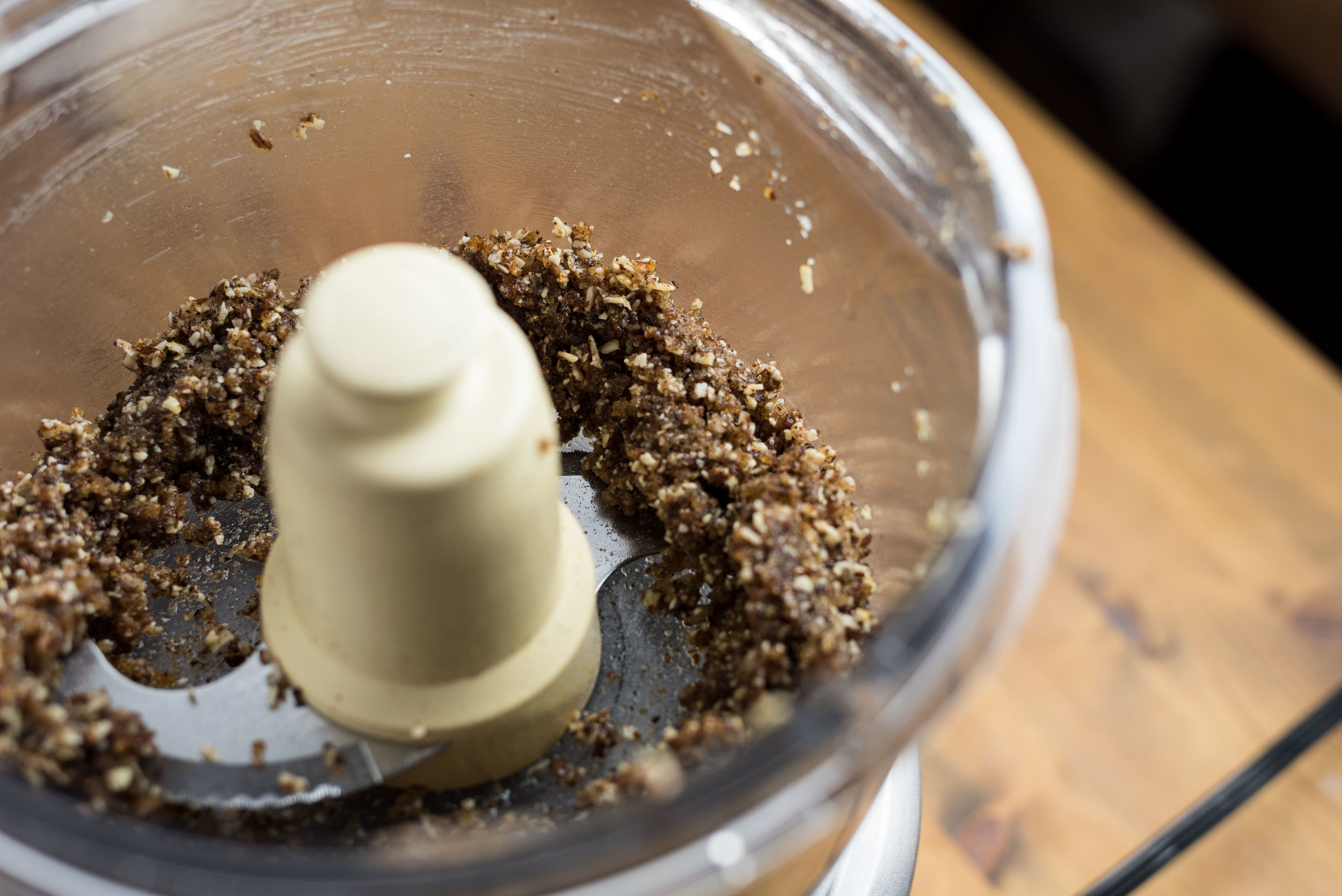
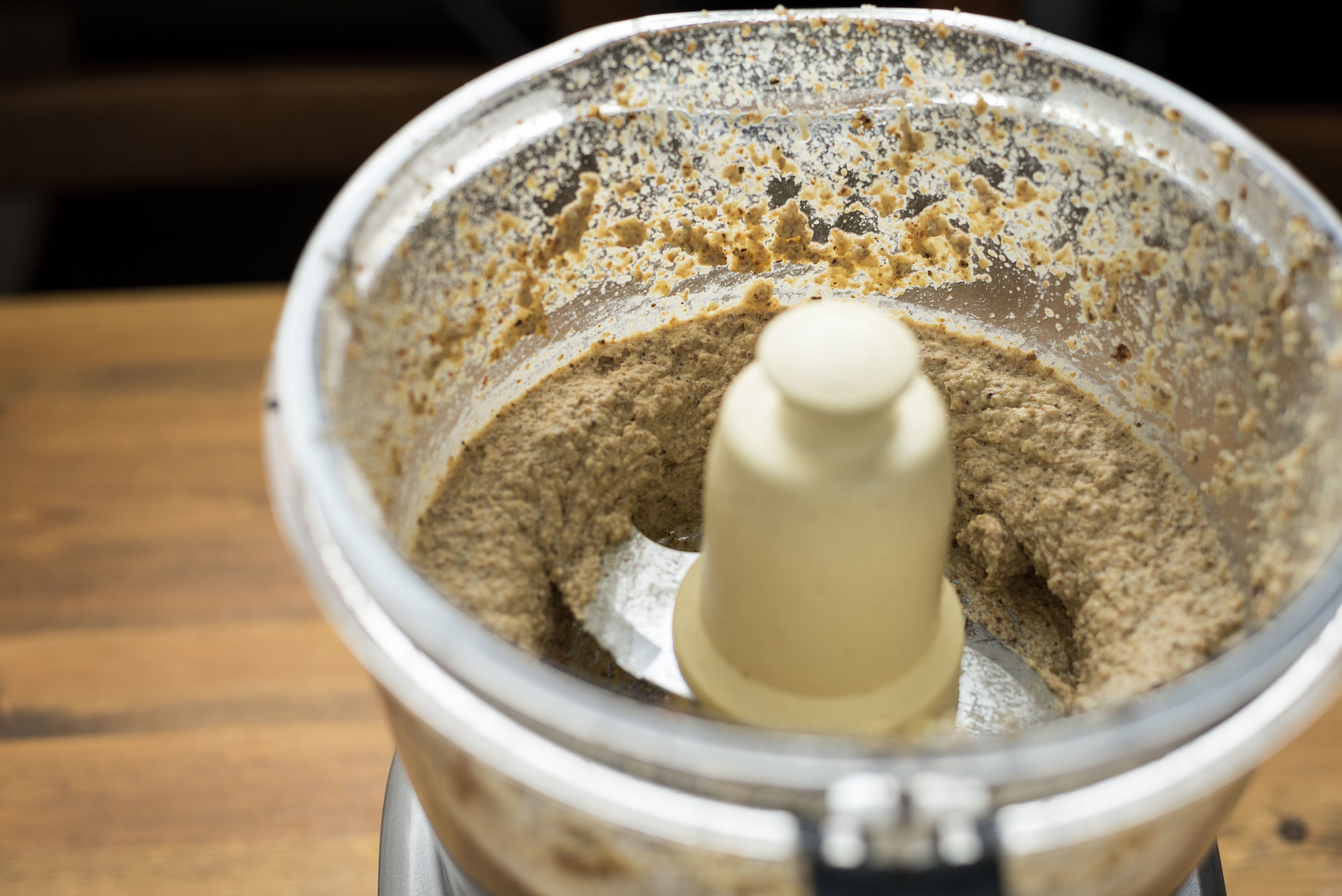
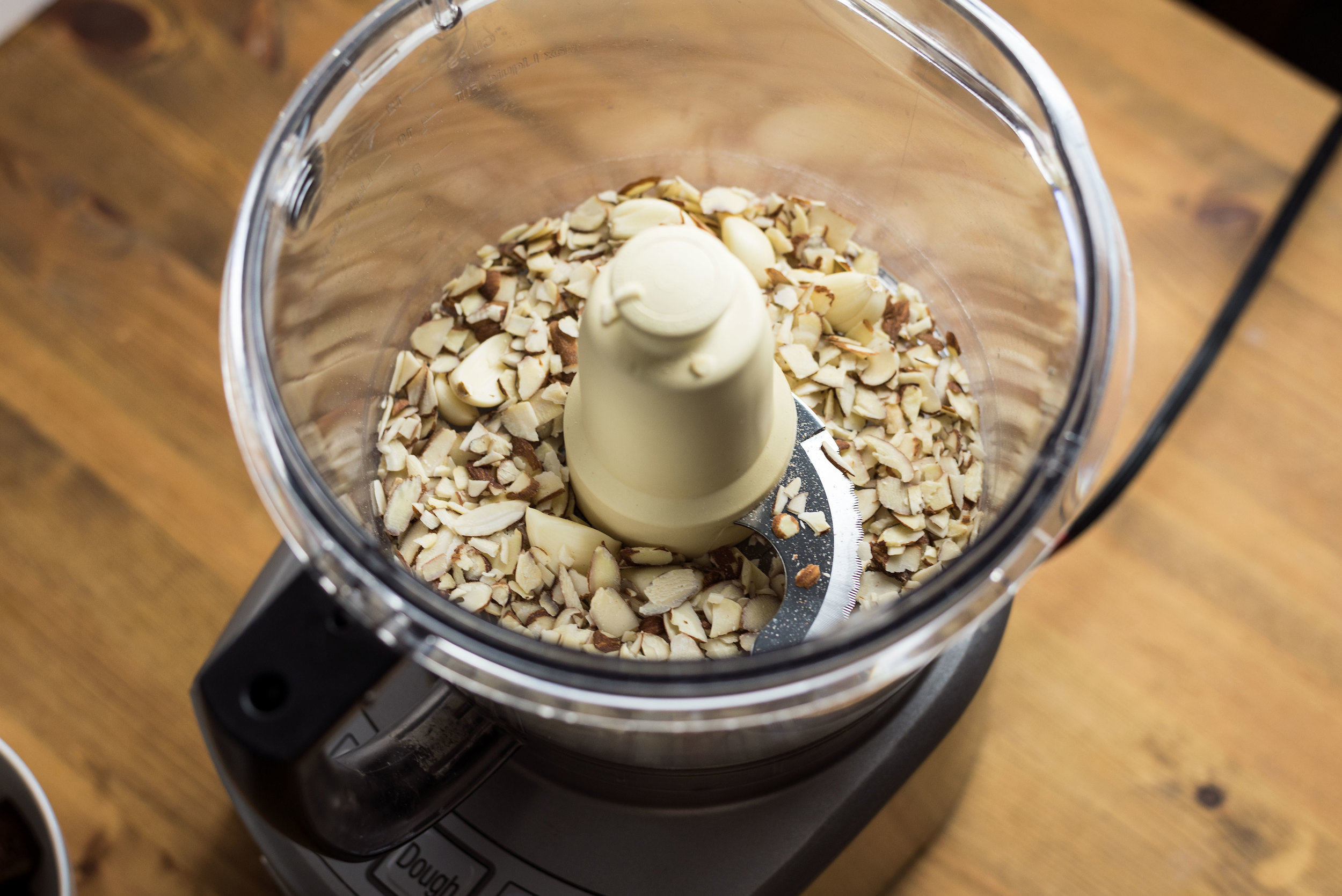
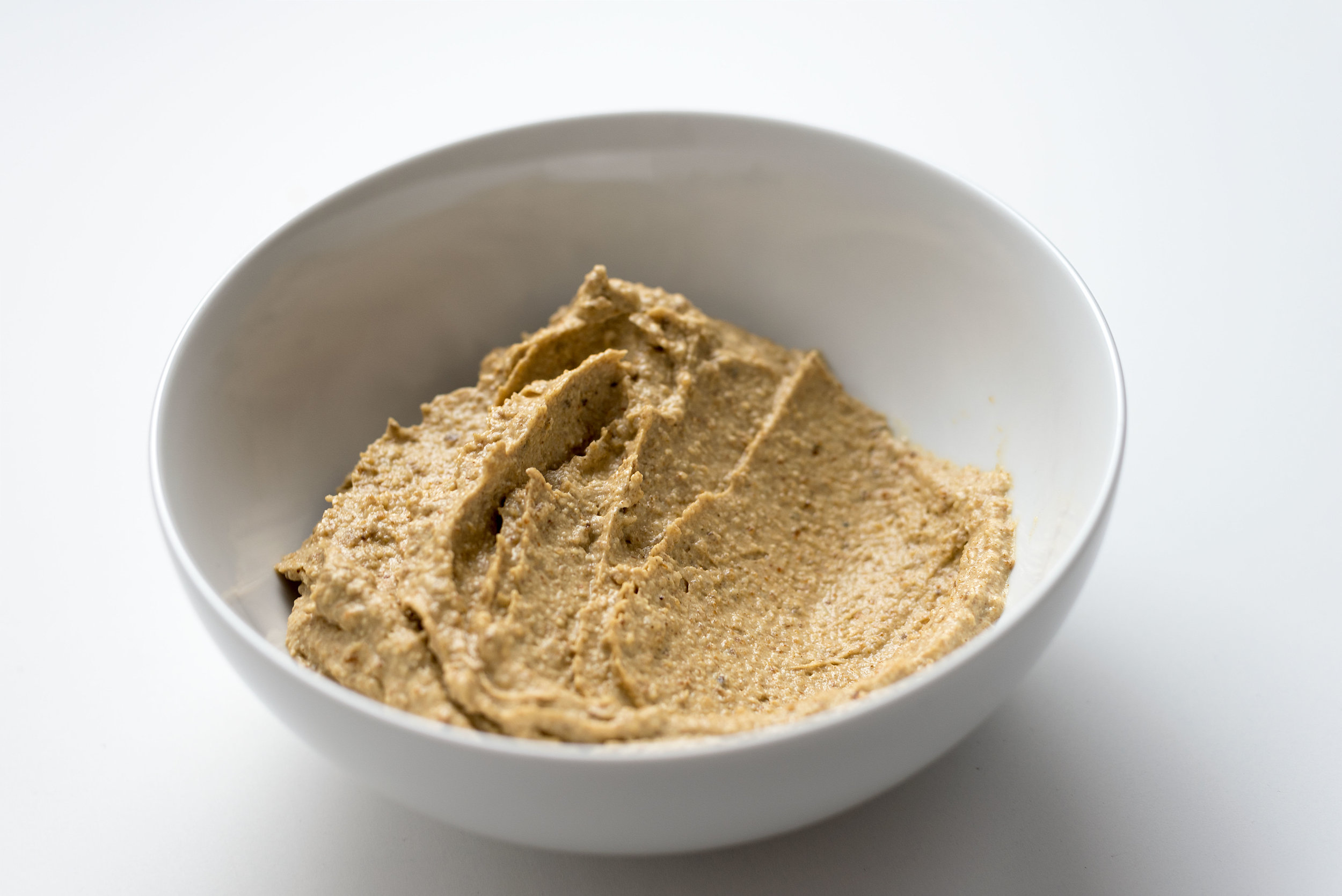
    Once your bread is fried to your desired shade of sexiness, remove it from the pan and add it to a food processor or blender along with all the remaining oil in the pan, the garlic, and slivered almonds. Pulse the ingredients to break them down, scraping the sides of the bowl frequently, then give it a good long blend to get them as fine as you can. While the ingredients are whirring away, consolidate the remaining ¼ cup of olive oil, water, and lemon juice into a vessel with a lip so you can slowly pour it out in a steady stream without making a mess. Through the opening at the top of the food processor or blender, slowly add all of the liquid, allowing your skordalia to loosen up and emulsify. You’ll probably need to let it blend on its own for a minute or two afterwards to break down the last few chunks. When finished, your skordalia should be smooth and resemble hummus. Salt your skordalia to taste and pulse to incorporate. Serve immediately or store in your fridge for up to two weeks.
    Side note: if you’re taking your skordalia out of the fridge to use for later, we’d recommend having it come up to room temperature on its own as opposed to microwaving it, since the application of heat really alters the fresh lemon juice flavor. That being said, don’t let that stop you from adding a dollop of this goodness to a lunch on-the-go that you’ll heat up at work or wherever you go later. It’ll still be delicious, just know that it’ll be a little different. The garlic flavor will come out more and the lemon will play less of a role.

    skordalia_07.jpg

    Yield: about 2 cups

  • Chicken Shawarma Dinner


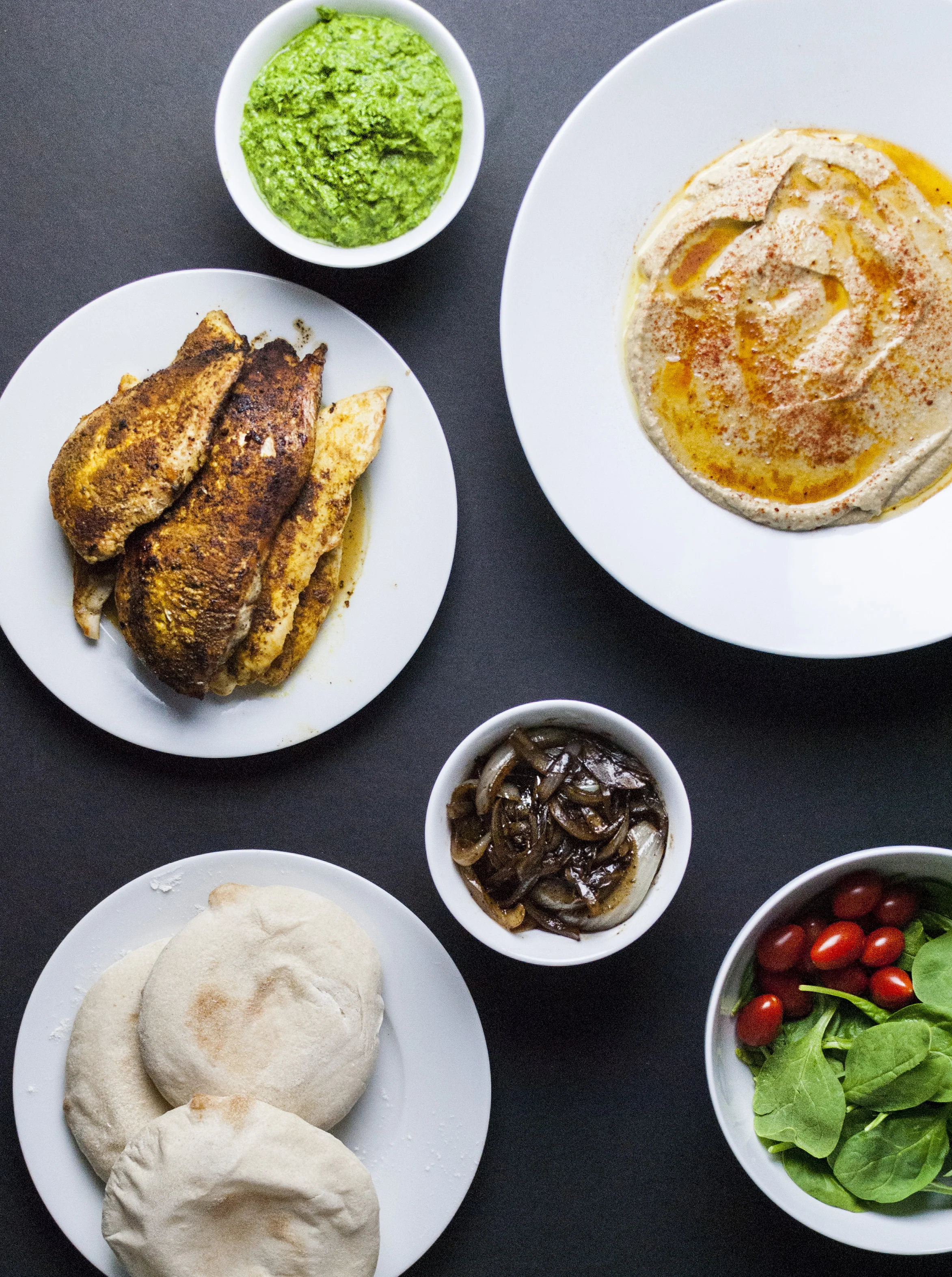
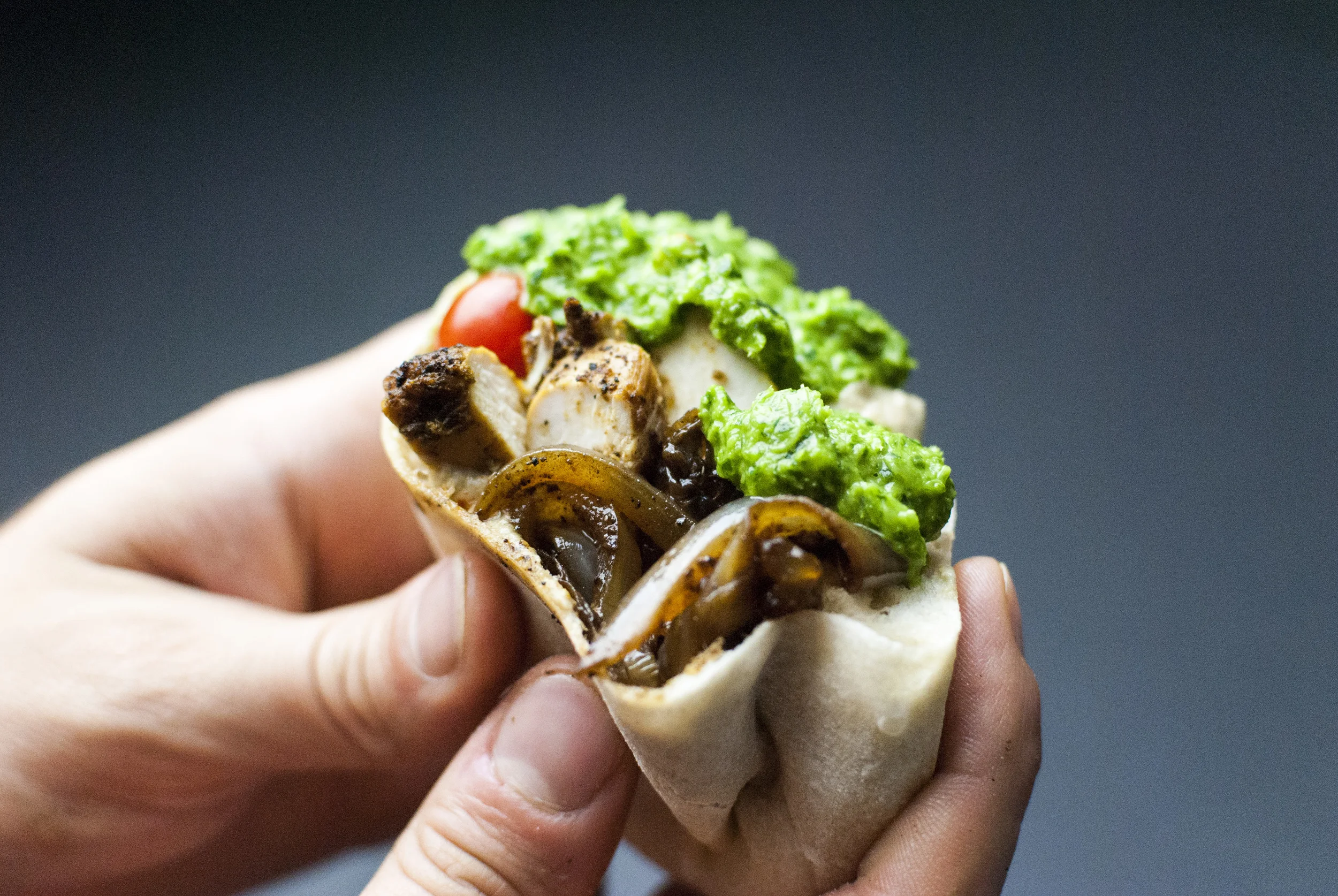
    First and foremost, this is a multi-recipe post! Nothing here is too complicated, and when you make (and eat) all these things together, the result is immensely satisfying; it’s a favorite weeknight—yes, weeknight—spread for us. This is a dinner that really exemplifies some of our favorite flavors: bold spices, fresh herbs, and obscene amounts of garlic. While we understand that this recipe might not be exactly authentic (it isn’t), we can promise that it’s completely delicious. The styles of shawarma, after all, are completely dependent on what’s around and what’s good, and we used what was in our pantry. We can also promise that this is one of the easiest and quickest smorgasbords you can make to impress a small crowd. It makes a great sit-down meal, but also could promote casual grazing at a party. We’ve tried it both ways: 10/10, would recommend.

    The zhoug was inspired from the Jerusalem cookbook, and has since found its way into many dinners of ours. Call us predictable, but we are suckers for fresh and spicy sauces that brighten things up.

    Parsley and Mint Zhoug:

    • 1 cup of fresh parsley leaves, packed, some stems are okay
    • ½ cup fresh mint leaves, packed
    • 2 cloves of garlic, crushed
    • 2 green chiles, stems removed
      • Note: You can use whatever green chiles might be available to you for this such as jalapeños or serranos. We love using Thai chiles, and for this particular recipe we us 4–5. It all depends to how spicy you want this condiment to be.
    • 1 heaping teaspoon of ground cumin
    • Juice of 1 lemon, seeds removed
    • ¼ cup olive oil
    • Salt to taste

    Combine parsley, mint, garlic, chiles, cumin, and lemon juice in a food processor and pulse the ingredients together, occasionally scraping the sides of the bowl. Once the mixture resembles a thick paste, keep the blade running and pour in the olive oil through the top slowly, creating an emulsion. Season with salt and double check the mixture for smoothness, pulsing occasionally if needed. Serve in a small serving bowl.

    Chicken Shawarma:

    • 1 pound of chicken breasts, trimmed of silver skin
    • Kosher salt
    • Shawarma spice mix:
      • 1 tablespoon ground cumin
      • 2 teaspoons curry powder
      • 1 teaspoon ground coriander
      • 1 teaspoon sumac
      • 1 teaspoon paprika
      • ½ teaspoon ground allspice
      • ¼ teaspoon ground cinnamon
      • ¼ teaspoon ground ginger
    • Oil as needed
    • ½ large sweet onion, thinly sliced into strips


    Rinse the chicken pat dry with a paper towel. Fillet meat into pieces with even thicknesses; about an inch. Cover one side of the meat liberally in salt and spices and set aside.

    Bring a pan to medium high heat with half a tablespoon of oil or so and place the chicken in the pan. As the meat cooks, salt and cover the other side with salt and spices. Cook until the chicken starts to whiten up the sides, then flip to finish cooking. Test the chicken for doneness (160-165°F) then remove from the pan to rest for 10 minutes before serving. While the chicken rests, add the onions to the pan and a little bit of water to help the drippings from the pan release. Cook onions until they become soft, translucent, and have sopped up all the drippings. Remove from the pan and serve.

    Serve with pita, hummus, baba ghanouj, and, if you can swing it, throw together a two second Greek salad.

    Serves 4.


  • Braised Pork in Lazy Cherry Ancho Mole


    I’m going to be completely honest here; I’m not the biggest fan of cherries.

    It’s not that I have anything against them, they’re just not really my steeze. But this blog is supposed to be a challenge, and that means transforming whatever is in season, whether I like it or not, into something unique and delicious.


    Doing research for cherry flavor profiles ended up giving us the key for what we would do with them. While cherries aren’t toward the top of my list, there are a multitude of flavors that I do love that have an affinity for them: chocolate, nuts, coffee, dried fruit or chiles, vanilla, and other spices like cinnamon to name a few. I had trouble picking a direction until I realized that I didn’t have to, after browsing through a Mark Miller cookbook. There’s already something out there that uses most of these things and that I was certain would welcome the presence of cherries: mole.

    Sometimes containing upwards of 60 ingredients and often demanding an entire day to make, mole is definitely an undertaking. While all the work is certainly worth it, sometimes I’m just not up to it. Sometimes I just feel like being lazy while something braises in the oven for hours while I troll my way through an RPG or a good book. I’ve made so many damn lazy moles in my day, and while they aren’t as complex as they could be, I still find that they hit the spot; plus they’re really fun to make and easy to experiment with. Never under-estimate the amount of joy I can derive from dumping a bunch of shit in a food processor, blending it together, and seeing what happens. I certainly had a lot of fun fooling around with this recipe.


    Lazy Cherry Ancho Mole:

    • 1½  ounces ancho chiles, stems and seeds removed
    • 1 pound of fresh dark cherries (we like Bings), pitted and halved
    • ½ small onion, roughly chopped
    • 1 cup of brewed strong coffee, hot
    • 2 chipotles in adobo sauce
    • ¼ cup whole almonds, toasted
    • 1 ounce chocolate (over 60%, please, none of that milk chocolate nonsense), finely chopped
    • 2 tablespoons apple cider vinegar
    • 2 teaspoons of salt
    • 1 teaspoon cumin
    • ¼ teaspoon of cinnamon
    • ⅛ teaspoon of allspice
    • A pinch of clove
    • A few grates of fresh nutmeg

    Rehydrate the chiles by submerging them in water and microwaving for 2–3 minutes. They should be soft and have changed in color, becoming more red. Remove from the water and set aside. Discard the water.

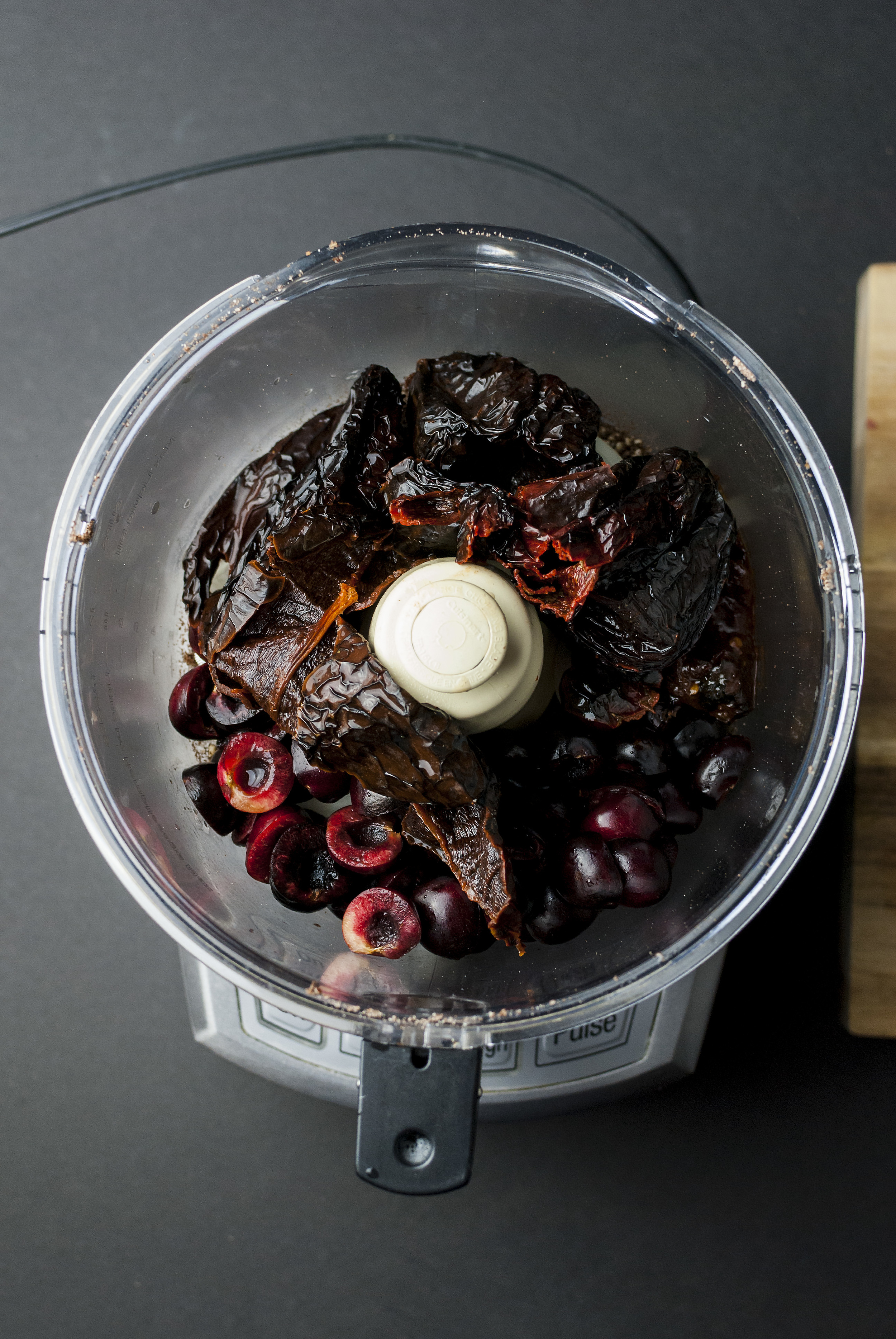
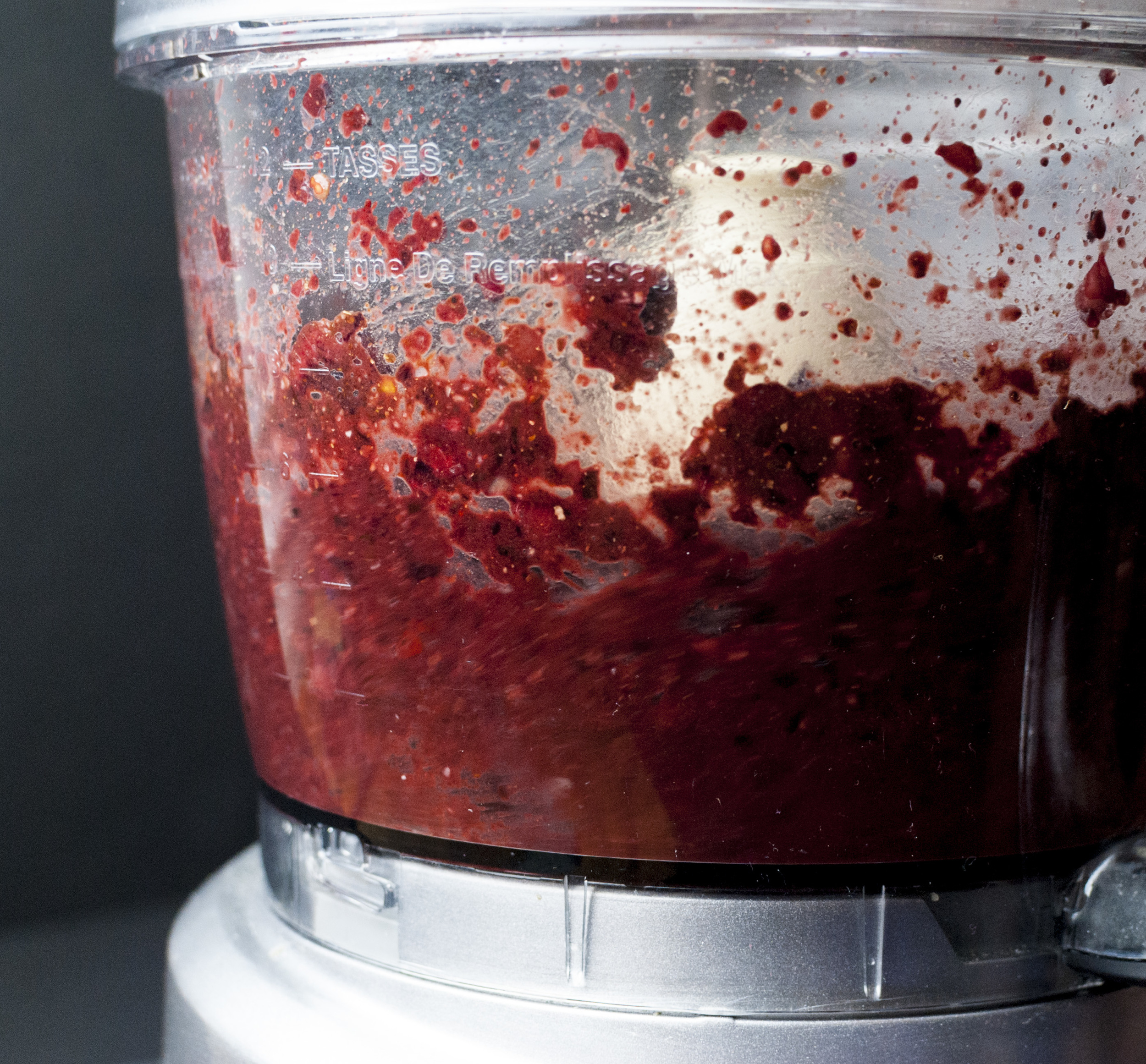
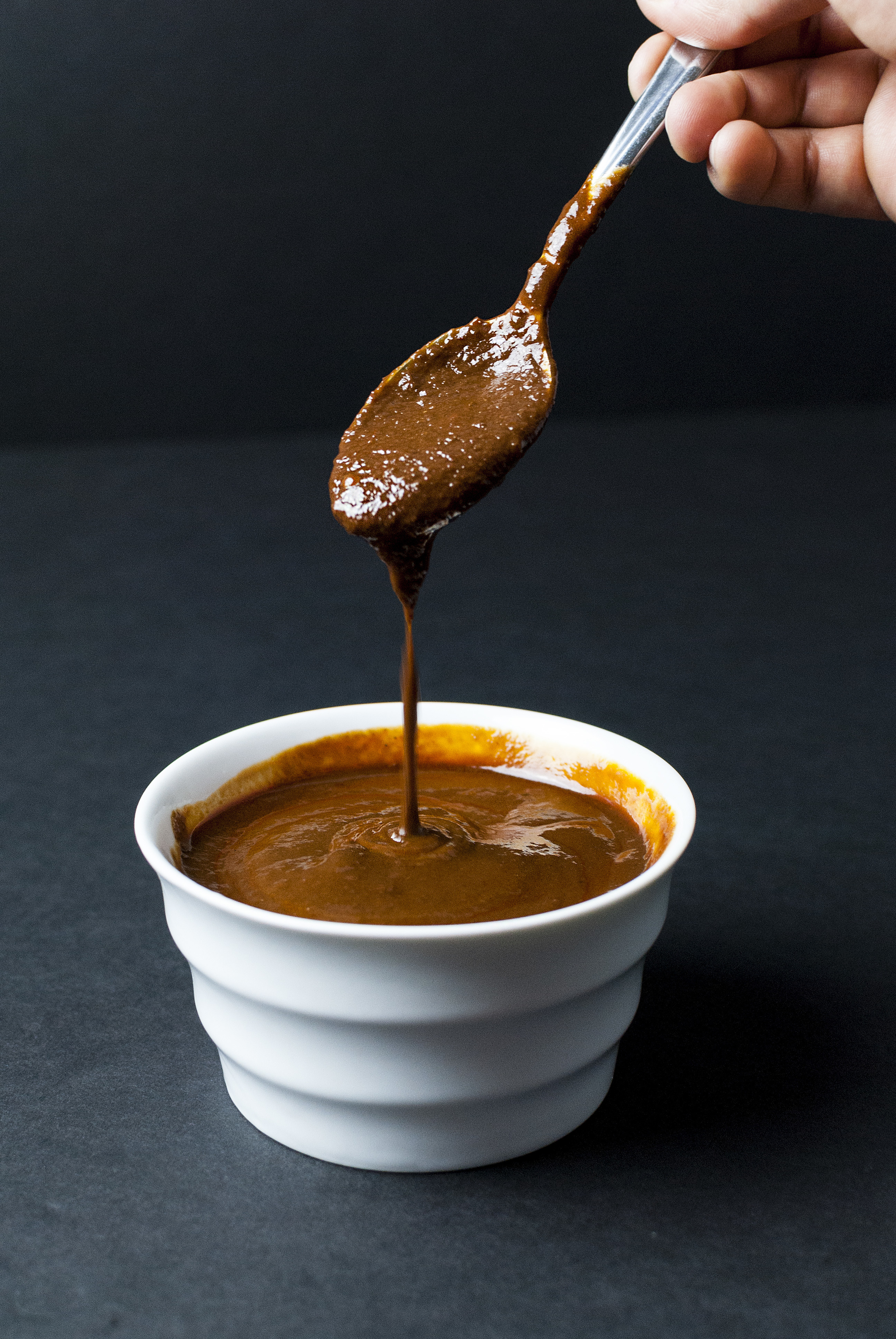
    In a food processor, combine all of the ingredients for the mole except for the coffee and the vinegar. Pulse repeatedly, scraping the sides until the mixture is as smooth as you can get it. Combine the coffee and vinegar together and pour through the top of the food processor while the blade is running. The mole should loosen up and blend until completely smooth. The quick mole is ready to use, but can be stored in an airtight container for up to a week before using.

    Braised Pork in Lazy Cherry Ancho Mole:

    • 4 pounds lean pork shoulder, cut into 2-3 inch cubes
    • 1 batch of Lazy Cherry Ancho Mole

    Preheat oven to 350°F.

    In a casserole dish (or dutch oven), pour in the mole and place the pieces of pork on top. If using a dutch oven, simply place all the pork inside and give it a quick stir. Cover in aluminum foil or lid and braise for about 3 hours or until the meat becomes tender and falls apart. After braising, remove the meat from the mole, allowing it to rest and be shredded later. Remove the excess fat and, if you like, use an immersion blender to make sure the mole has a really smooth texture.

    Shred the meat with forks and serve after cooling with sauce on the side. Accompaniments can include corn tortillas, rice and beans, or just eat it out of the pan over the stove.