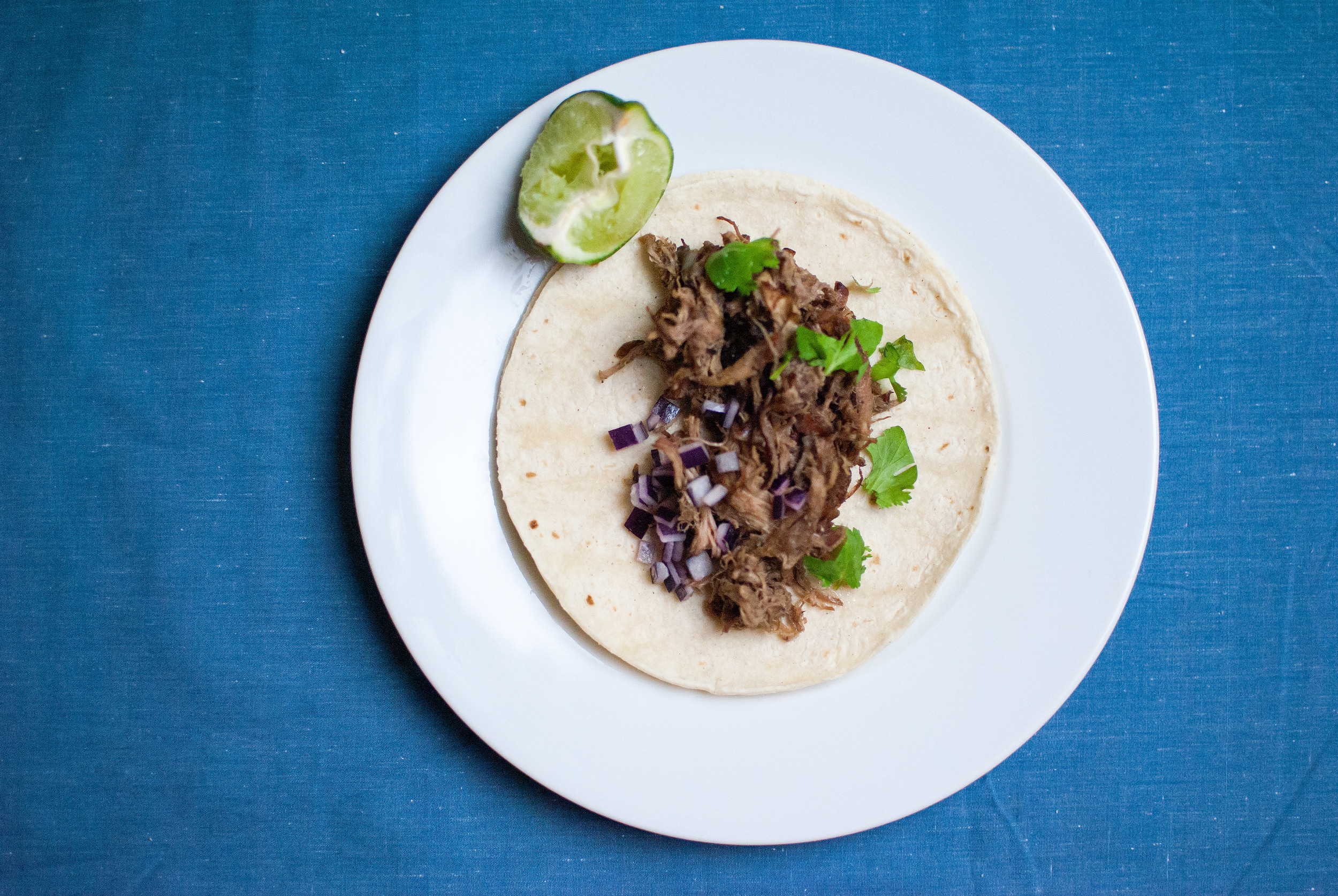
Tag: lime

  • Tiger Cry Steak


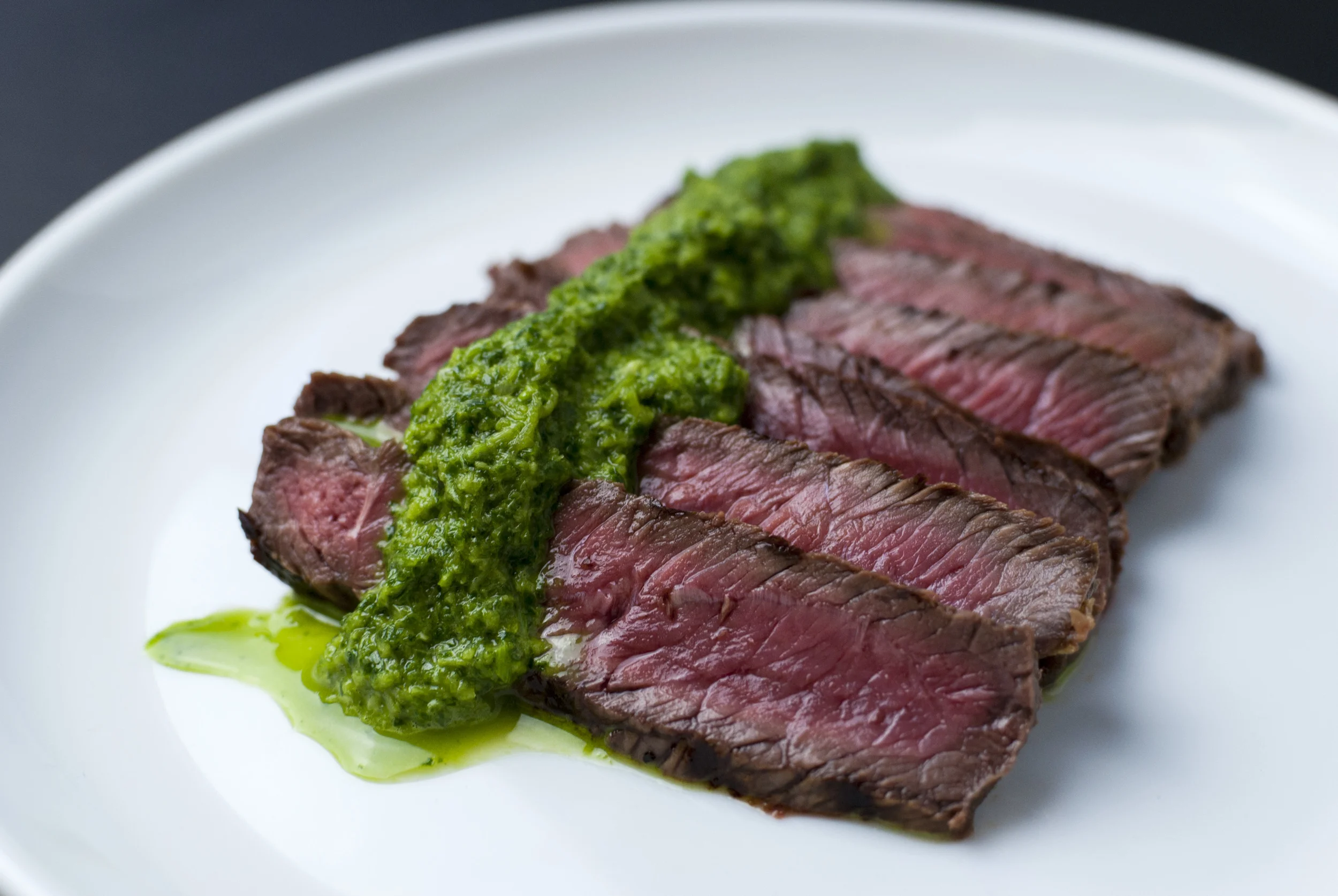
    This recipe from my childhood grew up over the years as I grew as a cook and — in its final form — it has changed into something simpler and more representative of my relationship with Nate, highlighting both of our strengths in the kitchen. Nate is all about technique (and very good at cooking meat) while I tend to be more of the flavor-combiner/mad scientist sauce making type, and this recipe relies on the success of both of these schools of thought. Nate’s well executed marinated steak is the perfect platform for this fresh herb chimichurri which will sear your face off and keep you coming back for more.
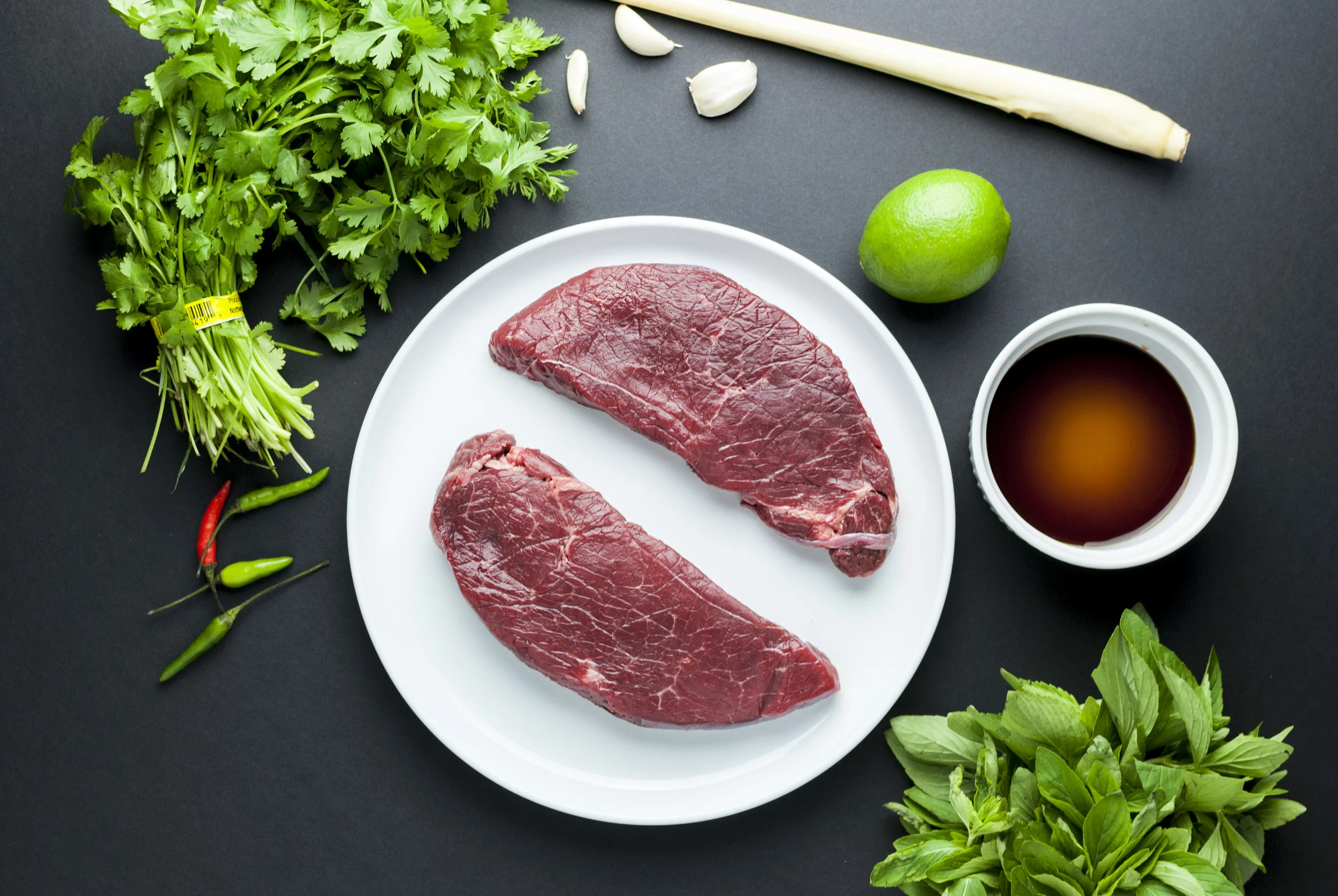

    Tiger Cry Steak:

    • 2 beef or buffalo steaks (any kind will do, but we used buffalo top sirloin), 8 ounces each, trimmed of fat and silver skin

    • ¼ teaspoon freshly ground black pepper

    • 1 stalk of lemongrass, tender white interior sliced thinly, green and husks discarded

    • 2 tablespoons thin soy sauce

    • 2 tablespoons lime juice

    Mix the pepper, lemongrass, soy sauce, and lime juice together to make a quick marinade then transfer to a plastic bag big enough to hold the meat. Add the steaks to the bag, distribute the marinade evenly, then marinate the meat in the fridge for a couple of hours to overnight (overnight is best). Before cooking, allow the steaks to come up to room temperature and be patted dry.
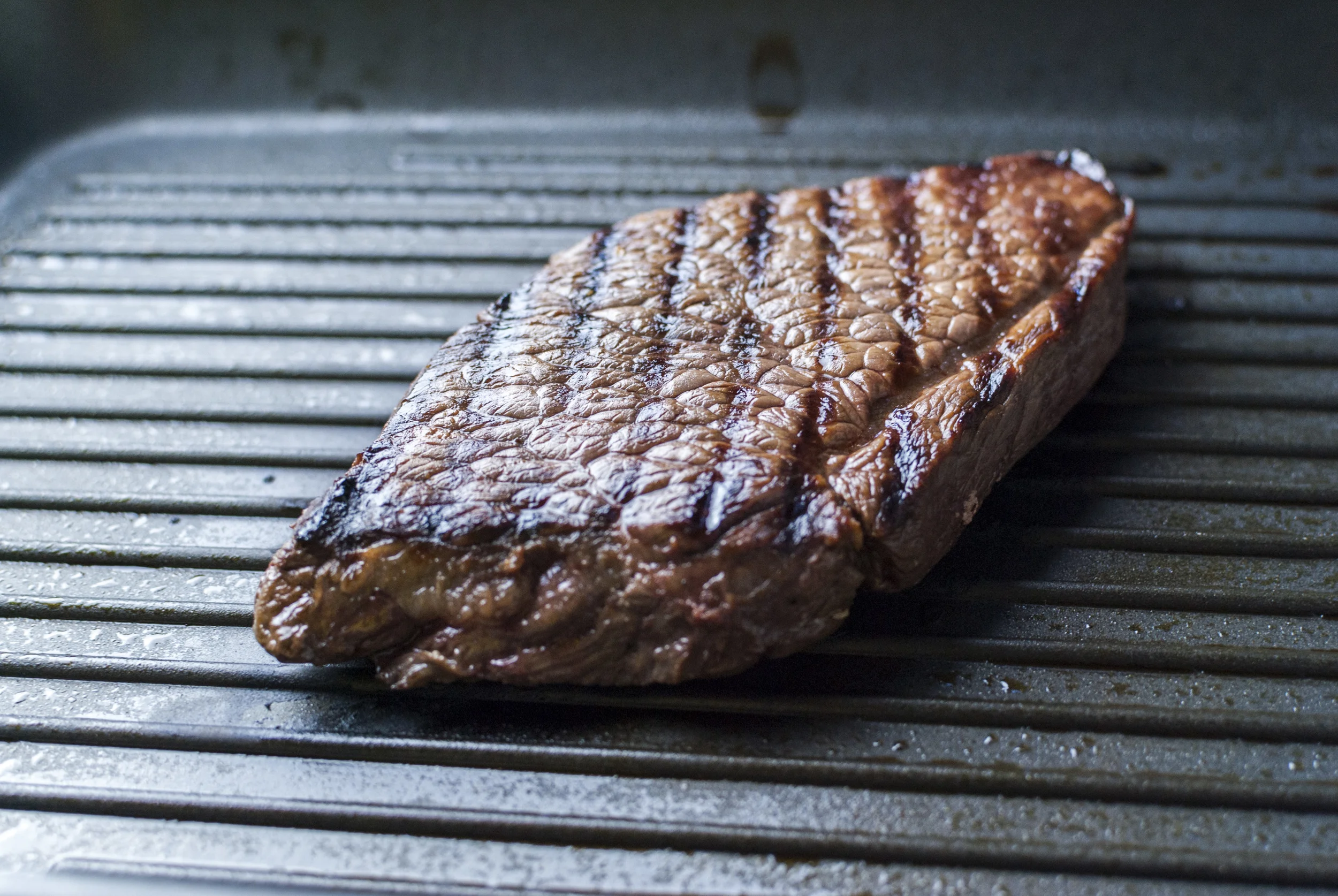

    On the grill or stovetop, cook the steaks for 4–5 minutes on one side to create a nice sear, then flip them and cook for another 3–5 minutes. For medium-rare steak, test the temperature with a meat thermometer to make sure the interior is around 135 degrees. Allow meat to rest for 10 minutes, reserving the meat juices, then serve with chimichurri.

    Thai Style Chimichurri:

    • 2 cups of fresh cilantro leaves, packed, some stems are okay.

    • ½ cup of fresh mint leaves, packed

    • 4–5 thai chilies, stems removed

    • 1 shallot, roughly chopped

    • 2 large cloves of garlic

    • 2 tablespoons plus 1 teaspoon of fish sauce

    • ⅓ cup lime juice (about 2 limes)

    • ¼ cup vegetable oil

    • Leftover meat drippings

    In a food processor, combine the cilantro, mint, chiles, shallot, and garlic and pulse until the ingredients are all finely minced. Mix the fish sauce, lime juice, vegetable oil, and meat drippings together into a vessel with a spout and pour into the food processor with the blade running. Blend until it becomes a smooth sauce. Serve with rested meat.

    Serves 4.

  • Larb Burgers


    larb_burgers_02.jpg

    All I can really glean from this recipe is that we come up with really good ideas when we’re drunk.
    So, one hot day recently, we were making larb and drinking a questionable amount of a tasty IPA (like you do), and then one of us—of course I can’t remember who—came up with the idea that instead of sticking to the plan and making salad, that we were actually craving burgers. Sure, it might have been the alcohol talking, but tell me, when you’re sloshed, what are you more inclined to eat: salad or a burger? Yeah. That’s what I thought you’d say. Glad we are all being honest here.

    Of course it was written in the stars that we had some leftover coconut milk in the fridge that we could transform into an amazing peanut sauce, and thus, the larb burger was born. After the incident, we made it three times in two weeks. We just couldn’t get it off our minds, and we also constructed some additions to spruce it up. What we’ve ended up with, we felt we really needed to share on the blog.

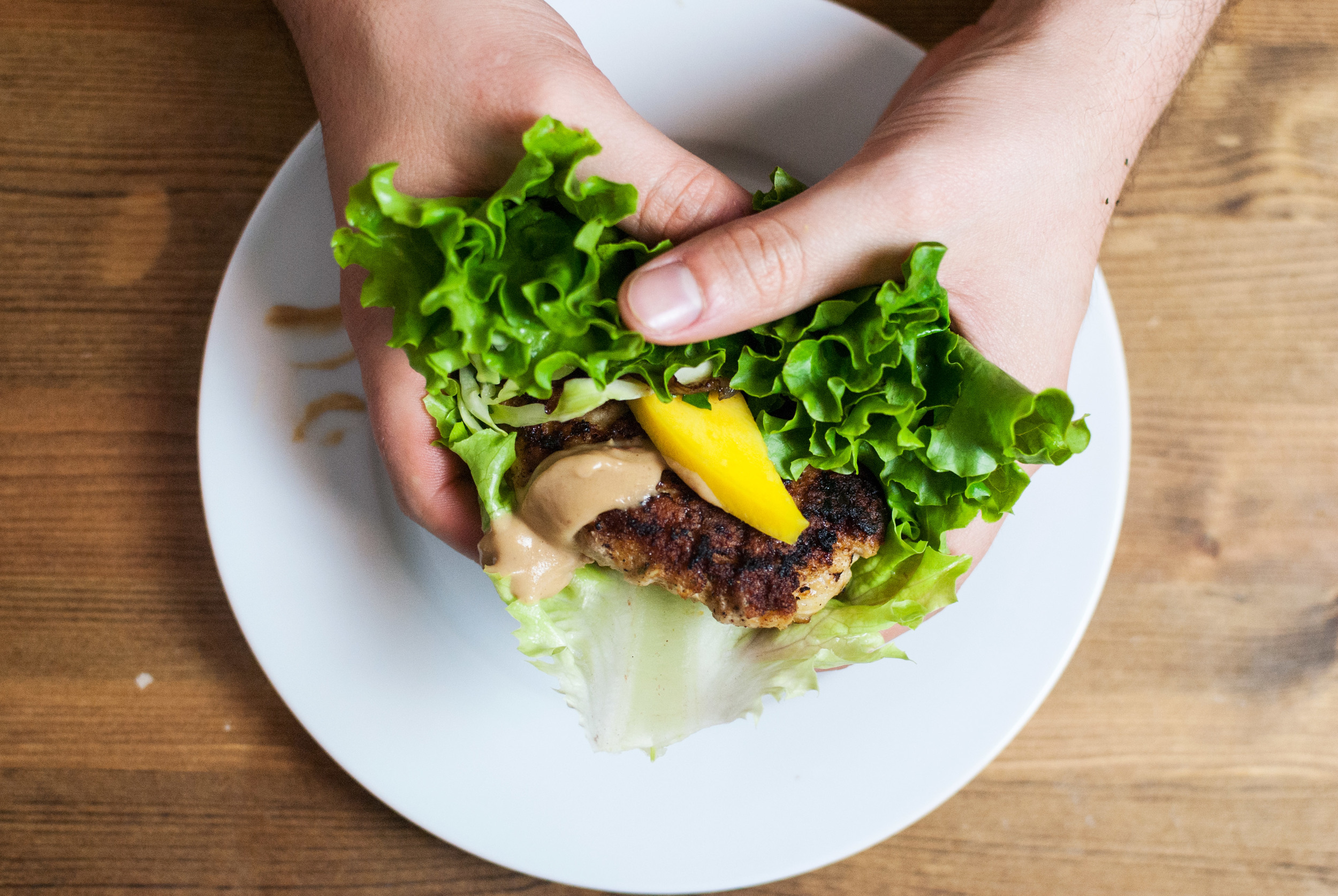
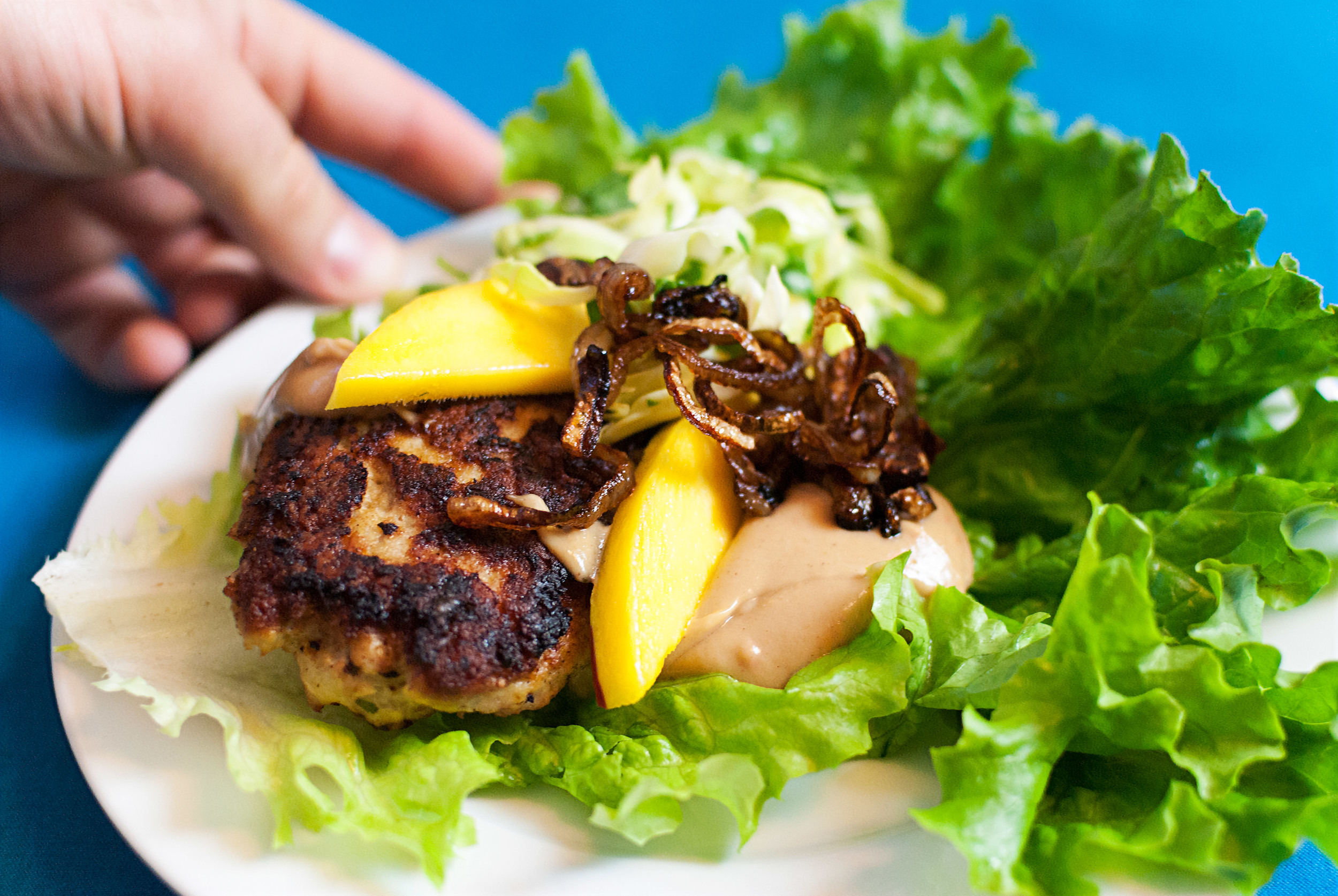
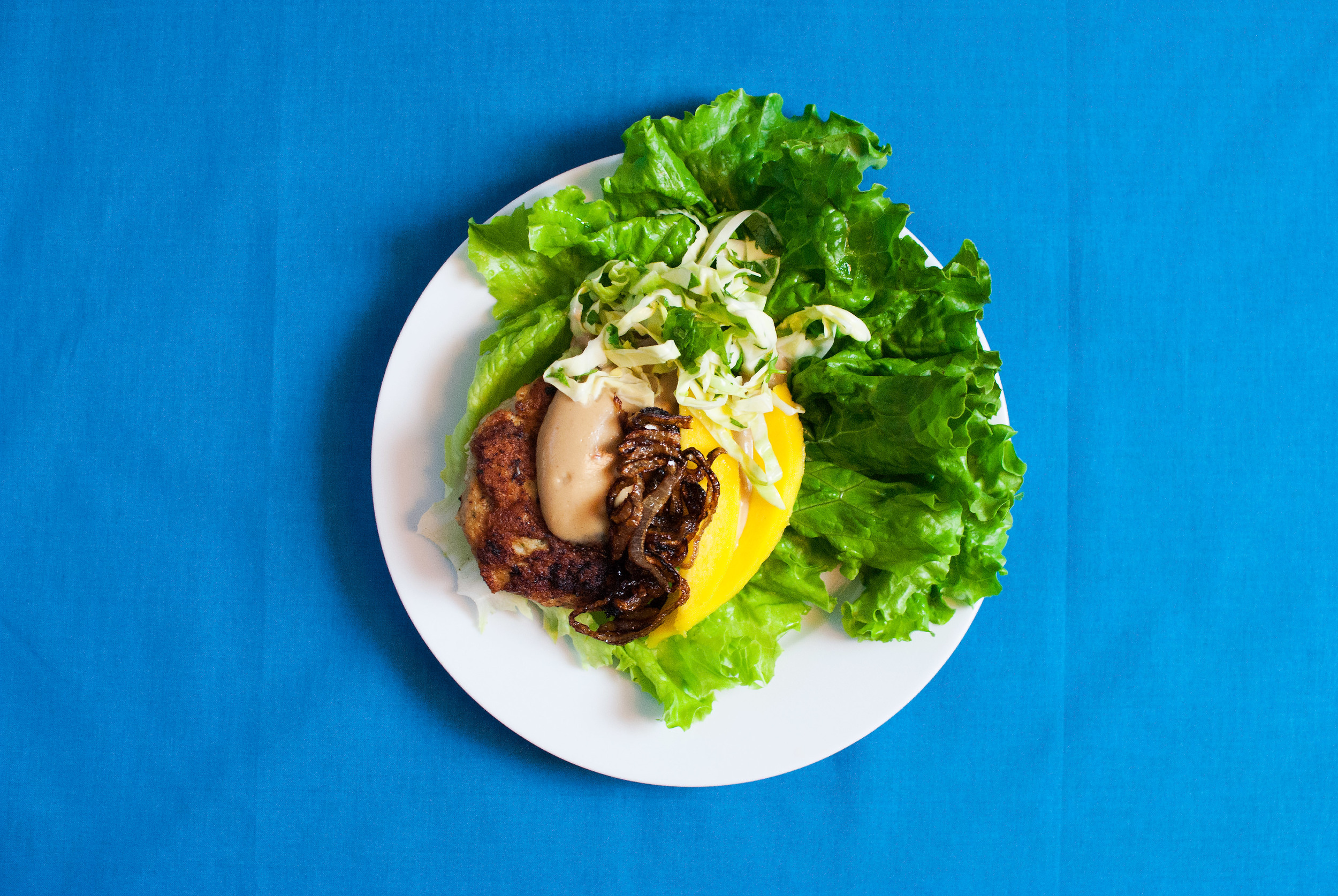
    For those of you who don’t know what larb is, it is ground chicken salad blended with Thai aromatics and chili, dressed in lime and fish sauce, then traditionally served on big leaves of lettuce. What we’ve done is form the ground chicken with aromatics into patties, then seared (or grilled) them up. We serve them on huge lettuce leaves, then smother those bitches in homemade peanut sauce. The burger is then topped with a fresh slaw dressed in lime, a juicy slice of mango, and crispy fried shallots. Wrap up burger. Put in face.

    You’re welcome.


    larb_burgers_03

    larb_burgers_03

    Larb Burgers

    • 1 lb. boneless, skinless chicken thighs
    • 1 shallot, thickly sliced
    • 3 cloves garlic, peeled
    • 6–8 kaffir lime leaves
    • 1 stalk lemongrass, roughly chopped
    • 1 tbs. fish sauce
    • 2-inch piece of ginger or galangal, peeled, roughly chopped
    • ripe mango, peeled sliced
    • 2 small shallots, thinly sliced
    • green leaf lettuce

    Peanut Sauce

    • ½ 15-oz can coconut milk.
    • ½ cup creamy peanut butter
    • 2 tsp. fish sauce
    • ½ tsp. chili paste (or Sriracha)
    • 2 tsp. palm sugar simple syrup
    • ⅓ cup water

    Slaw

    • 1 cup cabbage, shredded
    • ¼ cup cilantro, chopped
    • ¼ cup mint, chopped
    • Juice of 1 lime
    • ½ tsp. fish sauce

    In a food processor, pulse shallot, garlic, kaffir lime leaves, lemongrass, fish sauce, and ginger or galangal until minced, scraping sides as needed. Add chicken and process until chicken is ground up and the aromatics are evenly distributed. Set aside to rest.

    In a small skillet, heat coconut milk, peanut butter, fish sauce, chili paste, and palm sugar simple syrup over low heat. Stir constantly until warmed through and it starts to thicken and eventually congeal. Remove from heat. Gently stir in water until a smooth paste. Set aside.

    Heat a large skillet to medium high heat and coat with oil. Form 6 patties from the chicken mixture and cook until done (160°F), about 5–7 minutes a side. Remove burgers from heat and set aside to rest. In the same pan, add a little more oil and toss in the sliced shallots. Fry until golden and crispy. Set aside on a plate to cool and crisp up.

    In a small bowl, combine cabbage, cilantro, mint, lime juice, and fish sauce. Set aside.

    Serve burgers immediately topped with peanut sauce, mango, slaw, and shallots.


    larb_burgers_01

    larb_burgers_01

    Yields 6 burgers.

  • Carnitas Amargas


    The name of this dish translates to “bitter little meats.” Carnitas are a pretty standard protein in Mexican food, and why wouldn’t they be? It’s pork slow cooked in spices until it falls apart then is fried in its own fat. Sounds pretty great, right?
    We’ve made carnitas too many times to count. They’re easy, they keep well, and they also lend themselves to an incredible amount of quick and satisfying dinners. There are so many recipes for this, and it’s pretty hard to go wrong with carnitas, but we wanted to make something that stood out among the rest. So Nate had the great idea of making it taste more complex by enhancing a flavor profile that is often underrated but present in them already: bitterness.

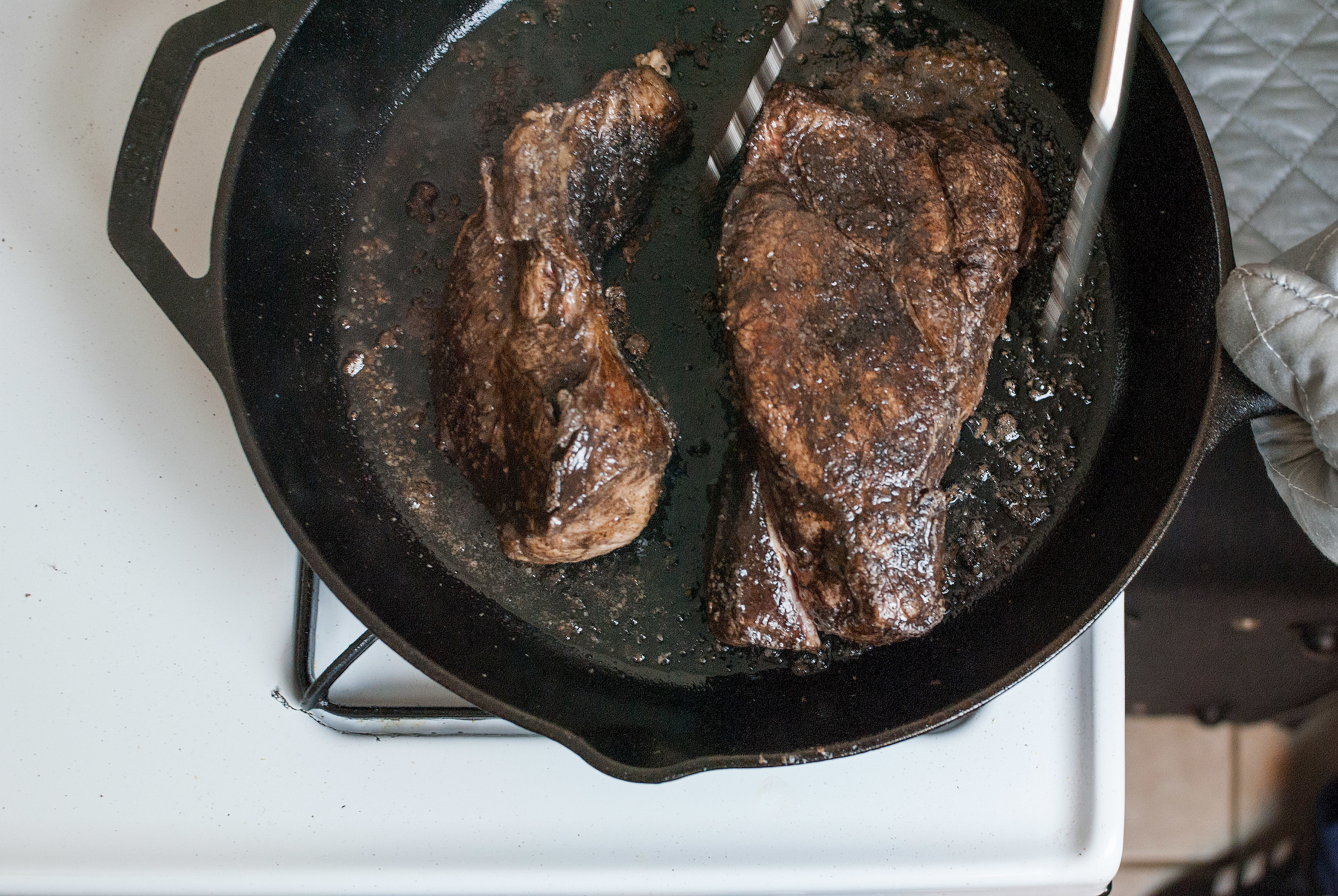
    Initially, I was dubious. Classifying anything bitter right off the bat is often a turnoff for many. However, after he made me a first batch, I was hooked, and we’ve made them the same way ever since. Cuts of pork shoulder are coated in salt and cocoa powder then seared in a pan, then cooked in their own juices with onions, garlic, some spices, and whole lime. The result is a tasting experience in two definitive stages: fatty and salty followed by a hint of bitterness, almost even floral.

    Carnitas Amargas

    • 2 lbs pork shoulder
    • 1 tsp. cocoa powder
    • 1 tsp. salt
    • 5 cloves of garlic, peeled, whole
    • ½ yellow onion, thinly sliced
    • 1 lime, halved
    • 1 tbs. Mexican oregano
    • 1 bay leaf

    Preheat oven to 350.

    In a small bowl, mix the cocoa powder and salt together, then rub mixture over the pork. In a hot pan on medium high heat, sear all sides of the pork.

    When the pork is done searing, place it in a dutch over or clay pot (something with a cover) along with the garlic, onion, lime, Mexican oregano, and bay leaf. Cover and bake for about 2.5 hours, or until the pork is tender and falling apart. Remove from the oven and discard the lime and bay leaf. Tear the pork apart with a fork until it becomes stringy, then transfer everything in the clay pot into a hot pan (ideally the pan you used at first) and cook off all the liquid while crisping up the meat a little bit. Taste test for salt, then the carnitas are ready for use.