Tag: bread

  • Skordalia


    I have a fascination with recipes that utilize ingredients that seem to have lost their value: vegetable tops and bottoms, stalks and skins, bones and bits, crusts and scraps. I don’t like wasting food, so when I discover something that allows me to use these delicious rejects in a creative way, I get a little thrill out of it. And do you wanna know what’s laying around our home that’s sometimes challenging to use before it becomes hard as a rock and “useless?”

    Bread. Lots and lots of effing bread.

    My partner bakes some of the best damn bread around and posts saliva inducing photographs of it on our Instagram, but alas, we can only eat so much of it at once, and sometimes we don’t consume all of it before it goes stale. Toward the beginning of his bread kick, we actually started to give the bread away to our friends, but even that didn’t keep us out of the clear, and I was starting to hear creaky protests coming from our food processor that seemed to say, “Please, God, not one more batch of breadcrumbs. PLEASE, NO MORE.” Luckily for our food processor, and for us, I discovered a type of recipe that changed the way I cooked with bread.

    Bread sauces.

    There are several, actually. The Brits have one (it’s just called “bread sauce,” because of course it is). Romesco sauce is also technically a bread sauce, utilizing stale bread to bind all its parts together. There’s even a Peruvian stale bread and cheese sauce that’s intended to be served with potatoes. I cycled through a few of different variations of this style of disposing of Nate’s hearty loaves, but it didn’t take long for me to stumble upon what became far and away my favorite one of the bunch: skordalia. Skordalia is easy to make, versatile in its use, keeps for a long time, and it focuses on two of my all time favorite flavors: garlic and lemon.

    Side note: using a good stale French loaf would be great for this, but in our house, we like sourdough. It really latches onto the lemon flavor, which is the backbone of the sauce. Also, you don’t even need to use stale bread for this recipe, just know that you can. I mean, you’re dousing it in oil and lemon juice and water then blending it into oblivion, so don’t get too hung up on that.

    Skordalia:

    • One 1” slice of stale bread from a large, hearty loaf of bread (we like sourdough)

    • 6–8 cloves of garlic (or, like, more if you’re into that)

    • A heaping ½ cup of slivered almonds

    • ½ cup olive oil, divided

    • Juice of one whole juicy lemon

    • ¾ cup of water

    • Salt to taste

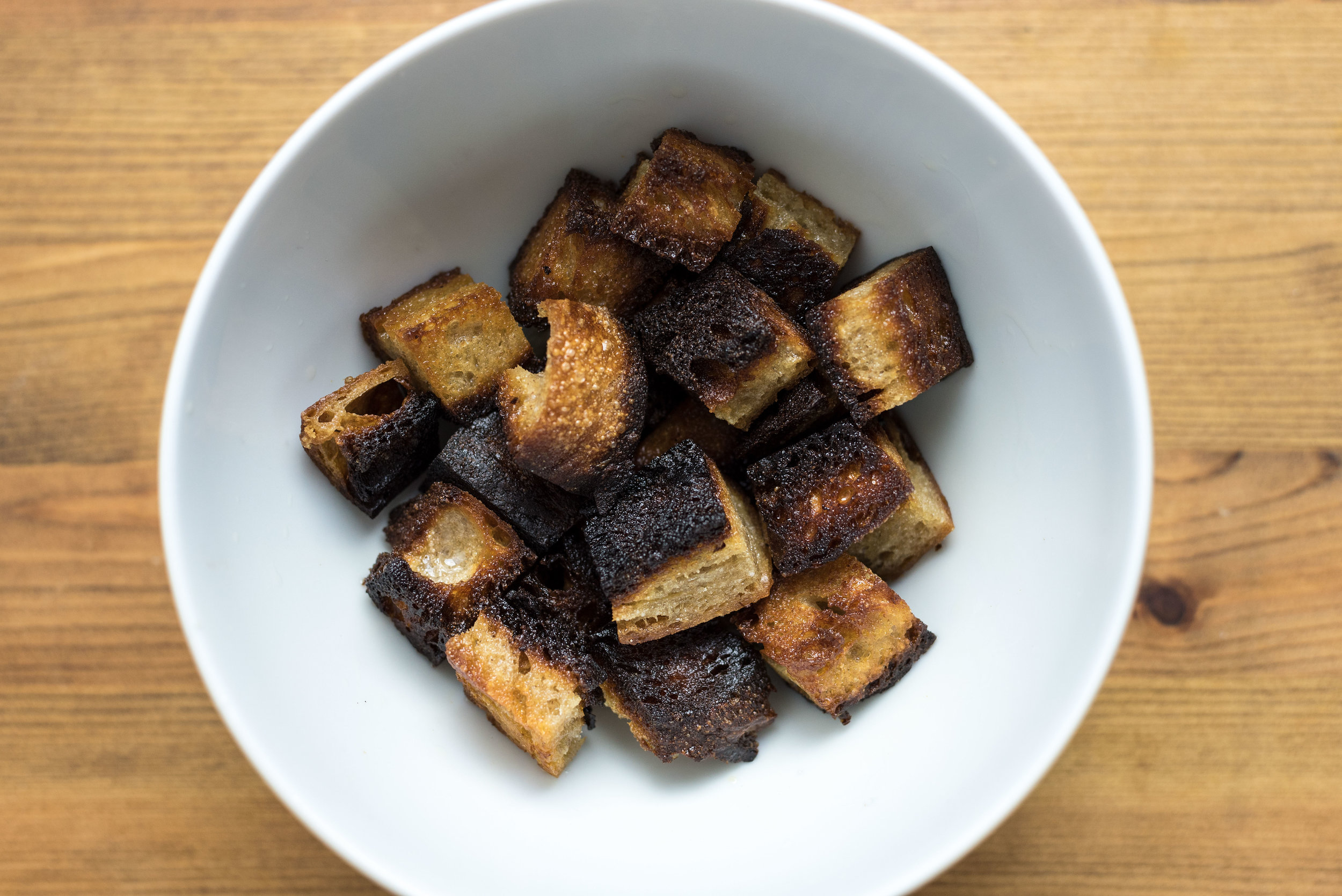
    In a skillet on medium heat, warm ¼ cup of the olive oil until it begins to shimmer. While the pan is coming up to heat, cut your stale bread into 1-inch cubes. Think of it like you’re making some big-ass croutons, because, well, you kind of are. When the oil is ready, add the bread to the pan. It should begin to fry immediately, making a satisfying “deep frying” noise (you know what I’m talking about). If it doesn’t, remove the bread and wait until it gets hotter and try again.

    Fry the bread cubes on all sides, moving them around the pan from time to time. You have a couple options here: fry the bread until it’s golden brown OR until it’s just a little more than that. This will determine the flavor character of your skordalia. Golden brown bread will be a nuttier, milder, and buttery skordalia whereas slightly charred bread will be a more sour, punchy, and smoky skordalia; they both have their place. If you’re using your skordalia as a dip, meant to be eaten more on its own, I’d opt for golden bread since it’ll be milder. If you’re using your skordalia to accompany a meal as a hearty bread sauce component, then I’d do charred bread since it’ll stick out a little bit more. The sourness of the charred flavor bonds with the lemon really nicely, and the smokiness responds really well to meat or roasted vegetables.

    skordalia_01.jpg

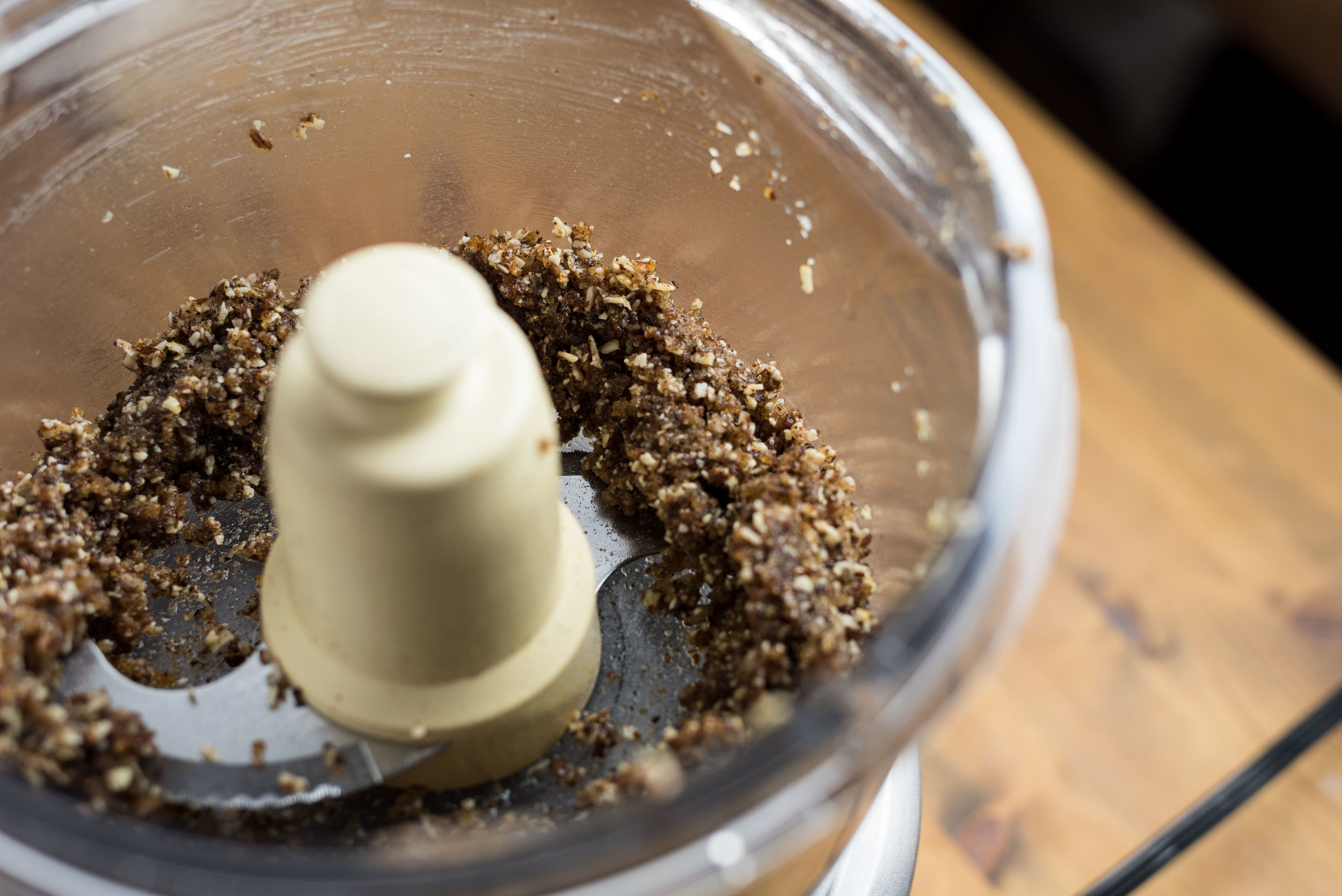
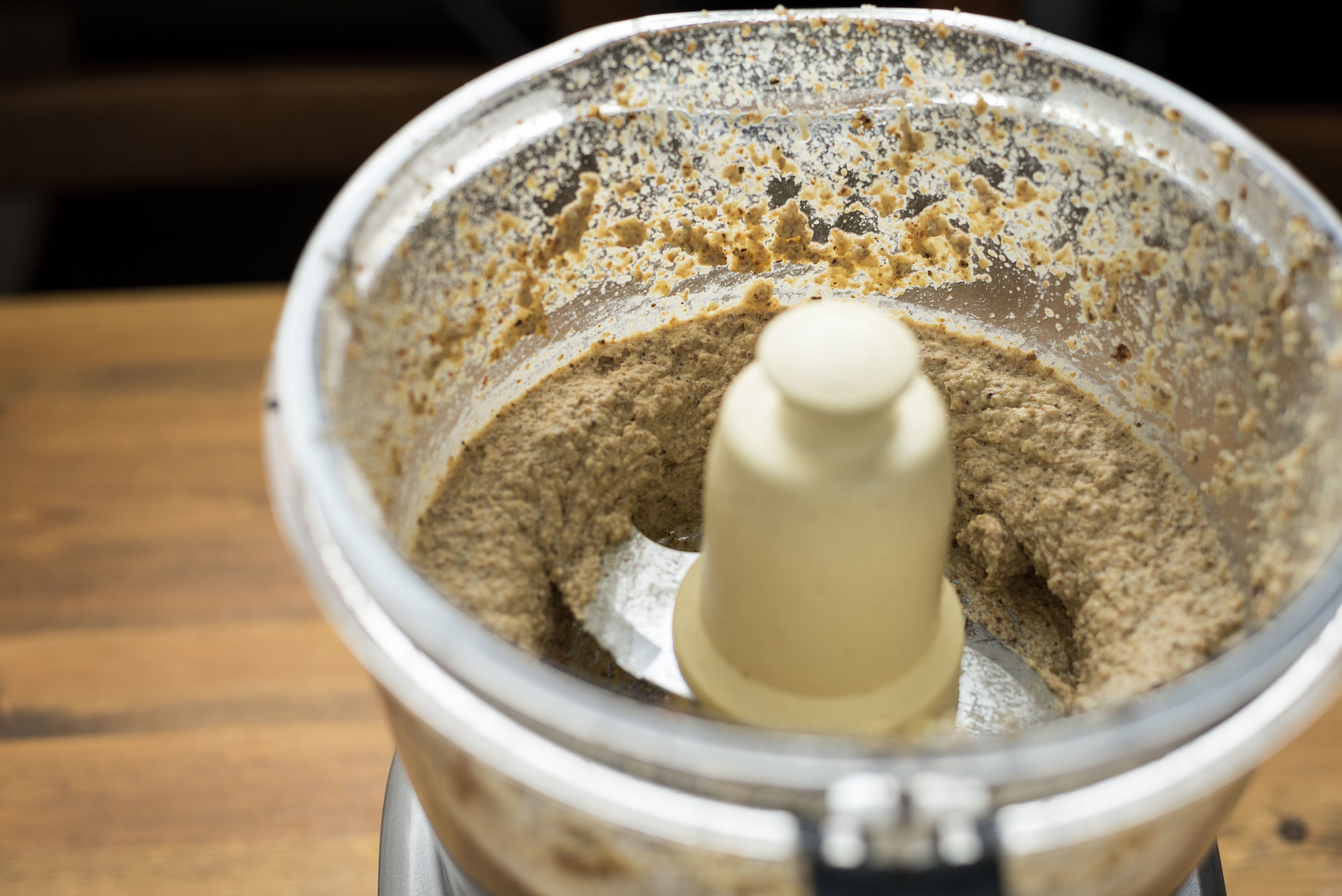
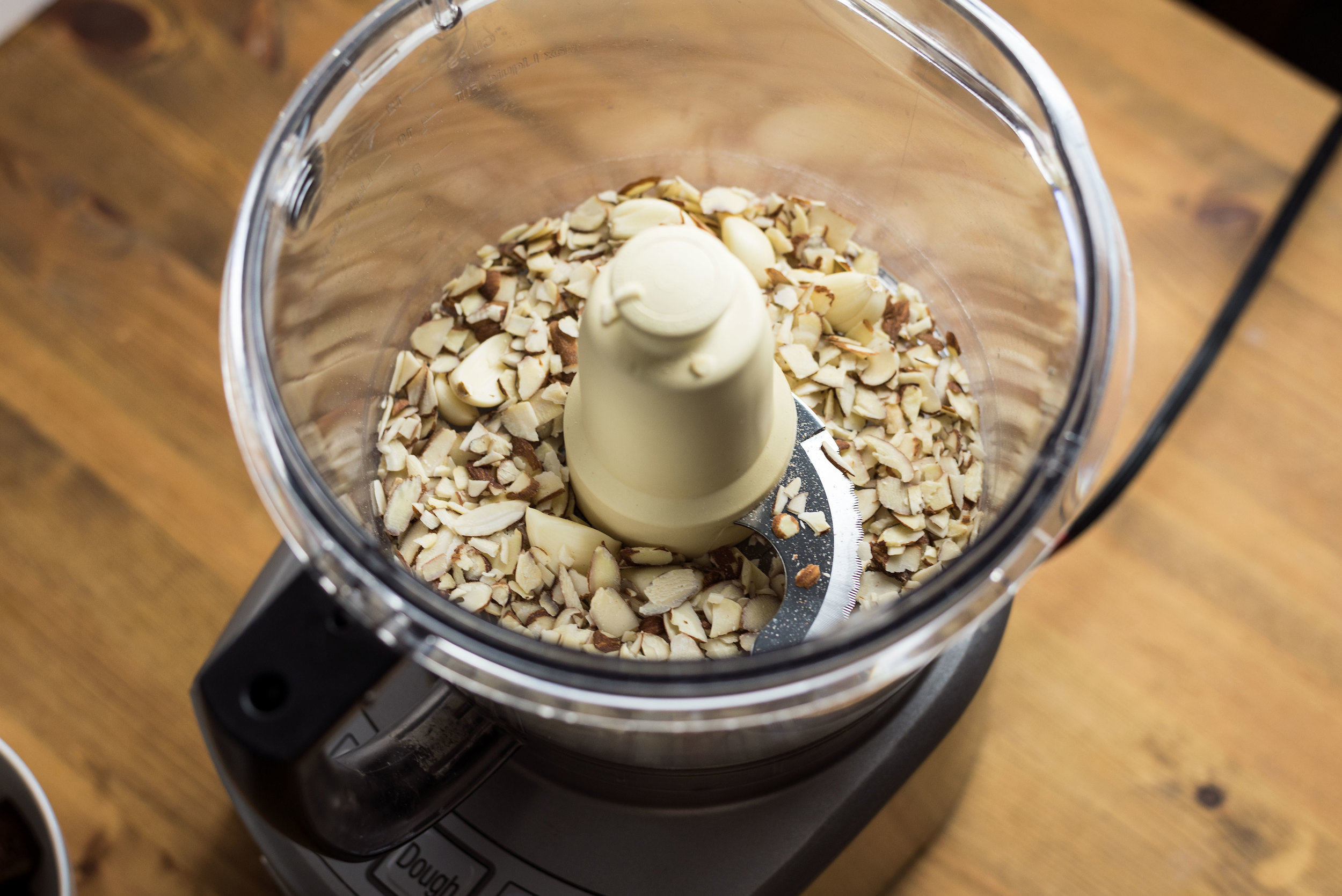
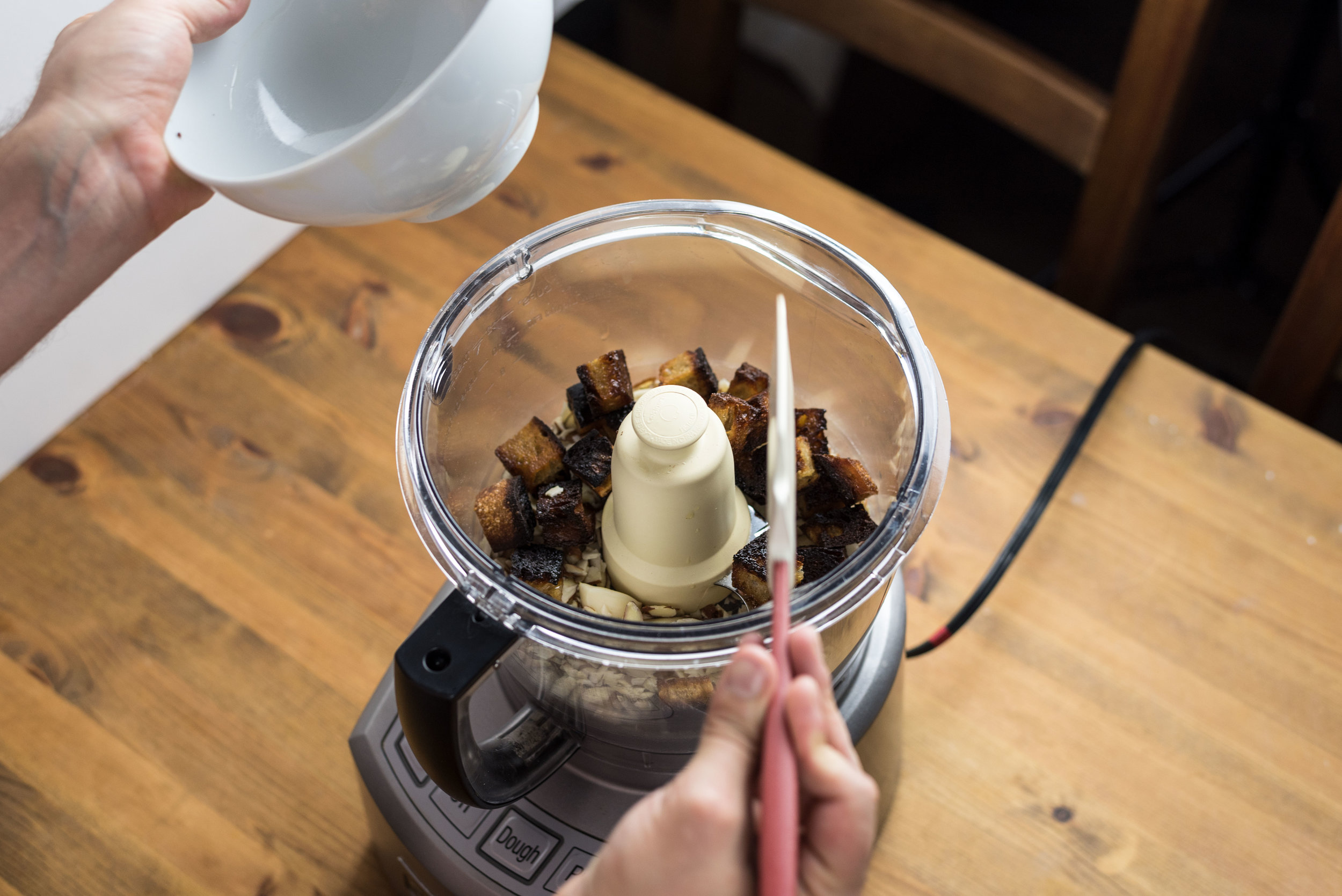
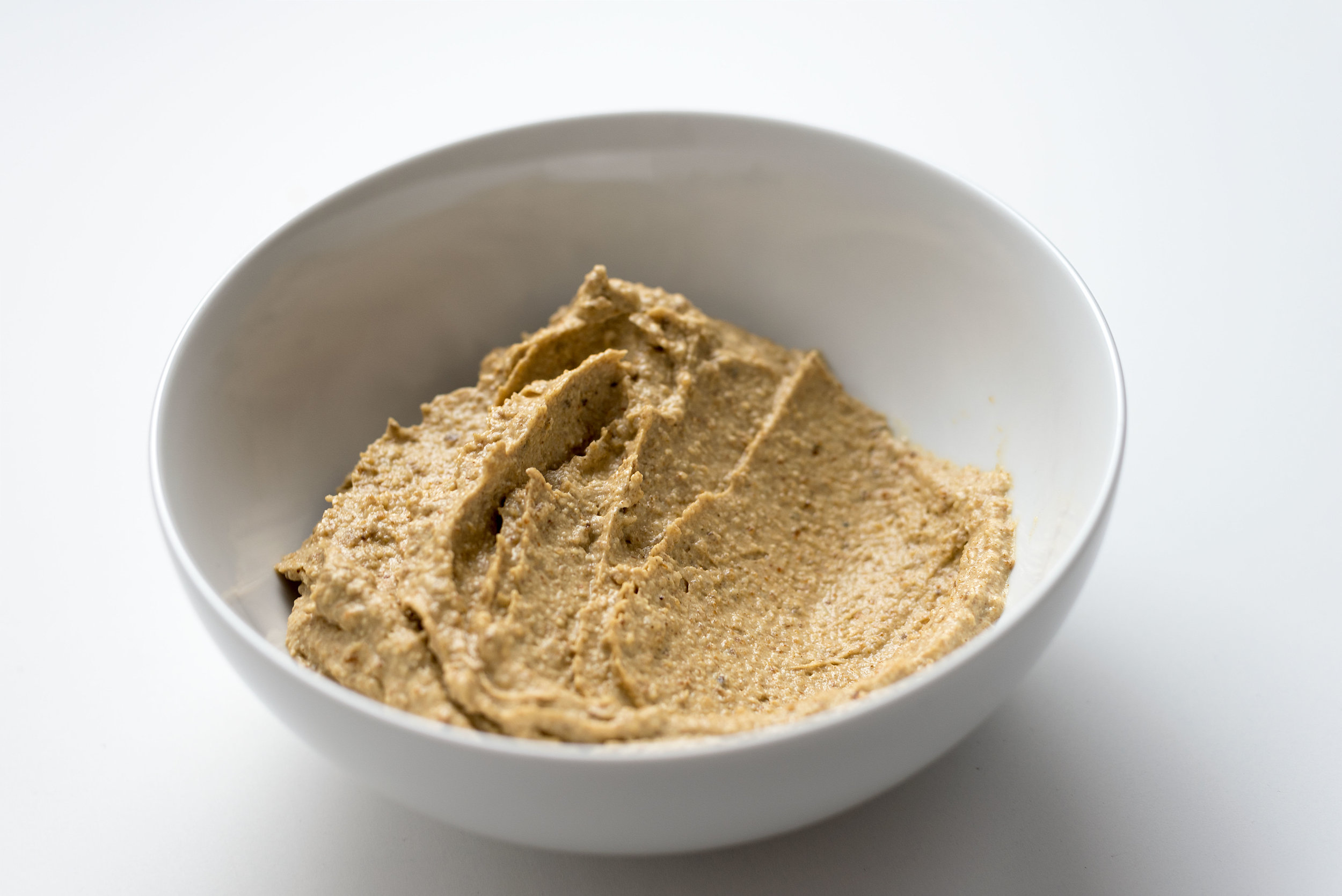
    Once your bread is fried to your desired shade of sexiness, remove it from the pan and add it to a food processor or blender along with all the remaining oil in the pan, the garlic, and slivered almonds. Pulse the ingredients to break them down, scraping the sides of the bowl frequently, then give it a good long blend to get them as fine as you can. While the ingredients are whirring away, consolidate the remaining ¼ cup of olive oil, water, and lemon juice into a vessel with a lip so you can slowly pour it out in a steady stream without making a mess. Through the opening at the top of the food processor or blender, slowly add all of the liquid, allowing your skordalia to loosen up and emulsify. You’ll probably need to let it blend on its own for a minute or two afterwards to break down the last few chunks. When finished, your skordalia should be smooth and resemble hummus. Salt your skordalia to taste and pulse to incorporate. Serve immediately or store in your fridge for up to two weeks.
    Side note: if you’re taking your skordalia out of the fridge to use for later, we’d recommend having it come up to room temperature on its own as opposed to microwaving it, since the application of heat really alters the fresh lemon juice flavor. That being said, don’t let that stop you from adding a dollop of this goodness to a lunch on-the-go that you’ll heat up at work or wherever you go later. It’ll still be delicious, just know that it’ll be a little different. The garlic flavor will come out more and the lemon will play less of a role.

    skordalia_07.jpg

    Yield: about 2 cups

  • Smashed Raspberry Grilled Cheese


    Our challenge of savory seasonal eating continues!

    Raspberry season is upon us, and we quickly discovered through our research process that there’s not a whole lot of savory raspberry recipes out there, which we found simultaneously disappointing and alluring. We found plenty of jams, jellies, cookies, pavlovas (Christ, so many pavlovas) and cakes, but no one seemed interested in figuring out how raspberries could make their way out of the realm of dessert.

    But if there’s a way to make something savory, we will find it. As usual, the key was cheese.

    Grilled cheese sandwiches are essentially a step below pizza ingredient-wise, so they’re near the top of the favorite food list for us. Few things can compare to crisp and thickly sliced rustic bread (Nate makes the best) with melted cheese. However, there is one thing that these sandwiches usually lack to create what is more commonly accepted as a “complete taste” on its own, and that’s acid. That’s why you see grilled cheese and tomato soup paired together all over the place.

    So we thought…why not switch up the acid?


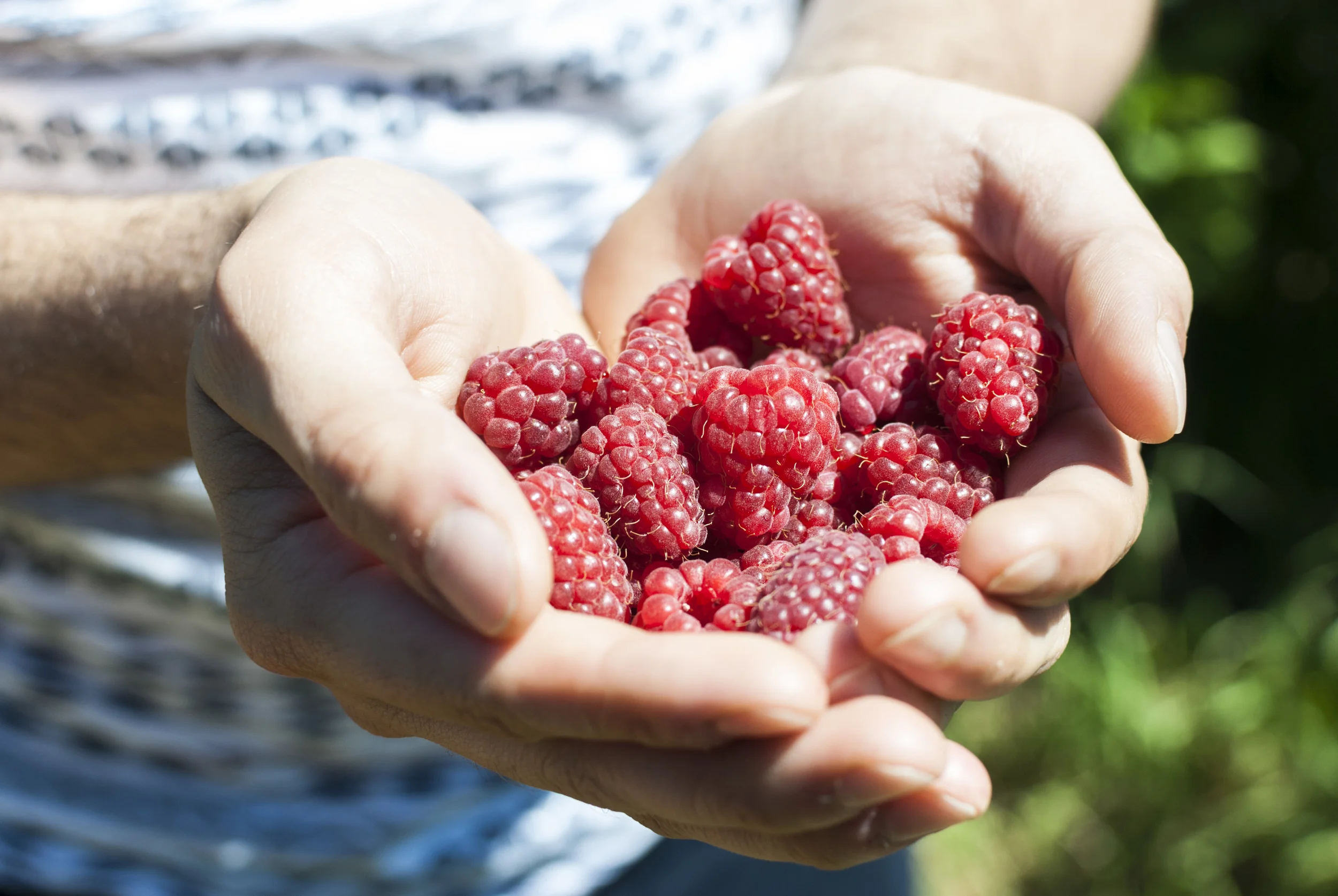
    Berries and cheese go way back, so we weren’t too scared about them intermingling. Our acidic subject? Fresh raspberries. Our cheese? We eventually decided to go with a blend of chèvre for flavor and Jarlsberg for texture. So we smashed some raspberries we got from Sauvie Island Farms after a lovely day of berry picking onto some of Nate’s homemade 50% whole wheat sourdough bread and got cooking.

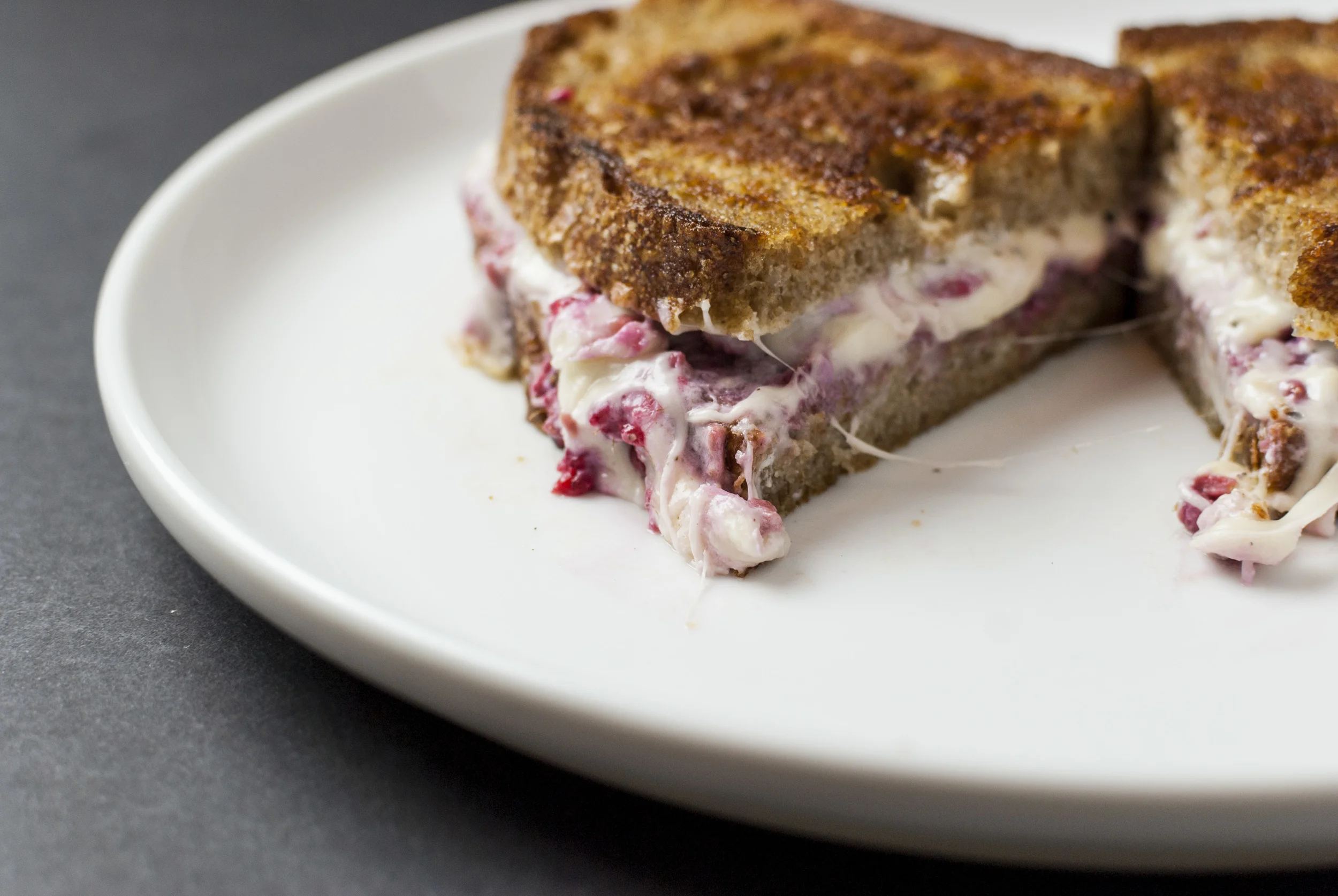
    The results? Crunchy, fluffy, creamy, gooey, and tart. It was everything we hoped it would be and more. If you have any fruit laying around, especially incredibly fresh fruit, we wholeheartedly recommend you put your thinking cap on and find a cheese that’ll pair well with it, then immediately stuff it in a grilled cheese sandwich. You will not be disappointed. Sometimes it really is the simplest things that taste the best.

    Smashed Raspberry Grilled Cheese Sandwich:

    Makes 1.

    • 2 thick slices of good rustic bread (whole wheat sourdough was magical with this, but if you wanna try something else, it’ll still turn out awesome)
    • About 1 tablespoon of butter, room temperature
    • 8–10 ripe raspberries (enough to cover the surface of one piece of bread)
    • 2 ounces of Jarlsberg cheese, grated
    • 1 ounce chèvre, room temperature
    • A dash of freshly ground black pepper

    In a small bowl, mix the grated Jarlsberg and chèvre together along with the fresh black pepper. Set aside.

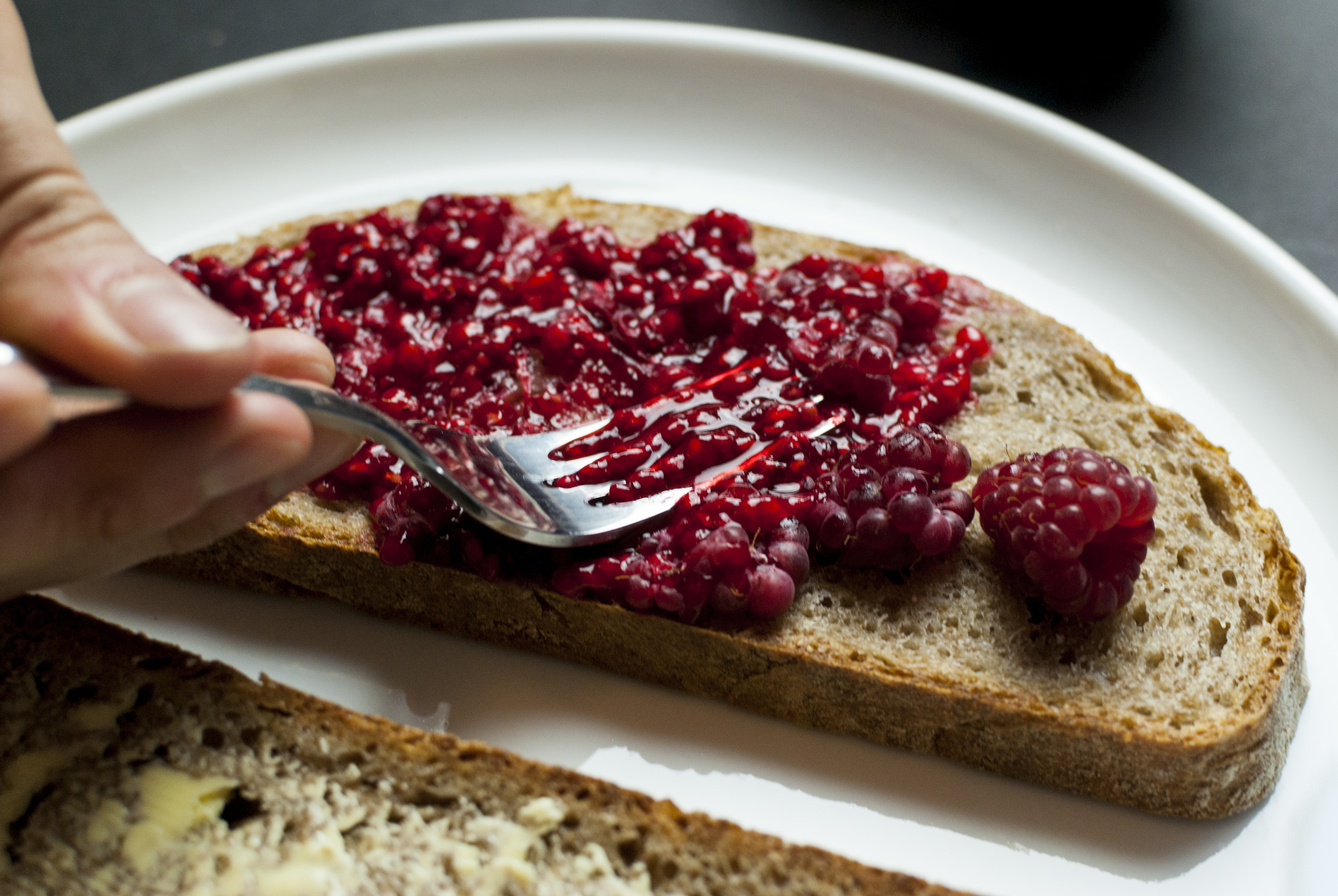
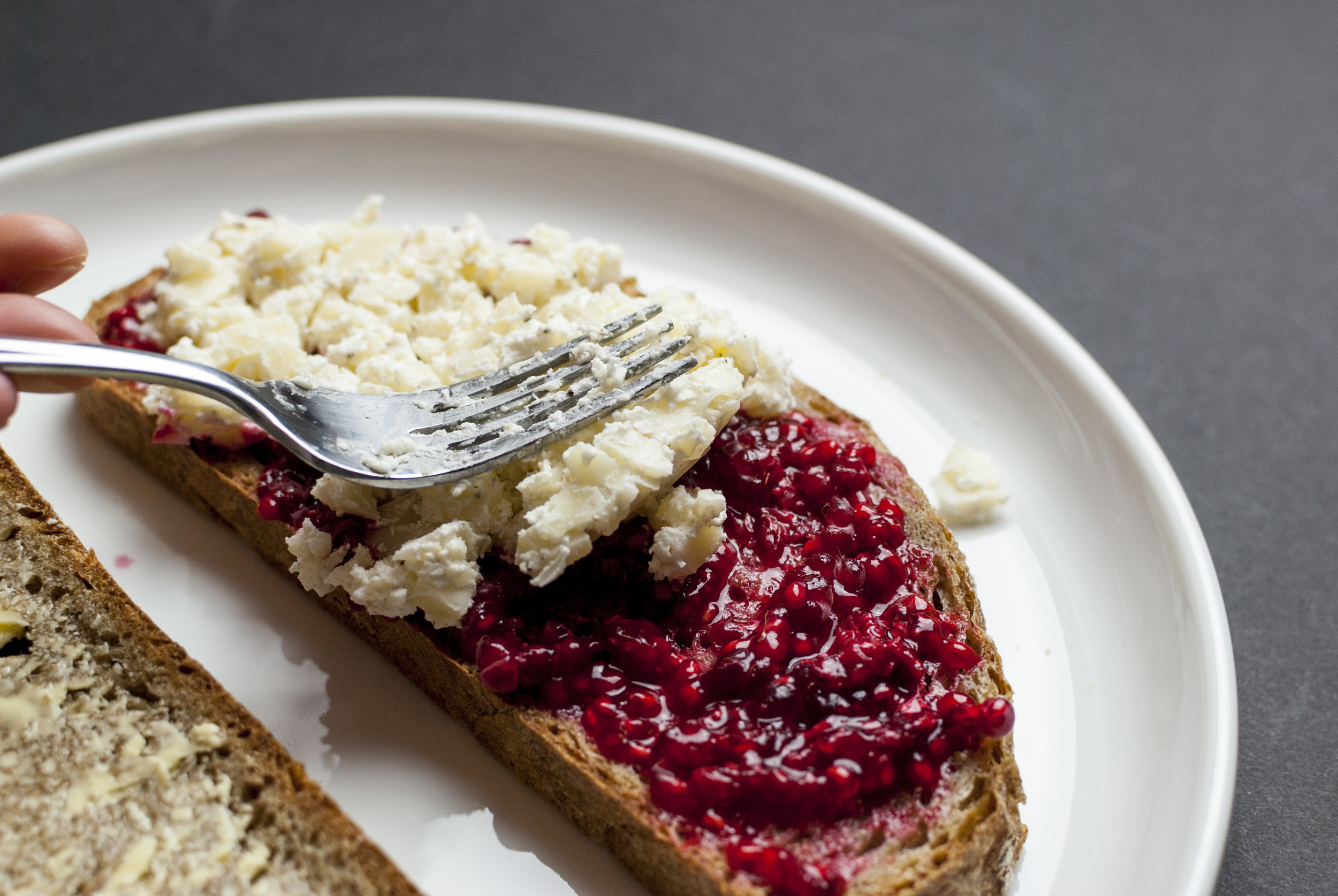
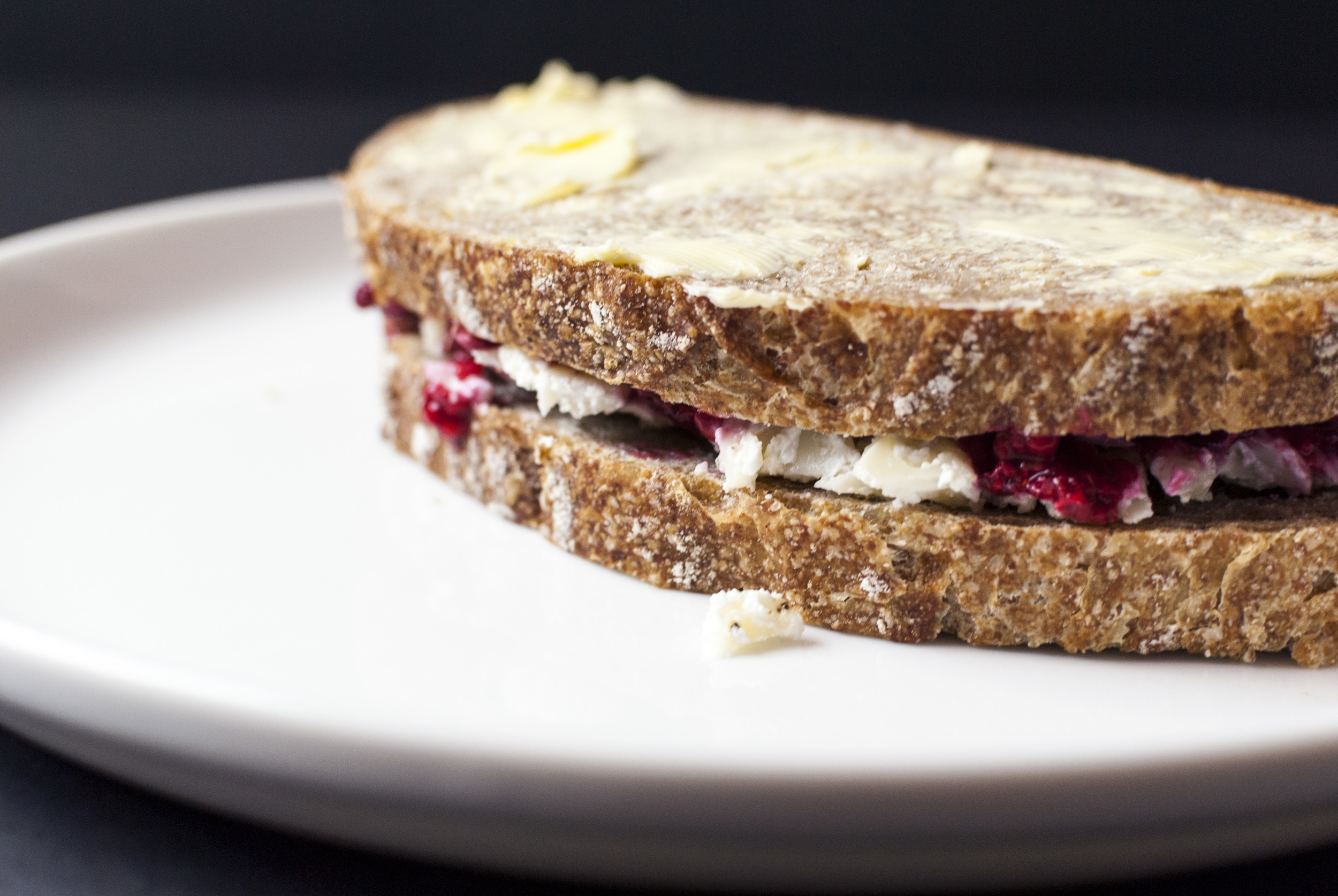
    Butter both pieces of bread on one side using ½ a tablespoon of butter each. On the unbuttered side of one of your pieces of bread, lay out your raspberries and smash them with a fork, moving the juices around until the entire surface of the bread is covered. Spoon the cheese mixture on top of the smashed raspberries and spread it until the cheese covers the surface of the bread. Put the other piece of bread on top, buttered side up.

    Preheat a non-stick pan on medium heat and put the sandwich in the pan. Allow each side to cook for roughly four minutes, adjusting heat as needed to cook the sandwich through, or until each side of the bread is golden brown and the cheese is melted. To help the melting process along, you can put a lid on the pan, keeping the heat trapped in, though you should limit this because you will lose that deep crispness with too much steam.

    Allow sandwich to cool, then go to town.


  • Peanut Butter and Jelly French Toast


    As we play our way through Dragon Age Inquisition for the first time, I have to say that it puts us in a rather aggressive mindset. We feel the urge to go forth and conquer things and conform them to our ideologies for the sake of the “greater good.” We have applied such schools of thought to our cooking recently, and one of the things that we have “conquered” as of late has been something notorious for its (way too) sweet reputation: French toast. Usually covered in butter corn syrup (sweet), dusted in powdered sugar (sweeter), and often soaked in eggs saturated in sugar and cinnamon (just eat a Pillsbury cinnamon roll, for goodness sake), French toast hasn’t been something that we seek out. But one day, Nate made some incredible homemade bread and we had to use it up. We made a few tasty favorites with it, but still had some left. So, we decided to go outside our comfort zone and venture into enemy territory (sorry, sweet tooths [teeth?])…

    We decided to make French toast.

    After some research we decided to base our recipe on something we found in the vast archives of the Martha Stewart empire, but suppress most of the sugary influences (of course). That left us with the conundrum of toppings. We had maple syrup and powdered sugar on hand (we swear we don’t know how it got there), but we just couldn’t bring ourselves to use them. We knew we would be disappointed. In search of a solution, we got creative. We always have an overstock of peanut butter in the pantry, and having just returned from Sauvie Island, we had plenty of strawberry jam to use. And then we had a thought: What if we took a classic and made it better?

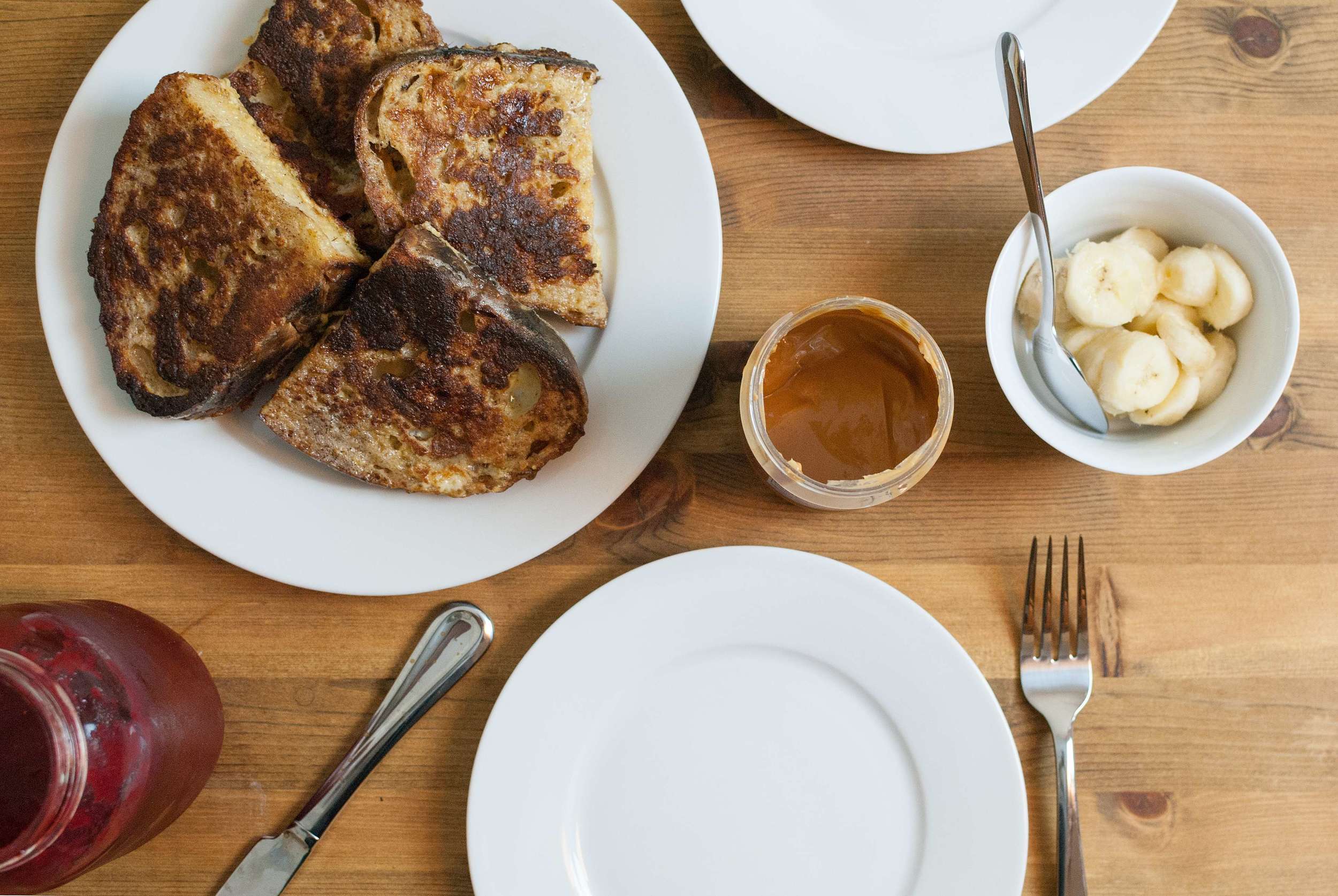
    What you see before you is how we will eat French toast for the rest of our lives. Salty peanut butter and seasonal jam on top of perfect french toast that is crisp on the outside, and almost like cake on the inside.

    • 2 eggs
    • ¼ cup half and half
    • ½ teaspoon vanilla extract
    • pinch salt
    • pinch ground cinnamon
    • 2 1-inch slices artisan bread (day old preferable)
    • Oil or butter for cooking
    • Peanut butter
    • Any seasonal jam/preserves/jelly/marmalade/etc.
    • Banana, sliced (optional)

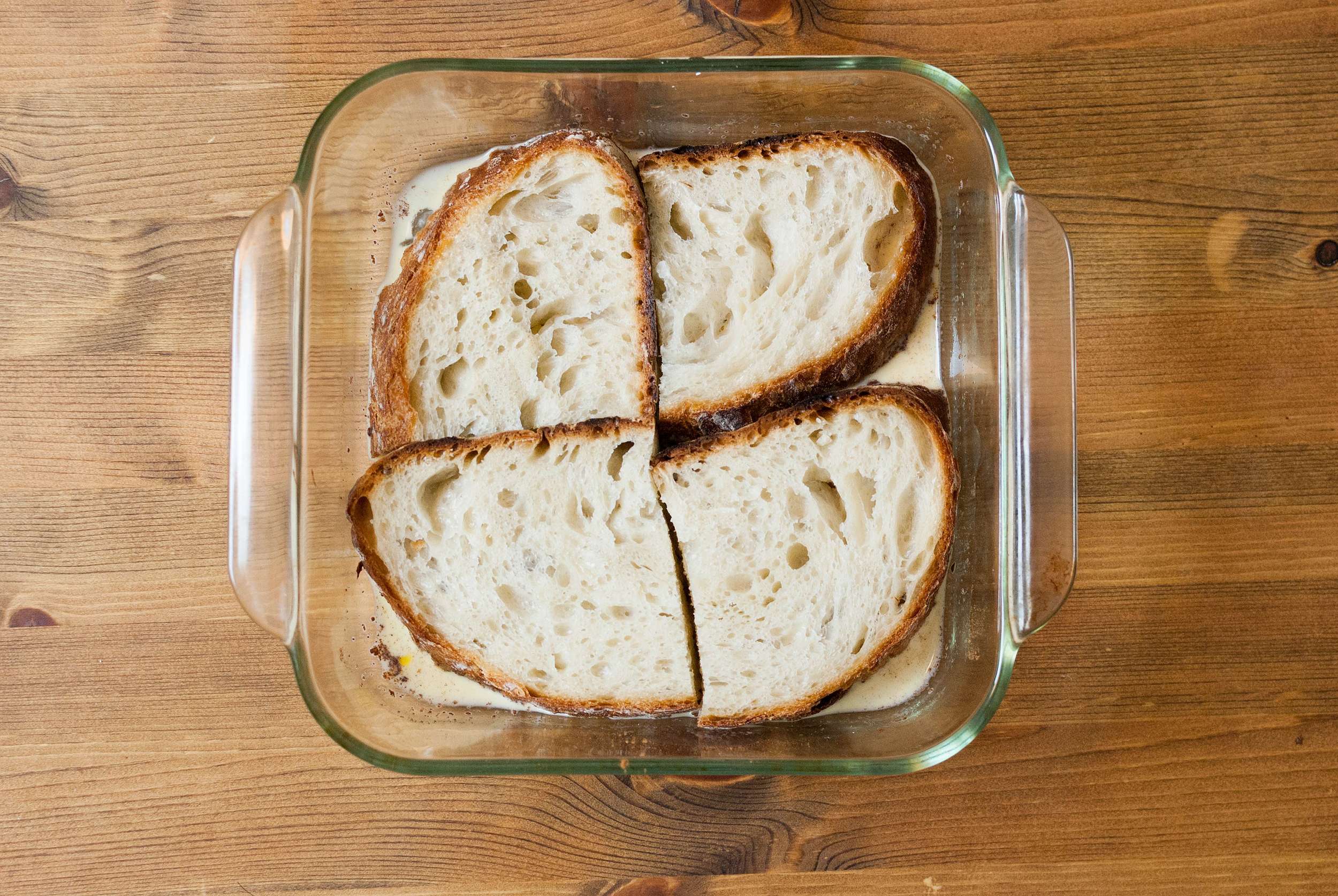
    Whisk together egg, half and half, vanilla, salt, and cinnamon in a baking dish (big enough to hold all your bread). Soak bread in egg mixture for 10 minutes on each side. Heat a skillet and butter over medium low heat and cook each side of the bread for 2–3 minutes, until golden brown.


    peanut-butter-and-jelly-french-toast-01

    If making more than one batch, preheat oven to its lowest setting. Place a wire rack on a baking sheet in the oven. Remove from heat, and put in the oven until all your French toast is ready.

    Serve immediately with peanut butter, jam, or whatever you want on top.

    Serves 2.

  • Spiced Banana Bread


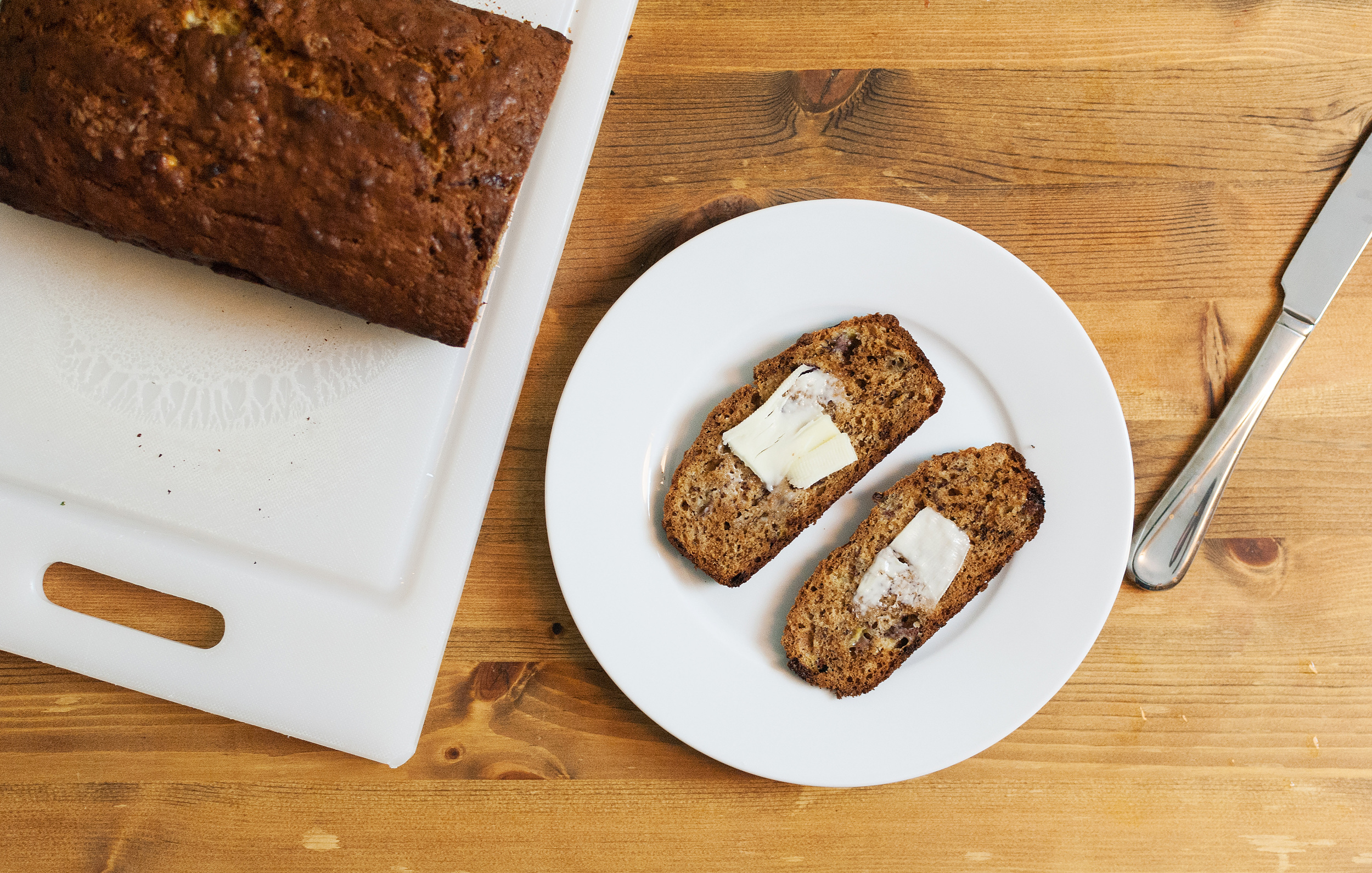
    banana-bread-031.jpg

    I spent a long time looking for the perfect banana bread recipe, which, when you think about it, shouldn’t be all that hard. The problem I kept running into was finding all sorts of things in the recipes from buttermilk to sour cream. I prefer to get the moisture in my banana bread from the bananas, since it gives it more banana flavor rather than a milk-based additive.
    What I ended up with was a soft, caky banana bread that’s always a hit at parties or when I take it to work. The thing that varies for me is what spice I use in it. Usually I’ll put in nutmeg or allspice, but sometimes cloves. Honestly it’s usually whatever I see first on the shelf. The key part of great banana bread is bananas so ripe, you think they’re rotten. For this last batch, I let the bananas get so black, they started to ferment. If this makes you uncomfortable, just remember that any alcohol in the bananas will cook off. Because you let them go for so long, make sure to start out with big fruit or use an extra so it’s moist enough.

    I think the best part about this recipe is that it takes a little over an hour from start to finish. It will keep, wrapped in foil, for up to a week.

    • ¼ cup butter, softened
    • ¾ cup granulated sugar
    • 1 large egg
    • 3 extremely ripe bananas, mashed
    • 1 tsp. vanilla extract
    • 2 cups (240 g./8.5 oz.) all-purpose flour
    • 1 tsp. baking soda
    • ½ tsp. salt
    • ½ tsp. ground nutmeg/allspice/cloves

    Preheat oven to 350°F. Lightly oil an 8×4 inch loaf pan. (I use 8×5 pans, but bake for a shorter time.)

    In a medium bowl, cream butter and sugar together until the sugar starts to dissolve. Stir in the egg. Add the bananas and vanilla extract and stir until fully mixed.

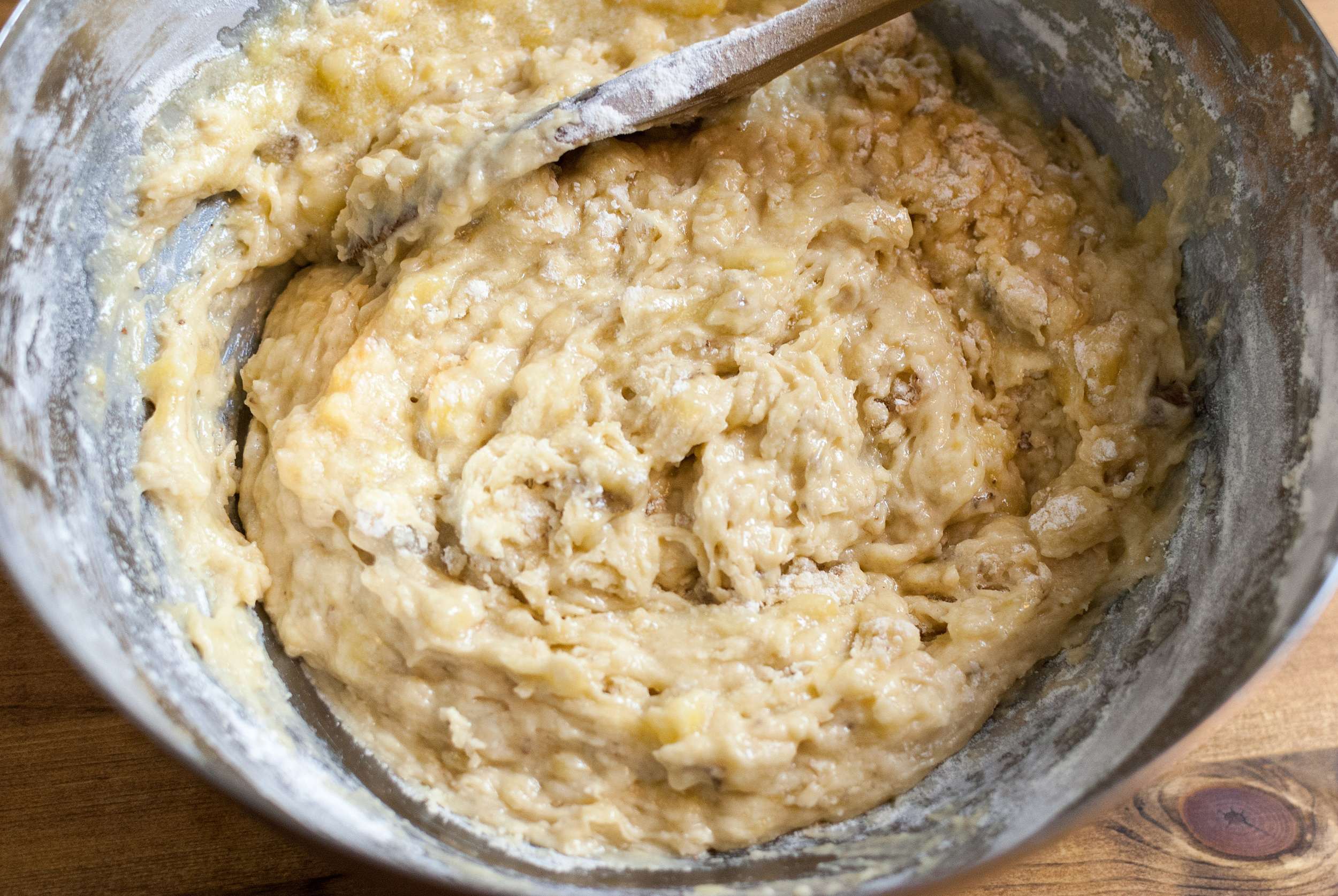
    Sift together flour, baking soda, salt, and spices. Add to the banana mixture and stir gently until just combined. You should still have some bits of undissolved flour.


    banana-bread-01

    banana-bread-01

    Pour into prepared loaf pan and tamp the base of the pan with your hand, or on a flat surface, to get rid of any bubbles. Bake for 50–60 minutes. Check about 40 minutes in. If it’s getting dark too soon, it means your oven is too hot. Bread is done when a toothpick comes out clean.

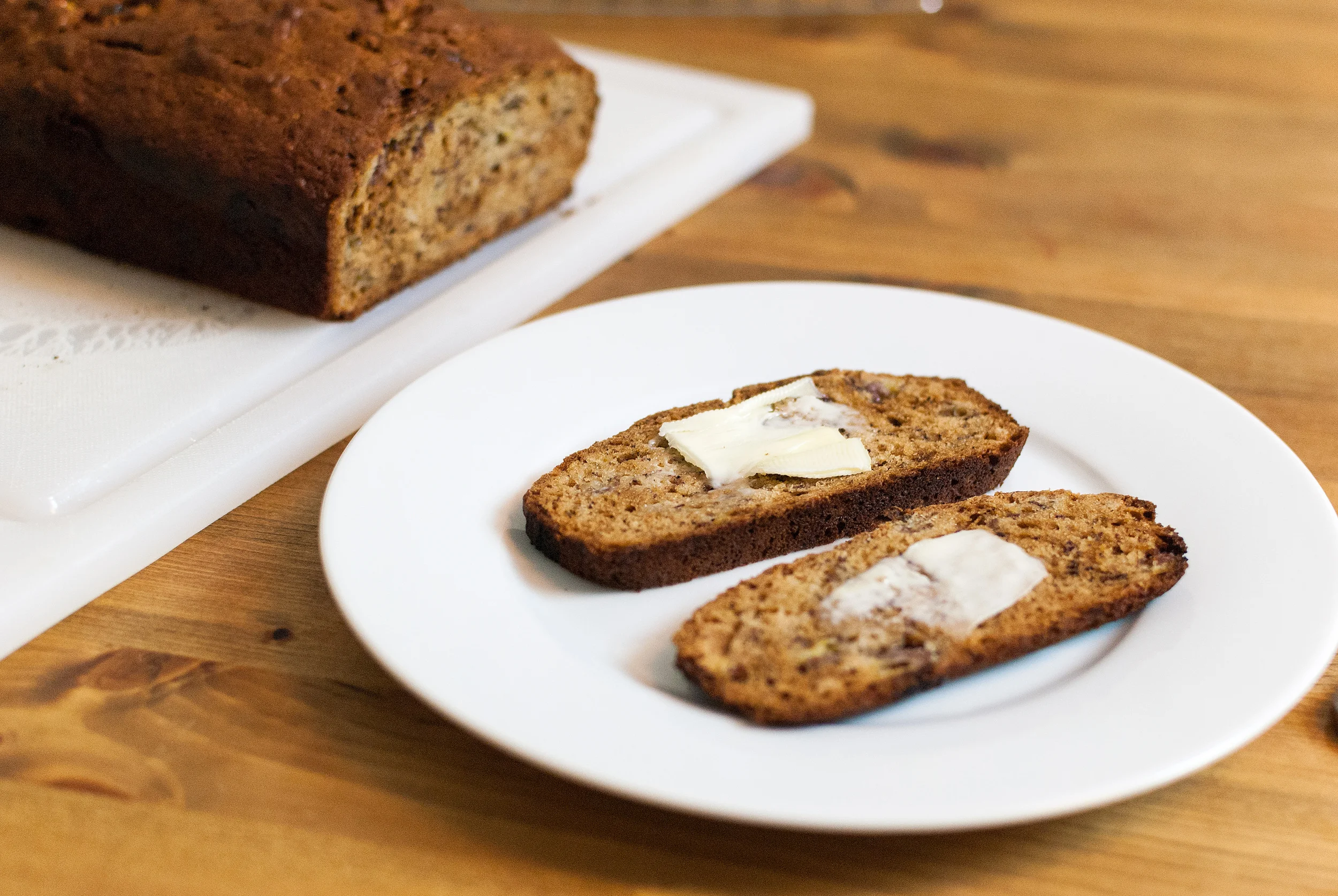
    Remove from oven and let rest in pan for 10 minutes before removing from the pan. Cool on an wire rack. I’d tell you to cool it completely, but good luck with that.


    banana-bread-02

    banana-bread-02